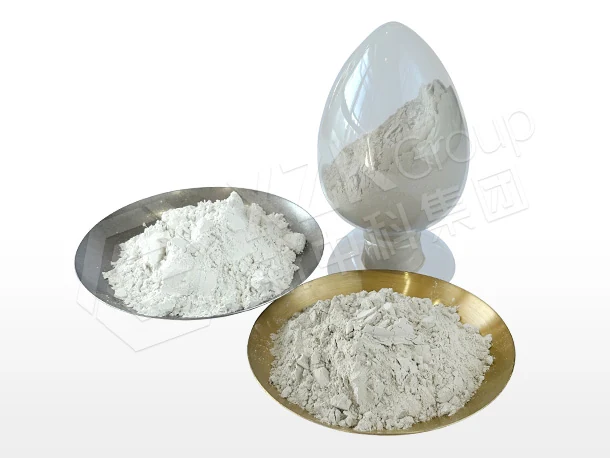
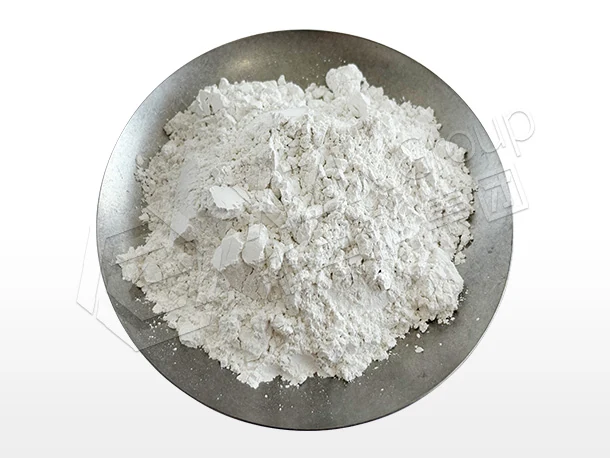
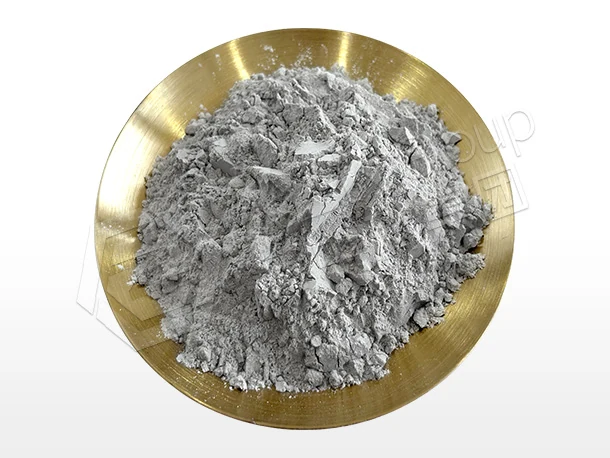
Calcium Aluminate Refractory Cement — CA50 (A600 / A700 / A900), CA70 and CA80 Grades
Nine grades across three alumina families · Al₂O₃ 50–80% · workable-time variants for any placement schedule · tested to GB/T 201-2015.
Specifications of XZK Refractory Cement
Manufactured strictly in accordance with ASTM, ISO, and YB/T metallurgical refractory standards.
| Family | Grades | Al₂O₃ (%) | Workable time | 1 d CCS (MPa) | Typical use |
|---|---|---|---|---|---|
| CA50 series | A600 A700 A900 | ≥50.0 ≥50.0 ≥53.0 | Moderate Moderate Longer | ≥40 ≥50 ≥70 | General-purpose refractory castables, mortars and gunning mixes; A900 for faster turnaround and higher early strength |
| CA70 series | CA70 CA70W CA70S | ≥68 ≥68 ≥68 | Moderate Short Longer | ≥30 ≥30 ≥30 | Low-cement and ultra-low-cement castables; CA70W for rapid mould turnaround, CA70S for large slow placements |
| CA80 series | CA75 CA80 CA80S | ≥73 ≥77 ≥77 | Moderate Short Longer | ≥25 ≥25 ≥25 | Highest-refractoriness castables and precast shapes; steel ladle, tundish and EAF roof duties |
| Property | A600 | A700 | A900 | |||
|---|---|---|---|---|---|---|
| Usual range | Spec. limit | Usual range | Spec. limit | Usual range | Spec. limit | |
| Workable time | Moderate | Moderate | Longer | |||
| Chemical composition (%) | ||||||
| SiO₂ | 7.8 – 8.3 | ≤9.0 | 7.0 – 7.5 | ≤8.0 | 5.0 – 5.5 | ≤6.0 |
| Al₂O₃ | 50.0 – 51.0 | ≥50.0 | 50.5 – 51.5 | ≥50.0 | 53.5 – 54.5 | ≥53.0 |
| Fe₂O₃ | 1.5 – 2.5 | ≤3.0 | 1.5 – 2.5 | ≤3.0 | 1.5 – 2.0 | ≤3.0 |
| R₂O | – | ≤0.5 | – | ≤0.5 | – | ≤0.5 |
| S⁻ | – | ≤0.2 | – | ≤0.2 | – | ≤0.2 |
| Cl⁻ | – | ≤0.06 | – | ≤0.06 | – | ≤0.06 |
| Fineness | ||||||
| 325M (%) | – | ≤20 | – | ≤15 | – | ≤8 |
| Specific surface area (m²/kg) | – | ≥320 | – | ≥350 | – | ≥380 |
| Setting time (min) | ||||||
| Initial setting time (IS) | 50 – 120 | ≥30 | 50 – 120 | ≥30 | 150 – 210 | ≥150 |
| Final setting time (FS) | 90 – 180 | ≤360 | 120 – 210 | ≤360 | 210 – 300 | ≤360 |
| Flexural strength (MPa) | ||||||
| 1 d | – | ≥5.5 | – | ≥6.5 | – | ≥8.5 |
| 3 d | – | ≥6.5 | – | ≥7.5 | – | ≥9.5 |
| Compressive strength (MPa) | ||||||
| 1 d | 45 – 55 | ≥40 | 50 – 60 | ≥50 | 70 – 75 | ≥70 |
| 3 d | 50 – 60 | ≥50 | 60 – 65 | ≥60 | 80 – 85 | ≥80 |
| Property | CA70 | CA70W | CA70S | |||
|---|---|---|---|---|---|---|
| Usual range | Spec. limit | Usual range | Spec. limit | Usual range | Spec. limit | |
| Workable time | Moderate | Short | Longer | |||
| Chemical composition (%) | ||||||
| SiO₂ | 0.2 – 0.7 | ≤1.0 | 0.2 – 0.7 | ≤1.0 | 0.2 – 0.7 | ≤1.0 |
| Al₂O₃ | 68.5 – 70.5 | ≥68 | 68.5 – 70.5 | ≥68 | 68.5 – 70.5 | ≥68 |
| Fe₂O₃ | 0.1 – 0.5 | ≤0.7 | 0.1 – 0.5 | ≤0.7 | 0.1 – 0.5 | ≤0.7 |
| CaO | 28.5 – 29.5 | – | 28.5 – 29.5 | – | 28.5 – 29.5 | – |
| R₂O | – | ≤0.4 | – | ≤0.4 | – | ≤0.4 |
| S⁻ | – | ≤0.1 | – | ≤0.1 | – | ≤0.1 |
| Cl⁻ | – | ≤0.06 | – | ≤0.06 | – | ≤0.06 |
| Fineness | ||||||
| d50 (µm) | 11 – 14 | ≤14 | 7 – 10 | ≤10 | 11 – 14 | ≤14 |
| 325M (%) | – | ≤8.0 | – | ≤5.0 | – | ≤8.0 |
| Specific surface area (m²/kg) | 380 – 420 | ≥350 | 400 – 450 | ≥400 | 380 – 420 | ≥350 |
| Setting time (min) | ||||||
| Initial setting time (IS) | 180 – 240 | ≥150 | 60 – 120 | ≥30 | 240 – 270 | ≥180 |
| Final setting time (FS) | 240 – 300 | ≤360 | 120 – 180 | ≤240 | 300 – 360 | ≤360 |
| Flexural strength (MPa) | ||||||
| 1 d | 9.0 – 11.0 | ≥5.0 | 9.0 – 11.0 | ≥5.0 | 8.0 – 11.0 | ≥5.0 |
| 3 d | 11.0 – 12.0 | ≥6.0 | 11.0 – 12.0 | ≥6.0 | 11.0 – 12.0 | ≥6.0 |
| Compressive strength (MPa) | ||||||
| 1 d | 45 – 55 | ≥30 | 45 – 55 | ≥30 | 45 – 55 | ≥30 |
| 3 d | 55 – 65 | ≥40 | 55 – 65 | ≥40 | 60 – 70 | ≥40 |
| Property | CA75 | CA80 | CA80S | |||
|---|---|---|---|---|---|---|
| Usual range | Spec. limit | Usual range | Spec. limit | Usual range | Spec. limit | |
| Workable time | Moderate | Short | Longer | |||
| Chemical composition (%) | ||||||
| SiO₂ | 0.1 – 0.4 | ≤0.5 | 0.1 – 0.4 | ≤0.5 | 0.1 – 0.4 | ≤0.5 |
| Al₂O₃ | 73.5 – 75.5 | ≥73 | 78.0 – 80.0 | ≥77 | 78.0 – 80.0 | ≥77 |
| Fe₂O₃ | 0.1 – 0.4 | ≤0.5 | 0.1 – 0.4 | ≤0.5 | 0.1 – 0.4 | ≤0.5 |
| CaO | 21.0 – 23.0 | – | 18.5 – 20.5 | – | 18.5 – 20.5 | – |
| R₂O | – | ≤0.4 | – | ≤0.4 | – | ≤0.4 |
| S⁻ | – | ≤0.1 | – | ≤0.1 | – | ≤0.1 |
| Cl⁻ | – | ≤0.06 | – | ≤0.06 | – | ≤0.06 |
| Fineness | ||||||
| d50 (µm) | 6 – 9 | ≤10 | 5 – 8 | ≤9 | 5 – 8 | ≤9 |
| 325M (%) | – | ≤5.0 | – | ≤5.0 | – | ≤5.0 |
| Specific surface area (m²/kg) | 420 – 480 | ≥400 | 450 – 500 | ≥450 | 450 – 500 | ≥450 |
| Setting time (min) | ||||||
| Initial setting time (IS) | 150 – 200 | ≥150 | 150 – 210 | ≥150 | 210 – 270 | ≥180 |
| Final setting time (FS) | 240 – 300 | ≤360 | 210 – 270 | ≤300 | 260 – 320 | ≤360 |
| Flexural strength (MPa) | ||||||
| 1 d | 6.5 – 8.5 | ≥4.0 | 6.0 – 8.0 | ≥4.0 | 5.5 – 7.5 | ≥4.0 |
| 3 d | 8.5 – 10.5 | ≥5.0 | 7.0 – 9.0 | ≥5.0 | 7.0 – 9.0 | ≥5.0 |
| Compressive strength (MPa) | ||||||
| 1 d | 42 – 52 | ≥25 | 40 – 50 | ≥25 | 35 – 45 | ≥25 |
| 3 d | 52 – 62 | ≥30 | 50 – 60 | ≥30 | 50 – 60 | ≥30 |
About XZK Refractory Cement
Calcium aluminate cement (CAC) is the hydraulic binder that lets a castable, mortar or gunning mix set and gain strength without firing. It is a small fraction of any mix by weight and it governs most of what that mix does in the first 24 hours — which is when a poor binder choice turns into a cracked lining, a slow strength gain, or a casting that never reaches its design properties.
XZK supplies nine standard grades across three alumina families: the CA50 series (A600, A700, A900), the CA70 series (CA70, CA70W, CA70S) and the CA80 series (CA75, CA80, CA80S), tested in accordance with GB/T 201-2015. Alumina content runs from 50% to 80%, covering refractory castables, mortars, gunning mixes and precast shapes for iron- and steelmaking.
Why Calcium Aluminate and Not Portland
Ordinary Portland cement cannot be used in a refractory mix. Its hydration products break down at a few hundred degrees, releasing water and losing strength exactly where a lining needs to hold. Calcium aluminate cement hydrates to phases that convert rather than decompose, and it keeps its integrity into the temperature range where ceramic bonding takes over. That is the entire reason a separate product category exists.
The Three Families, and What Actually Separates Them
Higher alumina is not automatically better. What changes as you move up the series:
- Refractoriness and maximum service temperature rise with alumina content. The CA50 series carries general-purpose duty; CA80 grades support the highest-temperature castables and precast shapes.
- Setting and workable time shift. The CA50 series is a moderate-setting general-purpose family. CA70 and CA80 each come in three workable-time variants — a short-time grade (W) for rapid mould turnaround, a standard grade, and a longer-time grade (S) for large placements where casting takes hours.
- Early-age strength rises steeply. A900 reaches ≥70 MPa compressive at one day, against ≥40 MPa for A600 — which decides how quickly a form can be struck and a unit returned to service.
- Cost rises with alumina content. Using a premium grade in a mix that never sees the temperature to justify it is money spent for no gain, while using a low grade where refractoriness governs is a lining failure waiting to happen.
Choosing Between the Workable-Time Variants
The W and S variants exist because placing a large castable takes time. A short-time grade poured into a 20-tonne ladle bottom will begin to set before the pour finishes; a long-time grade in a small precast shape slows mould turnaround for no benefit. Select on the placement duration and the form-stripping schedule — tell us both and we will indicate which variant fits, rather than defaulting to the standard grade. Note that within a family the W and S grades differ in setting behaviour and fineness, not in chemistry: SiO₂, Al₂O₃, CaO and impurity limits stay the same across the three variants.
Using It in a Mix
Cement content, water addition and curing practice interact, and both common errors are avoidable with the right figures in hand:
- Cement content. More cement raises the CaO in the system and lowers the refractoriness of the finished lining. Low-cement and ultra-low-cement castables exist for exactly this reason, and the CA70 and CA80 families are the grades used in them.
- Water addition. More water raises porosity and reduces strength at every age. The data sheet assumes a stated water demand; exceeding it invalidates the figures you specified.
- Curing and drying. CAC is sensitive to curing temperature and to drying practice. Rapid drying of a thick section traps steam and causes explosive spalling, so the heat-up schedule is part of the specification rather than a site variable.
If you are developing a castable, tell us the target service temperature and the placement method. We will recommend a grade and indicate a practical cement addition range rather than leaving you to trial it.
Supply and Storage
Minimum order 5 metric tons, shipped in 7–14 days by grade. Test data covers chemistry, fineness, setting time and strength at 1 and 3 days, with a Certificate of Analysis per batch. Calcium aluminate cement is moisture-sensitive: store it dry and sealed, and use it within the stated shelf life. A bag that has taken on water will set unpredictably — discard it rather than risk a lining. Third-party inspection (SGS / BV / TüV) can be arranged.
Refractory Cement — Production & Application Scenarios
Premium raw materials, CNC pressing, high-temp firing, and on-site installation.
Advantages of Choosing XZK Refractory Cement
Nine Grades Across Three Alumina Families
CA50 (A600/A700/A900), CA70 (CA70/CA70W/CA70S) and CA80 (CA75/CA80/CA80S) — so the binder can be matched to the service temperature and the placement schedule instead of the nearest available grade.
Workable-Time Variants That Match Placement
The W and S grades exist because placing a large castable takes time. A short-time grade in a big pour sets before the pour finishes; a long-time grade in a small shape wastes mould turnaround. Select on duration, not on habit.
Full GB/T 201-2015 Property Set Reported
Chemistry, fineness (d50, 325M, specific surface), setting times and flexural and compressive strength at 1 and 3 days — on every batch.
Early Strength You Can Plan Around
A900 reaches ≥70 MPa compressive at one day against ≥40 MPa for A600, which decides how fast a form can be struck.
Specific Applications of Refractory Cement
Proven performance across diverse heavy industrial thermal equipment.
Castable Linings
As the hydraulic binder in conventional, low-cement and ultra-low-cement castables for ladle, tundish, EAF roof and furnace linings.
Refractory Mortars
Providing room-temperature handling strength in air-setting mortar grades.
Gunning and Shotcrete Mixes
Binding gunning mixes where early strength gain governs how quickly a repair returns to service.
Precast Shapes
For precast blocks and shapes that must gain handling strength before they reach the furnace.
400+ Furnaces Trust XZK Refractory Solutions
Over 75% of our international steel and kiln clients continue multi-year long-term procurement partnerships.
We were using a higher grade than the service temperature justified. Matching the grade to the application cut cost with no loss in lining life.
Setting time was consistent across shipments, so our casting schedule became predictable. That was the main problem we had with the previous supplier.
Test data came with the batch and included setting times at our curing conditions, which made mix design straightforward.
We needed the long workable-time variant for a 20-tonne bottom pour. They had it and told us which grade to use, rather than selling us the standard one.
Frequently Asked Engineering Questions
Click any question to expand; only one answer is shown at a time.
Is refractory cement the same as ordinary cement?
No, and they are not interchangeable. Portland cement cannot be used in a refractory mix — its hydration products break down at a few hundred degrees and the lining loses strength where it is needed most. Refractory cement is calcium aluminate based (CAC), which hydrates to phases that convert rather than decompose.
Which of the three families should I use?
It depends on service temperature and placement schedule. CA50 is the general-purpose family for conventional castables and mortars. CA70 suits low-cement and ultra-low-cement castables where CaO content has to be kept low. CA80 supports the highest-refractoriness castables and precast shapes. Tell us the service temperature and we will recommend a family.
What is the difference between the standard, W and S grades?
Workable time. Within a family the chemistry is identical — SiO2, Al2O3, CaO and impurity limits do not change. What changes is setting behaviour and fineness: the W grade sets fastest for rapid mould turnaround, the standard grade is the middle, and the S grade gives the longest workable time for large placements where casting takes hours.
How do I choose between A600, A700 and A900?
Mainly on early strength and workable time. A600 is the standard general-purpose grade; A700 has higher one-day compressive strength; A900 gives the highest early strength (≥70 MPa at 1 day) with a longer setting time. If you need a form struck quickly, the higher grades earn their cost; if not, they do not.
How much cement should go into a castable?
That is a mix-design decision and it interacts with water addition. More cement raises the CaO in the system and lowers the refractoriness of the finished lining; more water raises porosity and reduces strength at every age. Tell us the target service temperature and placement method and we will indicate a practical addition range.
What is the shelf life and how should it be stored?
CAC is moisture-sensitive. Store dry and sealed and use within the stated shelf life. A bag that has taken on water will set unpredictably — discard it rather than risk a lining.
What documentation is provided?
A batch Certificate of Analysis covering chemistry, fineness (d50, 325M and specific surface area), initial and final setting time, and flexural and compressive strength at 1 and 3 days, tested to GB/T 201-2015. Third-party inspection (SGS / BV / TÜV) can be arranged.
Can it be used in gunning mixes and precast shapes?
Yes. It is widely used in gunning mixes where early strength gain governs how quickly a repair returns to service, and in precast shapes where the binder provides the green strength needed for handling before the shape reaches the furnace.
What is the MOQ and lead time?
5 metric tons, shipped in 7–14 days by grade.
How is it packed?
25 kg moisture-barrier bags with PE internal liner on ISPM-15 heat-treated pallets, date-stamped, with 1,000 kg big bags on request.
Related Refractories & Lining Materials
Explore complementary refractory brick grades and monolithic materials for your furnace relining.
Get Your Refractory Cement Quote within 12 Hours
Please specify your refractory requirements by referring to the following aspects:
- ✓ Target Application: Furnace type, lining position (slag line, hearth, roof)
- ✓ Technical Specs: Operating temperature, slag chemistry, chemistry requirements
- ✓ Quantity & Dimensions: Tonnage requirement, standard or custom CAD drawing
- ✓ Delivery Terms: FOB Qingdao/Tianjin, CIF destination port
Why Steel Plants Choose XZK Refractories
Zonal Engineering, Not Just Bricks
Every proposal is a zone-by-zone material schedule matched to your furnace profile and operating practice — so all zones reach end-of-life together.
Source Factory Consistency
Fully automatic CNC batching and zero-defect quality control keep batch-to-batch variation at laboratory level.
Proven Global References
Supplied to Baosteel, Shougang, Hyundai Steel, JSW, Severstal, MMK and 400+ furnace projects across 60+ countries.
Full-Lifecycle Service
Lining design, masonry supervision, heat-up curves and failure analysis — plus EPC turnkey delivery for new builds and relines.
Send Us Your Furnace Drawing
Our engineers will return a zonal lining proposal with material schedule and quotation within 48 hours — even for non-standard shapes.
- Free material feasibility review
- Zonal architecture & installation drawings
- Heat-up curve & masonry guidance
Strict ISO 9001 Process Control Across All 6 Workshops
Every batch of raw materials is chemically assayed. Finished refractory shapes undergo density, ultrasonic non-destructive testing, and pre-assembly gap verification prior to global packaging.
- Raw material ICP chemical assay on every incoming batch
- Density, porosity and cold crushing (CCS) tests per ASTM / ISO
- Ultrasonic non-destructive testing of finished shapes
- Pre-assembly gap verification before seaworthy packaging