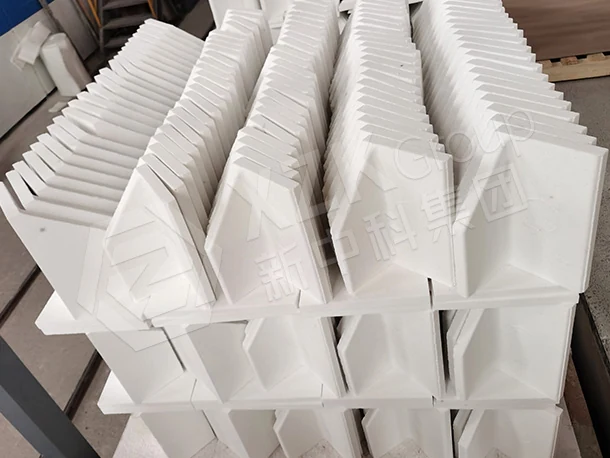
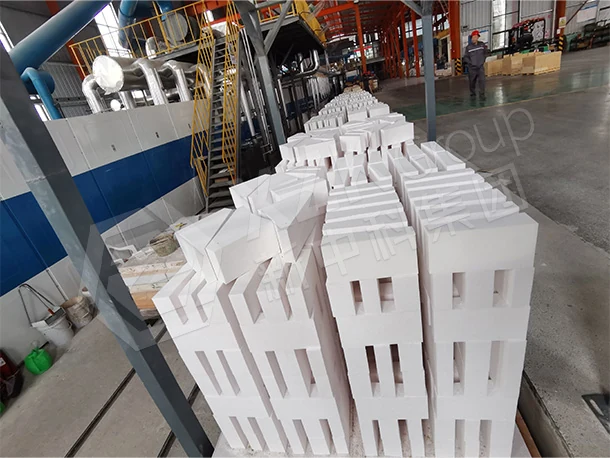
Corundum Mullite Brick for Blast Furnace Belly, Stoves & Kilns
Al₂O₃ 80–90% · BD ≥2.75–3.00 g/cm³ · CCS ≥85–90 MPa · RUL ≥1700 °C · Creep ≤0.3% — thermal shock and creep in one grade.
Specifications of XZK Corundum Mullite Brick
Manufactured strictly in accordance with ASTM, ISO, and YB/T metallurgical refractory standards.
| Property | XZK-CM80 | XZK-CM85 | XZK-CM90 |
|---|---|---|---|
| Al₂O₃ (%) ≥ | 80 | 85 | 90 |
| Fe₂O₃ (%) ≤ | 0.15 | 0.20 | 0.20 |
| Bulk Density (g/cm³) ≥ | 2.75 | 2.90 | 3.00 |
| Apparent Porosity (%) ≤ | 18 | 17 | 17 |
| Cold Crushing Strength (MPa) ≥ | 85 | 90 | 90 |
| Refractoriness Under Load (0.2 MPa, °C) ≥ | 1700 | 1700 | 1700 |
| Thermal Shock Resistance (1100 °C water, cycles) ≥ | 7 | 15 | — |
| Creep Rate (1500 °C × 5–50 h, %) ≤ | 0.3 | 0.3 | — |
Values are typical production averages, not guaranteed minima. A batch-specific Certificate of Analysis is issued for every shipment; third-party inspection (SGS / BV / TÜV) can be arranged on request.
| Property Reported Above | ASTM | ISO | GB/T |
|---|---|---|---|
| Chemical composition — Al₂O₃, SiO₂, Fe₂O₃, TiO₂, alkali oxides | ASTM C573 | ISO 12677 | GB/T 6900 |
| Apparent porosity and bulk density | ASTM C20 | ISO 5017 | GB/T 2997 |
| Cold crushing strength | ASTM C133 | ISO 10059-1 | GB/T 5072 |
| Hot modulus of rupture (elevated temperature) | ASTM C583 | ISO 5013 | GB/T 3002 |
| Refractoriness under load (0.2 MPa, rising temperature) | ASTM C16 | ISO 1893 | GB/T 5989 |
| Creep in compression | ASTM C832 | ISO 3187 | GB/T 5073 |
| Thermal shock resistance | ASTM C1171 | — | GB/T 30873 |
Every value in the tables above is determined by the method stated in this reference table, and the method is identified on the batch Certificate of Analysis. Where a property is not covered by a directly corresponding ISO method, the ASTM or GB/T method is applied as the reference method and stated accordingly. Third-party verification (SGS / BV / TÜV) can be arranged on request.
About XZK Corundum Mullite Brick
Corundum mullite brick exists because two desirable properties pull in opposite directions. Corundum gives you refractoriness and slag resistance but spalls under repeated thermal cycling. Mullite gives you thermal shock tolerance and low thermal expansion but creeps under sustained load. Corundum-mullite carries enough of each to be usable where both matter — which turns out to be a lot of real furnace zones.
Reading the Grade Series
Our CM series runs 80 to 90% Al₂O₃, and the trade is explicit:
- XZK-CM90 — most corundum, best slag resistance and density (3.00 g/cm³), selected where chemical attack and temperature dominate.
- XZK-CM85 — the balance point, and the grade with the best documented thermal shock rating at 15 cycles (1100 °C water quench). The usual default for cycled high-temperature zones.
- XZK-CM80 — lower peak temperature and moderate load, where the mullite contribution is doing most of the work.
Note that CM90 carries no published thermal shock figure. That is deliberate: we do not publish a number we do not test consistently. If shock resistance is your controlling property, we will steer you to CM85.
Creep Is the Property People Forget
Corrosion gets the attention, but deformation ends more long campaigns than chemistry does. Under sustained compressive load at temperature, refractory slowly changes shape; joints open, arches flatten, and the structure loses stability while the brick still has most of its thickness. Holding creep to ≤0.3% at 1500 °C is what keeps geometry intact over a multi-year campaign, and it is the number worth asking any supplier for when the zone is loaded.
Typical Zones
- Blast furnace bosh and belly — high heat load plus cycling, usually evaluated alongside Si₃N₄-bonded SiC.
- Hot blast stove domes and combustion chambers — low creep plus changeover cycling.
- Ladle working and safety linings — where cycling rules out pure corundum.
- Tunnel and shuttle kiln hot faces — car linings, burner zones and crowns.
Manufacturing and Documentation
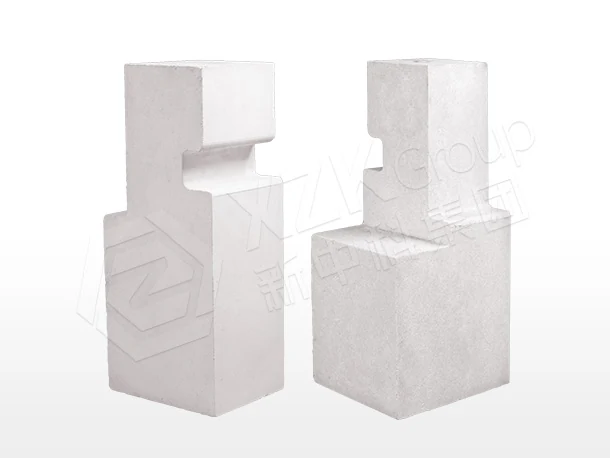
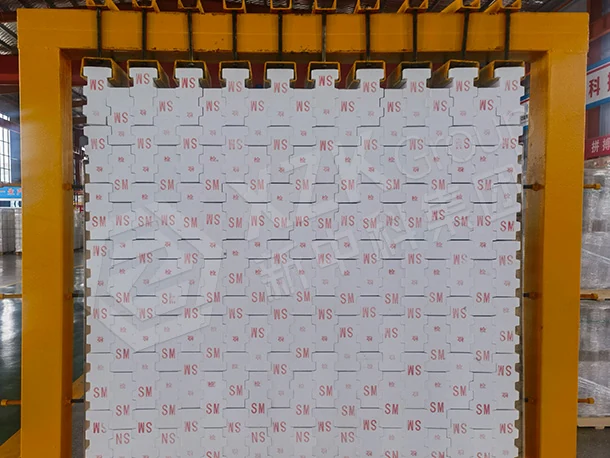
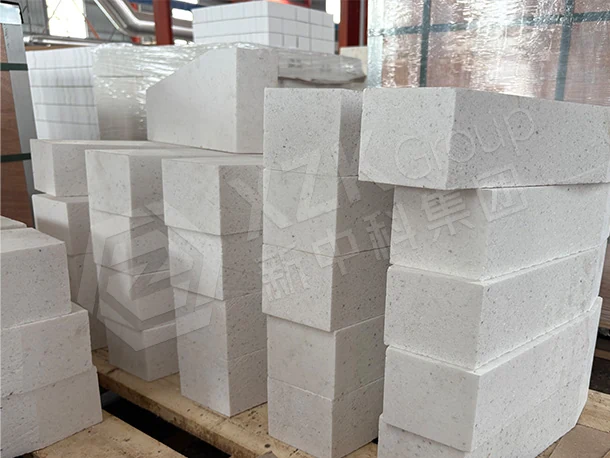
XZK corundum mullite bricks are pressed on 2,000-ton class CNC hydraulic presses and fired on controlled curves to develop the mullite bond. Bulk density and porosity per ASTM C830, crushing strength per ASTM C133, RUL per ISO 1893, creep per ISO 3187 and chemistry per GB/T 6900 are tested per batch, with a Certificate of Analysis on every shipment. Custom shapes and precast blocks are produced to drawing with ground seating faces and dry trial-fitting.
Where This Grade Sits in the Lining System
Corundum and high-alumina grades earn their place on hot strength and creep resistance, and those properties only pay back if the surrounding zones survive as long as they do. Putting the strongest brick into the harshest zone and leaving the rest to habit is how most of the refractory budget is actually lost.
XZK supplies corundum mullite brick as one zone of a zoned package rather than as a standalone item: the grades normally zoned alongside it — among them corundum brick — are documented on the corundum and high-alumina refractories page, and the vessel-level architecture — where each zone starts and ends, and which mechanism actually limits the campaign — is set out on the blast furnace and hot blast stove pages.
For a complete vessel programme built on this class of material, including the wear survey that set the zoning, see the MMK Magnitogorsk No.10 BF and 375 t ladle programme project reference.
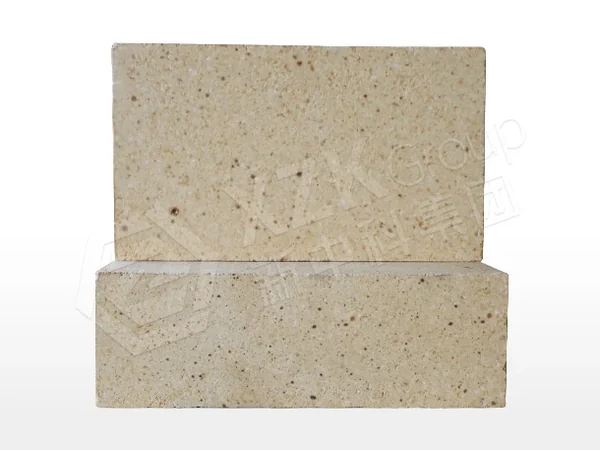
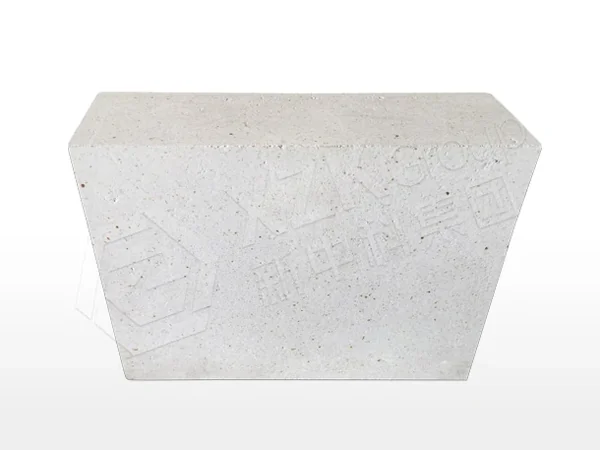
Corundum Mullite Brick — Production & Application Scenarios
Premium raw materials, CNC pressing, high-temp firing, and on-site installation.
Advantages of Choosing XZK Corundum Mullite Brick
The Balance Point Between Two Failure Modes
Pure corundum resists slag but spalls under cycling; pure mullite survives cycling but creeps under load. Corundum-mullite carries enough corundum for refractoriness and enough mullite for shock and creep resistance — which is why it is specified for cycled, loaded, high-temperature zones.
Low Creep at Sustained Load
Creep rate is held to ≤0.3% at 1500 °C, so the brick keeps its shape and the lining keeps its geometry over a long campaign rather than slowly deforming under its own load.
Real Thermal Shock Resistance
XZK-CM85 is rated at 15 cycles at 1100 °C water quench, roughly double the lower grade, which matters in zones that see frequent temperature swings during tapping, charging or burner cycling.
High Strength with Manageable Density
Cold crushing strength to 90 MPa at densities from 2.75 to 3.00 g/cm³ gives mechanical reserve without the thermal mass and cost of a full corundum body.
Specific Applications of Corundum Mullite Brick
Proven performance across diverse heavy industrial thermal equipment.
Blast Furnace Bosh, Belly & Lower Stack
Zones combining high heat load, alkali exposure and thermal cycling, where a nitride-bonded SiC or corundum-mullite grade is normally selected.
Hot Blast Stove Domes & Combustion Chambers
High-temperature dome and upper checker zones requiring low creep and thermal shock resistance through repeated stove changeovers.
Steel Ladle Working & Safety Linings
Backup and selected working zones where cycled thermal load rules out pure corundum.
Ceramic & Refractory Tunnel Kilns
Hot-face car linings, burner zones and crown areas where cycling and load coexist.
400+ Furnaces Trust XZK Refractory Solutions
Over 75% of our international steel and kiln clients continue multi-year long-term procurement partnerships.
We had been choosing between corundum and mullite and getting half of each problem. The corundum-mullite grade gave us the shock resistance without giving up refractoriness.
Creep was the number our engineering team cared about. At 0.3% the stove dome geometry is holding as designed.
Thermal shock rating was twice the alternative and it shows — far less spalling after changeovers than the previous lining.
They machined the arch shapes to drawing and numbered every course. Installation was straightforward.
Frequently Asked Engineering Questions
Click any question to expand; only one answer is shown at a time.
How do I choose between XZK-CM80, CM85 and CM90?
Work down from the service temperature and slag severity, and up from the cycling severity. CM90 carries the most corundum and the best slag resistance but the least documented shock data; CM85 has the best documented thermal shock rating (15 cycles) and is the usual default for cycled high-temperature zones; CM80 suits moderately loaded zones with lower peak temperature.
Why does CM90 have no thermal shock figure listed?
Because we do not publish a value we do not test consistently for that grade. If thermal shock resistance is your controlling property, we would steer you to CM85, which is tested and rated. We would rather leave a cell blank than put a number on it that we cannot stand behind.
What does creep rate actually predict?
How much the brick deforms under sustained compressive load at temperature. In a stove dome or a loaded hot face, high creep means the lining slowly changes geometry, joints open, and the structure loses stability long before the brick is chemically consumed.
Is corundum-mullite suitable for the blast furnace bosh?
Yes, and it is frequently specified there alongside Si₃N₄-bonded SiC, depending on the cooling configuration and the alkali load. Send us the furnace drawing and cooling design and we will recommend which is justified for each zone.
Can you supply precast blocks and special shapes?
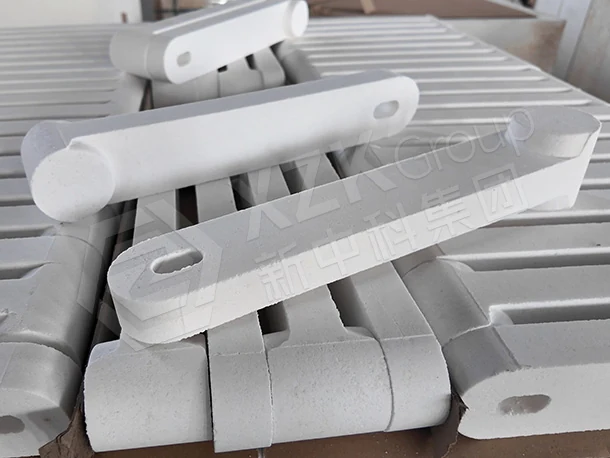
Yes. Large blocks, arch and wedge shapes, burner surrounds and precast corundum-mullite components are all produced to drawing, with critical faces ground and assemblies dry trial-fitted before shipment.
What is the MOQ and lead time?
10 metric tons for standard shapes in 7–14 days; 20 metric tons for custom shapes and precast blocks in 20–35 days including tooling.
What test data is supplied?
Bulk density and apparent porosity per ASTM C830, cold crushing strength per ASTM C133, refractoriness under load per ISO 1893, creep per ISO 3187 and chemical analysis per GB/T 6900. Batch COA ships with every lot.
How is the material packed?
Palletised at 1.0–1.2 metric tons on ISPM-15 fumigated pallets with PE wrap, edge protectors and moisture-barrier liner. Machined and precast items are individually protected.
Related Refractories & Lining Materials
Explore complementary refractory brick grades and monolithic materials for your furnace relining.
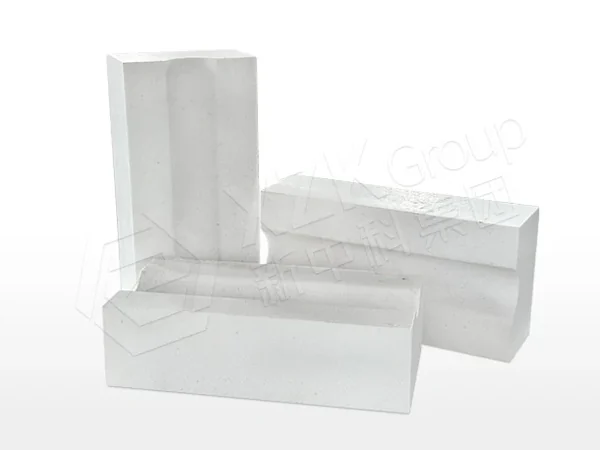
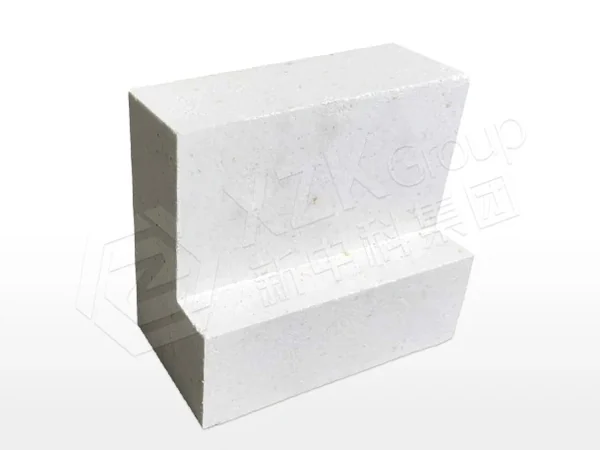
Get Your Corundum Mullite Brick Quote within 12 Hours
Please specify your refractory requirements by referring to the following aspects:
- ✓ Target Application: Furnace type, lining position (slag line, hearth, roof)
- ✓ Technical Specs: Operating temperature, slag chemistry, chemistry requirements
- ✓ Quantity & Dimensions: Tonnage requirement, standard or custom CAD drawing
- ✓ Delivery Terms: FOB Qingdao/Tianjin, CIF destination port
Why Steel Plants Choose XZK Refractories
Zonal Engineering, Not Just Bricks
Every proposal is a zone-by-zone material schedule matched to your furnace profile and operating practice — so all zones reach end-of-life together.
Source Factory Consistency
Fully automatic CNC batching and zero-defect quality control keep batch-to-batch variation at laboratory level.
Proven Global References
Supplied to Baosteel, Shougang, Hyundai Steel, JSW, Severstal, MMK and 400+ furnace projects across 60+ countries.
Full-Lifecycle Service
Lining design, masonry supervision, heat-up curves and failure analysis — plus EPC turnkey delivery for new builds and relines.
Send Us Your Furnace Drawing
Our engineers will return a zonal lining proposal with material schedule and quotation within 48 hours — even for non-standard shapes.
- Free material feasibility review
- Zonal architecture & installation drawings
- Heat-up curve & masonry guidance
Strict ISO 9001 Process Control Across All 6 Workshops
Every batch of raw materials is chemically assayed. Finished refractory shapes undergo density, ultrasonic non-destructive testing, and pre-assembly gap verification prior to global packaging.
- Raw material ICP chemical assay on every incoming batch
- Density, porosity and cold crushing (CCS) tests per ASTM / ISO
- Ultrasonic non-destructive testing of finished shapes
- Pre-assembly gap verification before seaworthy packaging