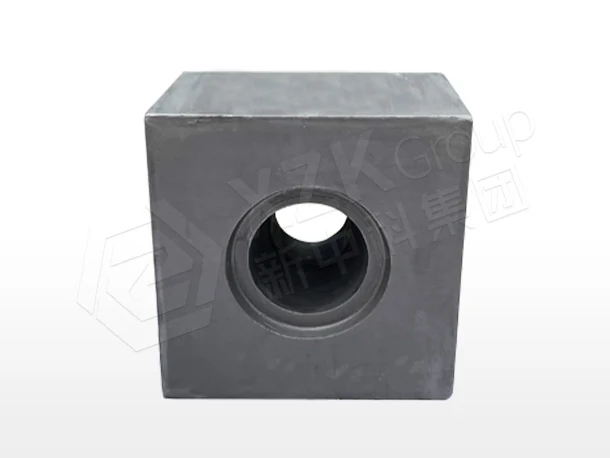
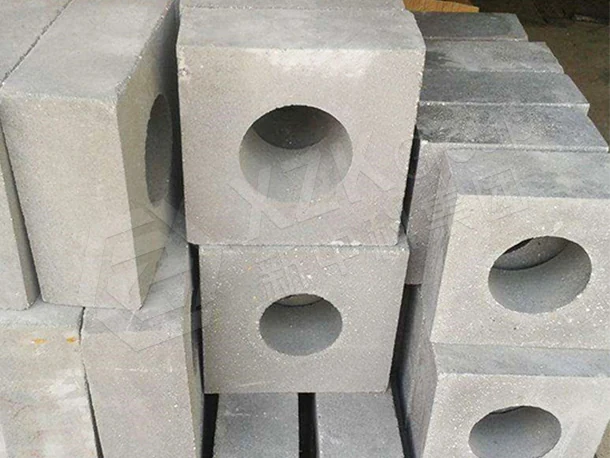
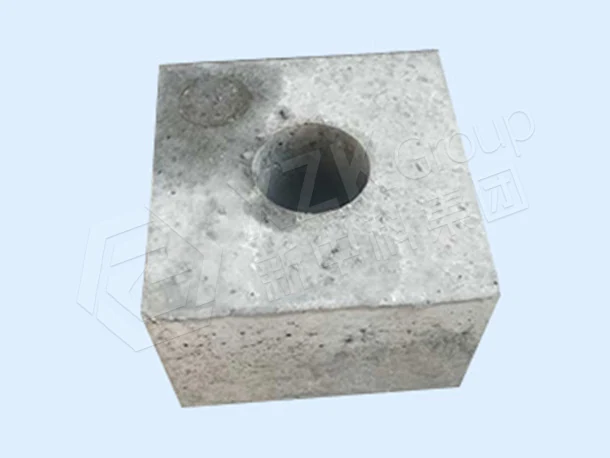
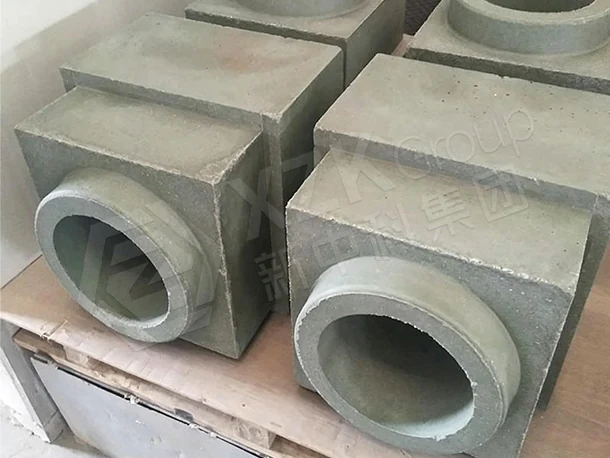
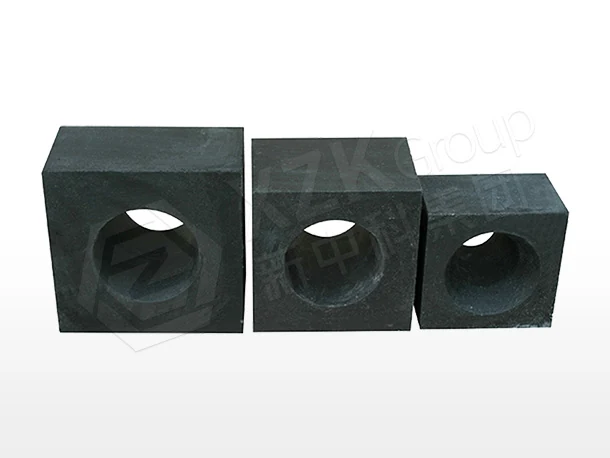
Well Block & Seat Brick for Ladle Nozzle and Purging Plug Assemblies
Al₂O₃ ≥85% / MgO ≥80% · BD ≥2.85–3.10 g/cm³ · CCS ≥60–80 MPa · RUL ≥1700 °C — machined seat faces for leak-free assembly.
Specifications of XZK Well Block (Seat Brick)
Manufactured strictly in accordance with ASTM, ISO, and YB/T metallurgical refractory standards.
| Property | Corundum-spinel | Magnesia-based |
|---|---|---|
| Al₂O₃ (%) ≥ | 85 | — |
| MgO (%) ≥ | — | 80 |
| Bulk Density (g/cm³) ≥ | 3.10 | 2.85 |
| Apparent Porosity (%) ≤ | 16 | 18 |
| Cold Crushing Strength (MPa) ≥ | 80 | 60 |
| Refractoriness Under Load (0.2 MPa, °C) ≥ | 1700 | 1700 |
Values are typical production averages, not guaranteed minima. A batch-specific Certificate of Analysis is issued for every shipment; third-party inspection (SGS / BV / TÜV) can be arranged on request.
| Property Reported Above | ASTM | ISO | GB/T |
|---|---|---|---|
| Chemical composition — MgO, CaO, SiO₂, Fe₂O₃, Al₂O₃ | ASTM C574 | ISO 12677 | GB/T 5069 |
| Apparent porosity and bulk density | ASTM C20 | ISO 5017 | GB/T 2997 |
| Cold crushing strength | ASTM C133 | ISO 10059-1 | GB/T 5072 |
| Refractoriness under load (0.2 MPa, rising temperature) | ASTM C16 | ISO 1893 | GB/T 5989 |
Every value in the tables above is determined by the method stated in this reference table, and the method is identified on the batch Certificate of Analysis. Where a property is not covered by a directly corresponding ISO method, the ASTM or GB/T method is applied as the reference method and stated accordingly. Third-party verification (SGS / BV / TÜV) can be arranged on request.
About XZK Well Block (Seat Brick)
Well blocks and seat bricks are the least visible components in a ladle and among the most consequential. They carry the nozzle or purging plug assembly, they take the load of the steel column, and they are the barrier that stops steel finding a path around the assembly.
A Seat Problem Is a Safety Problem
When a well block does not seat properly, steel penetrates around the nozzle or plug. That shows up first as a performance issue — shorter assembly life, gas leakage, inconsistent flow — but the failure mode it leads to is serious. It is also one of the most avoidable problems in the ladle, because the cause is dimensional rather than metallurgical.
The fix is straightforward: machine the seat face to the nozzle or plug drawing, and supply the block and the component it seats as a matched set. That is why we do both.
Corundum-Spinel as the Default
Corundum-spinel is the standard seat material, and for good reason: bulk density 3.10 g/cm³, apparent porosity 16%, cold crushing strength 80 MPa, and refractoriness under load ≥1700 °C. That combination handles the mechanical load of the assembly and the thermal load of the steel without deforming.
Magnesia grades (80% MgO, 2.85 g/cm³, 60 MPa) suit specific steel grades and slag chemistries where alumina would dissolve at the contact surface — the same logic that governs the choice of a magnesia bowl rim on a nozzle.
Why RUL, Not Refractoriness
A seat brick carries load at full steel temperature for the entire heat. Refractoriness measured without load tells you when the material softens under its own weight; refractoriness under load tells you when it softens while carrying the assembly. The second is what governs whether the seat stays closed, which is why we publish RUL at ≥1700 °C for both chemistries.
Supply
Quoted per set, typically 100–300 pieces minimum, 20–35 days from drawing approval. Seat faces are ground to drawing, and dimensional inspection reports and batch test data ship with every order. Complete assemblies — block, nozzle and plug — are supplied as matched sets.
Where This Grade Sits in the Lining System
Flow-control refractories are consumed on the caster's schedule, so the specification is as much about dimensional repeatability and interchangeability with your existing mechanism as it is about composition. A plate or shroud that fits but varies by a millimetre between lots costs more in breakouts than it saves in unit price.
XZK supplies well block (seat brick) as one zone of a zoned package rather than as a standalone item: the grades normally zoned alongside it — among them purging plug — are documented on the continuous casting functional refractories page, and the vessel-level architecture — where each zone starts and ends, and which mechanism actually limits the campaign — is set out on the steel ladle and RH/VD page.
For a complete vessel programme built on this class of material, including the wear survey that set the zoning, see the JFE Steel RH degasser snorkel and ladle flow control programme project reference.
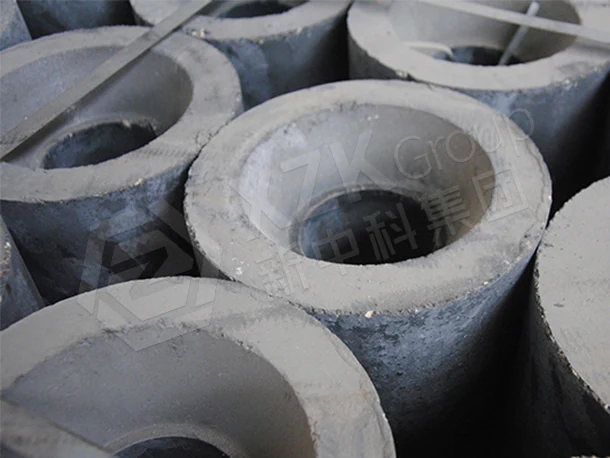
Well Block (Seat Brick) — Production & Application Scenarios
Premium raw materials, CNC pressing, high-temp firing, and on-site installation.
Advantages of Choosing XZK Well Block (Seat Brick)
Machined for a Leak-Free Seat
The seat face is ground to the nozzle or plug interface, so the assembly closes properly. This is the single most effective defence against steel penetration around the assembly.
High Density and Strength
Bulk density to 3.10 g/cm³ with crushing strength to 80 MPa on corundum-spinel grades carries the mechanical load of the nozzle assembly and the steel column above it.
RUL ≥1700 °C
The seat carries load at full steel temperature for the whole heat, so refractoriness under load — not just refractoriness — is the governing property.
Supplied as a Matched Set
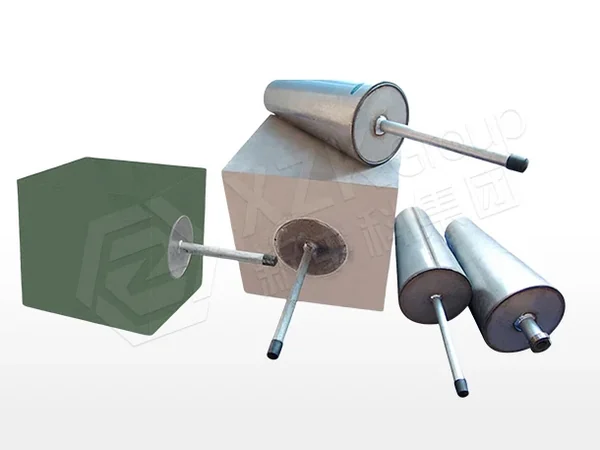
Well block, nozzle and plug are supplied as one assembly with interfaces machined to suit, rather than three parts from three sources that may not fit together.
Specific Applications of Well Block (Seat Brick)
Proven performance across diverse heavy industrial thermal equipment.
Ladle Nozzle Seat
Seat brick beneath the upper nozzle in ladle slide gate assemblies.
Purging Plug Seat
Well block seating the ladle bottom purging plug, in single and dual plug configurations.
Tundish Nozzle Seats
Seat bricks for tundish upper and metering nozzle assemblies.
400+ Furnaces Trust XZK Refractory Solutions
Over 75% of our international steel and kiln clients continue multi-year long-term procurement partnerships.
We were getting steel penetration around the plug seat. Machined well blocks from the same supplier as the plug solved it.
Density and strength were consistent and the seat faces were ground properly. No hand fitting needed.
Supplying block, nozzle and plug as one set removed the compatibility problems we used to have.
Dimensional reports with every delivery, which is what our quality system requires.
Frequently Asked Engineering Questions
Click any question to expand; only one answer is shown at a time.
Why is the well block so important?
Because it is the seat for the nozzle or plug assembly, and a poor seat leaves a path for steel to penetrate around the assembly. That is a performance failure first and a safety concern second — and it is largely avoidable through dimensional accuracy.
Corundum-spinel or magnesia?
Corundum-spinel is the standard choice for ladle nozzle and plug seats, with higher density (3.10 g/cm³) and strength (80 MPa). Magnesia grades suit specific steel grades and slag chemistries where alumina would dissolve at the contact surface.
Do you machine the seat faces?
Yes, to the nozzle or plug drawing. A ground seat face is the difference between an assembly that closes and one that has to be persuaded with mortar and hand grinding on site.
Can you supply the complete assembly?
Yes — well block, nozzle and plug as one matched set with interfaces machined to suit. This removes the compatibility risk that comes from sourcing the three parts separately.
What is the MOQ and lead time?
Quoted per set, typically 100–300 pieces minimum, with 20–35 days lead time from drawing approval.
What documentation is provided?
Dimensional inspection reports, batch physical and chemical test data and material certificates. Third-party inspection can be arranged.
How is RUL relevant for a seat brick?
The seat carries the nozzle assembly load at full steel temperature for the entire heat. A material with good refractoriness but poor refractoriness under load will deform under that load, and the seat will open up.
How are well blocks packed?
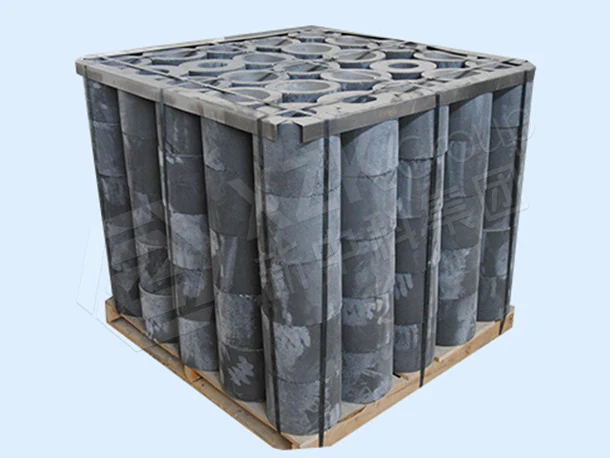
Individually boxed or palletised with edge protection on ISPM-15 heat-treated pallets, moisture-barrier wrapped, with ground faces protected.
Related Refractories & Lining Materials
Explore complementary refractory brick grades and monolithic materials for your furnace relining.
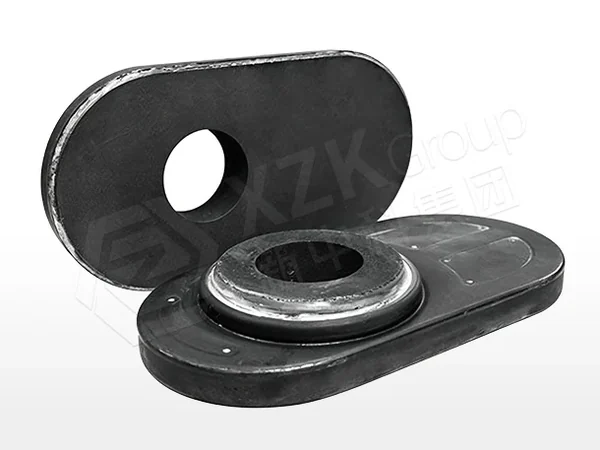
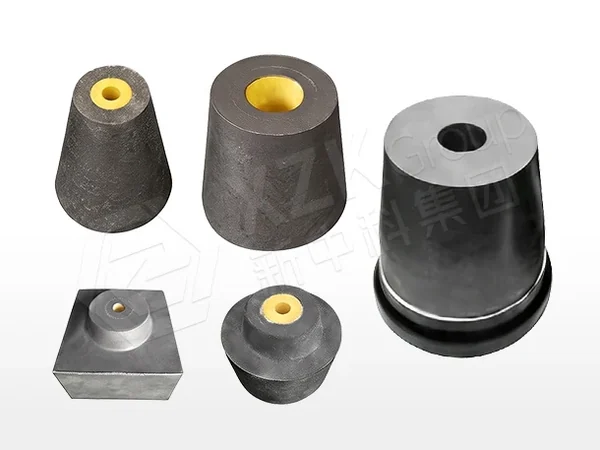
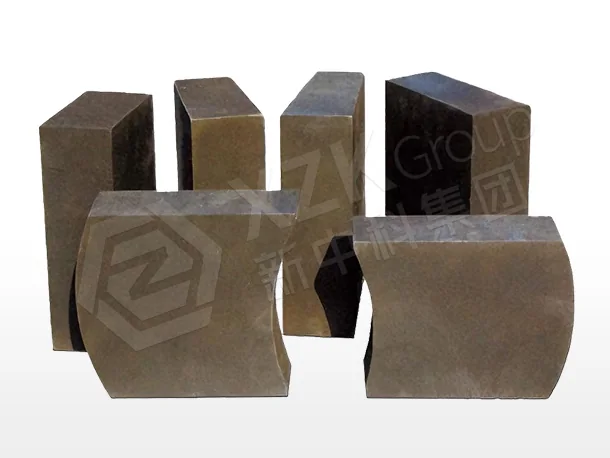
Get Your Well Block (Seat Brick) Quote within 12 Hours
Please specify your refractory requirements by referring to the following aspects:
- ✓ Target Application: Furnace type, lining position (slag line, hearth, roof)
- ✓ Technical Specs: Operating temperature, slag chemistry, chemistry requirements
- ✓ Quantity & Dimensions: Tonnage requirement, standard or custom CAD drawing
- ✓ Delivery Terms: FOB Qingdao/Tianjin, CIF destination port
Why Steel Plants Choose XZK Refractories
Zonal Engineering, Not Just Bricks
Every proposal is a zone-by-zone material schedule matched to your furnace profile and operating practice — so all zones reach end-of-life together.
Source Factory Consistency
Fully automatic CNC batching and zero-defect quality control keep batch-to-batch variation at laboratory level.
Proven Global References
Supplied to Baosteel, Shougang, Hyundai Steel, JSW, Severstal, MMK and 400+ furnace projects across 60+ countries.
Full-Lifecycle Service
Lining design, masonry supervision, heat-up curves and failure analysis — plus EPC turnkey delivery for new builds and relines.
Send Us Your Furnace Drawing
Our engineers will return a zonal lining proposal with material schedule and quotation within 48 hours — even for non-standard shapes.
- Free material feasibility review
- Zonal architecture & installation drawings
- Heat-up curve & masonry guidance
Strict ISO 9001 Process Control Across All 6 Workshops
Every batch of raw materials is chemically assayed. Finished refractory shapes undergo density, ultrasonic non-destructive testing, and pre-assembly gap verification prior to global packaging.
- Raw material ICP chemical assay on every incoming batch
- Density, porosity and cold crushing (CCS) tests per ASTM / ISO
- Ultrasonic non-destructive testing of finished shapes
- Pre-assembly gap verification before seaworthy packaging