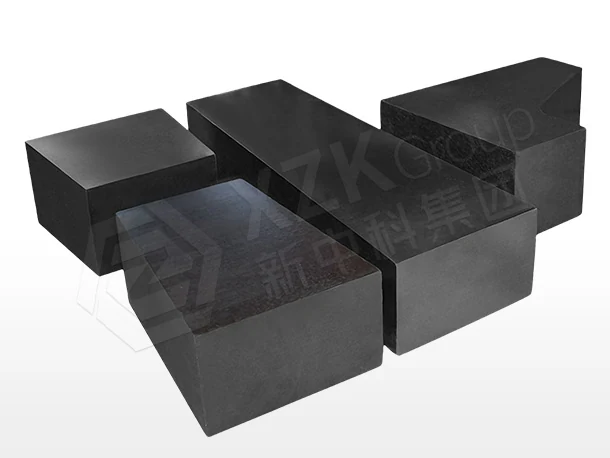
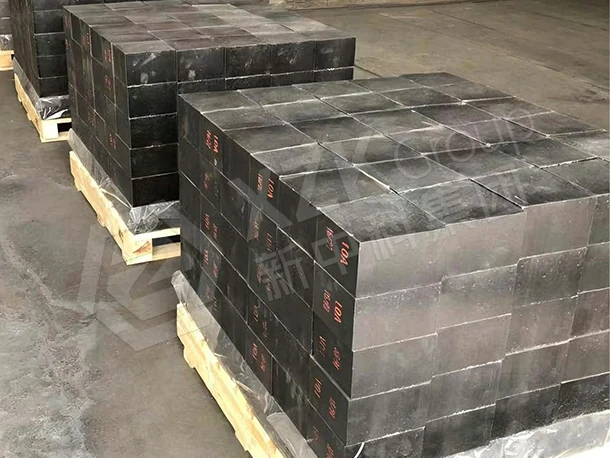
Magnesia Carbon Brick Manufacturer for BOF, EAF & Steel Ladles
MgO 72–89% · C 4–19% · Bulk density ≥2.98 g/cm³ · CCS ≥38 MPa · HMOR ≥10 MPa at 1400 °C — zonal BOF, EAF and ladle grades for synchronized campaign wear.
Specifications of XZK Magnesia Carbon Brick
Manufactured strictly in accordance with ASTM, ISO, and YB/T metallurgical refractory standards.
| Location | Brand | C (%) | MgO (%) | Apparent Porosity (%) ≤ | Bulk Density (g/cm³) ≥ | Cold Crushing Strength (MPa) ≥ | Hot MOR 1400 °C × 0.5 h (MPa) ≥ |
|---|---|---|---|---|---|---|---|
| Cone | XZK-MC-14AF3 | 15 | 76 | 3.0 | 3.05 | 43 | 10 |
| Cone | XZK-MC-16AF3 | 17 | 74 | 2.5 | 3.00 | 40 | 10 |
| Sidewall | XZK-MC-14AF2/F3 | 15 | 76 | 3.0 | 3.05 | 43 | 12 |
| Sidewall | XZK-MC-16AF2/F3 | 17 | 74 | 2.5 | 3.00 | 40 | 10 |
| Sidewall | XZK-MC-18AF2/F3 | 19 | 72 | 2.0 | 2.98 | 38 | 10 |
| Slag Line / Metal Zone | XZK-MC-14AF1/F2 | 15 | 77 | 3.0 | 3.05 | 43 | 14 |
| Slag Line / Metal Zone | XZK-MC-16AF1/F2 | 17 | 75 | 2.5 | 3.00 | 40 | 12 |
| Slag Line / Metal Zone | XZK-MC-18AF1/F2 | 19 | 73 | 2.0 | 2.98 | 38 | 12 |
| Bottom | XZK-MC-14AF1/F2 | 15 | 76 | 3.0 | 3.05 | 43 | 12 |
| Bottom | XZK-MC-16AF1/F2 | 17 | 74 | 2.5 | 3.00 | 40 | 10 |
| Bottom | XZK-MC-18AF1/F2 | 19 | 72 | 2.0 | 2.98 | 38 | 10 |
| Purging Plug | XZK-MC-14AF1 | 15 | 77 | 3.0 | 3.05 | 40 | 14 |
| Purging Plug | XZK-MC-18AF1 | 19 | 73 | 2.0 | 2.98 | 38 | 12 |
| Protective Block | XZK-MC-14AF1 | 15 | 77 | 3.0 | 3.05 | 40 | 14 |
| Taphole Seating Block | XZK-MC-12AF1/F2 | 13 | 79 | 4.0 | 2.98 | 40 | 14 |
| Taphole Sleeve Block | XZK-MC-12AF1/F2 | 13 | 79 | 3.0 | 3.05 | 42 | 14 |
| Safety Lining (low carbon) | XZK-MC-4F3 | 4 | 89 | 6.0 | 3.05 | 50 | — |
| Location | Brand | C (%) | MgO (%) | Al₂O₃ (%) | Apparent Porosity (%) ≤ | Bulk Density (g/cm³) ≥ | Cold Crushing Strength (MPa) ≥ | Hot MOR 1400 °C × 0.5 h (MPa) ≥ |
|---|---|---|---|---|---|---|---|---|
| Slag Line / Hot Spot | XZK-MC-12AF2/F3 | 13 | 79 | — | 3.5 | 3.07 | 48 | 10 |
| Slag Line / Hot Spot | XZK-MC-14AF2/F3 | 15 | 77 | — | 3.0 | 3.05 | 43 | 12 |
| Slag Line / Hot Spot | XZK-MC-18AF2/F3 | 19 | 73 | — | 2.0 | 2.98 | 38 | 12 |
| Sidewall | XZK-MC-8F3 | 9 | 84 | — | 4.0 | 3.10 | 55 | 10 |
| Sidewall | XZK-MC-12F3 | 13 | 79 | — | 3.5 | 3.07 | 48 | 10 |
| Taphole Seating Block | XZK-MC-12AF1/F2 | 13 | 79 | — | 4.0 | 2.98 | 40 | — |
| Taphole Sleeve Block | XZK-MC-12AF1/F2 | 13 | 79 | — | 3.0 | 3.05 | 42 | — |
| EBT Taphole End Block | XZK-ASC-16F1 | 17 | — | 73 | 5.0 | 3.10 | 40 | — |
| EBT Taphole End Block | XZK-ASC-12F1 | 13 | — | 78 | 6.0 | 3.13 | 45 | — |
| Location | Brand | C (%) | MgO (%) | Al₂O₃ (%) | Apparent Porosity (%) ≤ | Bulk Density (g/cm³) ≥ | Cold Crushing Strength (MPa) ≥ | Hot MOR 1400 °C × 1.5 h (MPa) ≥ |
|---|---|---|---|---|---|---|---|---|
| Lip | XZK-MC-14AF3 | 10 | 30 | 46 | 5.0 | 2.95 | 70 | — |
| Slag Line | XZK-MC-14AF1/F2 | 15 | 77 | — | 3.0 | 3.05 | 45 | 12 |
| Slag Line | XZK-MC-16AF1/F2 | 17 | 75 | — | 2.5 | 3.00 | 40 | 12 |
| Slag Line | XZK-AMC-10AF2 | 11 | 25 | 55 | 5.0 | 3.20 | 60 | — |
| Slag Line | XZK-AMC-10AS | 11 | 25 | 50 | 6.0 | 3.10 | 55 | — |
| Sidewall | XZK-AMC-10AFS | 11 | 25 | 52 | 5.5 | 3.15 | 55 | — |
| Sidewall | XZK-AMC-10ASF | 11 | 25 | 50 | 6.0 | 3.10 | 55 | — |
| Sidewall | XZK-MC-10AF3 | 11 | 81 | — | 4.0 | 3.10 | 50 | — |
| Transition | XZK-MAC-10AF2 | 11 | 54 | 25 | 4.0 | 3.10 | 55 | — |
| Transition | XZK-MAC-10AFS | 11 | 52 | 25 | 4.5 | 3.05 | 50 | — |
| Bottom | XZK-AMC-10AF2 | 11 | 25 | 55 | 5.0 | 3.20 | 60 | — |
| Bottom | XZK-AMC-10AS | 11 | 25 | 50 | 6.0 | 3.05 | 50 | — |
| Bottom | XZK-MC-10AF3 | 11 | 81 | — | 3.5 | 3.10 | 50 | — |
Values are typical production averages, not guaranteed minima. Test methods: bulk density and apparent porosity per ASTM C830; cold crushing strength per ASTM C133; hot modulus of rupture per ASTM C583; chemical analysis per GB/T 5069. A batch-specific Certificate of Analysis is issued for every shipment, and third-party inspection (SGS / BV) can be arranged on request.
| Property Reported Above | ASTM | ISO | GB/T |
|---|---|---|---|
| Chemical composition — MgO, CaO, SiO₂, Fe₂O₃, Al₂O₃ | ASTM C574 | ISO 12677 | GB/T 5069 |
| Carbon / SiC content (carbon-bearing grades) | ASTM C571 | — | GB/T 17732 |
| Apparent porosity and bulk density | ASTM C20 | ISO 5017 | GB/T 2997 |
| Cold crushing strength | ASTM C133 | ISO 10059-1 | GB/T 5072 |
| Hot modulus of rupture (carbon-bearing grades) | ASTM C1099 | ISO 5013 | GB/T 13243 |
Every value in the tables above is determined by the method stated in this reference table, and the method is identified on the batch Certificate of Analysis. Where a property is not covered by a directly corresponding ISO method, the ASTM or GB/T method is applied as the reference method and stated accordingly. Third-party verification (SGS / BV / TÜV) can be arranged on request.
About XZK Magnesia Carbon Brick
Magnesia carbon brick (MgO-C) is the load-bearing working lining of modern primary steelmaking. It survives where no oxide brick can, because graphite does the three things magnesia alone cannot: it refuses to be wetted by basic slag, it carries heat away from the hot face fast enough to keep the brick below its softening range, and it gives the lining the compliance it needs to absorb thermal cycling without spalling.
XZK does not sell a single "MgO-C brick". We supply a zonal grade matrix — 4% to 19% carbon, 72% to 89% MgO, five antioxidant formulations — and we assign one grade to each wear zone of your vessel so that every zone reaches the end of the campaign at approximately the same time. That is what turns refractory from a consumable cost into a campaign-design variable.
Why Carbon Content Is Only Half the Story
Most suppliers quote carbon content as if it were a quality grade. It is not — it is a position specification. Carbon raises slag resistance and thermal conductivity but lowers hot strength and oxidation resistance. The right carbon level is therefore a function of where the brick sits:
- Charge pad and cone (14–17% C) — mechanical impact from scrap and hot metal dominates. The grade is tuned for high cold crushing strength (≥40–43 MPa) and toughness, not maximum carbon.
- Slag line and metal zone (14–19% C) — chemical dissolution by FeO-rich, high-basicity slag dominates. Carbon is raised and MgO purity pushed to 77% to slow dissolution.
- Safety / permanent lining (4% C, 89% MgO) — carbon is deliberately minimised to protect steel cleanliness and to keep thermal conductivity low, while bulk density (≥3.05 g/cm³) and strength (≥50 MPa) are maximised.
- Clean-steel ladle grades (10–11% C) — for IF, LF-VD and RH routes where carbon pickup into ultra-low-carbon steel is a reject risk.
Zonal Grade Engineering: One Vessel, Many Materials
A 300 t BOF lining consumes roughly 14 distinct brick positions. Lining it with one grade guarantees that the harshest zone fails first and the rest of the vessel is relined prematurely. XZK's approach, applied on converters from 100 t to 350 t and ladles from 80 t to 400 t, is to map the vessel into zones, assign a grade to each, and balance residual thickness at campaign end — the principle we call synchronized wear.
The practical output is a lining drawing with a grade per zone, a consumption forecast per zone, and a projected campaign life with the controlling failure mode identified. That drawing is free with any enquiry and takes our engineers 24–48 hours from receipt of your vessel data.
The Antioxidant Package — Where MgO-C Bricks Actually Fail
Carbon oxidation, not slag corrosion, is the dominant life limiter in most converters. Once oxygen or FeO reaches the graphite, the brick loses its slag barrier, porosity climbs, and slag penetration accelerates. XZK grades carry metallic aluminium, silicon and SiC/B₄C additions matched to the service temperature:
- Al and Si react preferentially with oxygen, forming Al₄C₃ / SiC and then a secondary MgO-rich dense layer that physically blocks further oxygen ingress.
- SiC and B₄C extend protection into the 1400–1600 °C window, raising hot modulus of rupture from 10 MPa to 12–14 MPa in our AF1/F2 grades.
- High-temperature flex — hot modulus of rupture at 1400 °C × 0.5 h is measured on every production batch, not just at type approval.
Manufacturing and Batch Consistency
XZK MgO-C bricks are pressed on 2,000-ton class CNC hydraulic presses from automatically weighed batches, then tempered under controlled atmosphere. Large-crystal fused magnesite (MgO ≥97%) and high-crystallinity flake graphite are used for all slag-line and metal-zone grades; the resin binder system is selected for low volatile content to prevent pore formation during tempering.
- Apparent porosity held at ≤2.0–4.0% depending on grade — the single most reliable predictor of slag penetration depth.
- Every batch ships with a Certificate of Analysis covering chemistry, bulk density, apparent porosity, CCS and HMOR.
- Third-party verification (SGS, BV, or your nominated inspector) can be arranged before shipment, with witnessed sampling.
- Dimensional tolerance on pressed shapes controlled to ±1.0 mm on critical seating faces for taphole and purging plug assemblies.
Storage, Preheating and Installation Guidance
- Shelf life: 6 months in original sealed packaging, stored dry and under cover. Resin-bonded MgO-C loses strength if stored wet or above 40 °C — we date-stamp every pallet.
- Preheating: for ladles, follow a controlled ramp; rapid heat-up above 600 °C in the first hour is the most common cause of early-life spalling that is wrongly blamed on brick quality.
- First heat: avoid extended holding of high-FeO slag against a fresh lining; a short slag-coating practice in the first 2–3 heats measurably extends campaign life.
- Maintenance: pair with XZK magnesia gunning mix (XZK-MG-80) for slag-line repair to level the wear profile between planned relines.
What We Need From You to Engineer Your Lining
Send the following and you will receive a zonal lining proposal, grade-by-grade, within 48 hours:
- Vessel type and capacity (BOF / EAF / ladle, tonnage, and whether combined blowing or EBT is used)
- Steel grades produced and refining route (LF, RH, VD, CAS-OB)
- Slag basicity (CaO/SiO₂) and FeO content, plus tapping temperature
- Current campaign life and the zone that controls it (with photos if available)
- Drawings or a sketch of the existing lining, or simply the old brick dimensions
Related systems: MgO-C is only one element of the vessel. See our BOF Converter Lining Solution, Electric Arc Furnace Solution and Steel Ladle & RH/VD Solution for the full zonal architecture, and our Purging Plug and Well Block for bottom gas stirring assemblies.
Where This Grade Sits in the Lining System
Carbon-bonded basic grades are never specified in isolation. Carbon level, antioxidant package and bulk density are all set by the zone, and the zone map is set by the vessel — which is why a grade that performs well in one position can fail early in the next.
XZK supplies magnesia carbon brick as one zone of a zoned package rather than as a standalone item: the grades normally zoned alongside it — among them alumina-magnesia carbon brick — are documented on the magnesia-carbon and basic refractories page, and the vessel-level architecture — where each zone starts and ends, and which mechanism actually limits the campaign — is set out on the BOF converter and electric arc furnace pages.
For a complete vessel programme built on this class of material, including the wear survey that set the zoning, see the ArcelorMittal Kryvyi Rih 300 t BOF lining programme project reference.
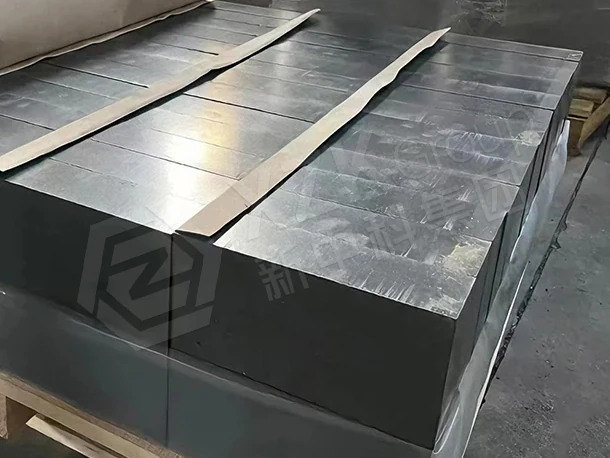
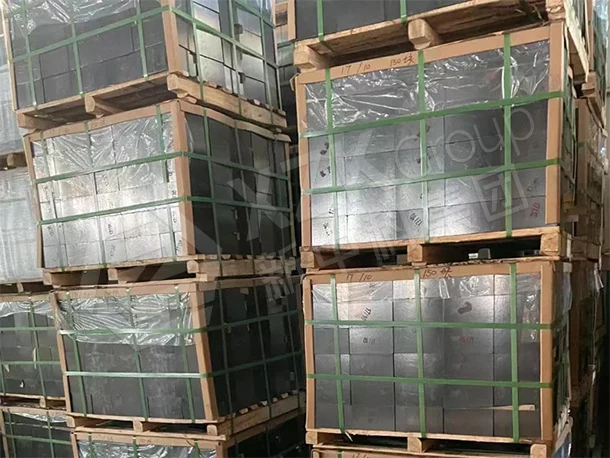
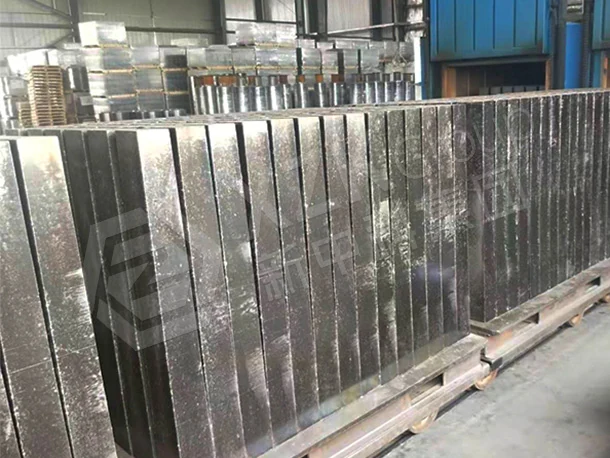
Magnesia Carbon Brick — Production & Application Scenarios
Premium raw materials, CNC pressing, high-temp firing, and on-site installation.
Advantages of Choosing XZK Magnesia Carbon Brick
Zonal Grade Matching, Not One-Size-Fits-All
Every vessel zone (cone, sidewall, slag line, bottom, taphole, purging plug, safety lining) gets its own carbon level, MgO purity and antioxidant package, so all zones reach end-of-campaign together instead of the weakest zone dictating the reline date.
Antioxidant-Engineered Carbon
Aluminium, silicon and SiC/B₄C additions react preferentially with oxygen to form a dense secondary MgO layer that blocks further oxidation — the single biggest life limiter in MgO-C linings. Hot modulus of rupture rises from 10 to 14 MPa in our AF1/F2 grades.
Large-Crystal Fused Magnesite
Slag-line and metal-zone grades use ≥97% MgO large-crystal fused magnesite with high-crystallinity flake graphite and low-volatile resin, holding apparent porosity at 2.0–4.0% — the most reliable predictor of slag penetration depth.
Lower Refractory Cost per Ton of Steel
Synchronized wear eliminates the premature relining caused by a single failing zone. Combined with gunning maintenance (XZK-MG-80), plants typically cut refractory consumption per ton and reduce reline downtime.
Specific Applications of Magnesia Carbon Brick
Proven performance across diverse heavy industrial thermal equipment.
BOF Converter
Complete zonal lining: cone, sidewall, slag line and metal zone, bottom, purging plug and protective blocks, taphole seating and sleeve blocks, plus a 4% carbon safety lining. Applied on converters from 100 t to 350 t with and without combined blowing.
Electric Arc Furnace
Hot spots and slag line (XZK-MC-12/14/18AF2-F3), general sidewall (XZK-MC-8F3 / 12F3) and the full EBT taphole assembly including ASC end blocks — for UHP AC, DC and shaft furnaces from 60 t to 160 t.
Steel Ladle
Slag-line MgO-C (XZK-MC-14/16AF1-F2), low-carbon clean-steel grades (XZK-MC-10AF3), spinel-forming AMC sidewall and bottom grades (XZK-AMC-10AF2/AS/AFS) and MAC transition bricks (XZK-MAC-10AF2) for LF, RH, VD and CAS-OB routes.
400+ Furnaces Trust XZK Refractory Solutions
Over 75% of our international steel and kiln clients continue multi-year long-term procurement partnerships.
We used to reline on the slag line calendar and scrap a sidewall that still had 60 mm left. After XZK split the vessel into zones and gave each one its own grade, the whole lining now comes down together — that change alone moved our campaign from 9,000 to over 12,000 heats.
The batch-to-batch dimensional consistency is what convinced us. Taphole seating blocks arrived within ±1 mm on every pallet, which cut our seat preparation time significantly during the reline.
We run ultra-low-carbon grades through LF and RH, so carbon pickup is a constant worry. The 10–11% carbon ladle grades they specified held our heat chemistry inside specification without sacrificing slag-line life.
Every shipment came with a full COA covering chemistry, density, porosity, CCS and hot MOR. Our incoming inspection passed first time on four consecutive containers — that is not our usual experience.
Frequently Asked Engineering Questions
Click any question to expand; only one answer is shown at a time.
How do I choose the right carbon content for each BOF zone?
Carbon is a position specification, not a quality grade. Higher carbon (16–19%) improves slag resistance and thermal conductivity but lowers hot strength, so it belongs at the slag line and metal zone. Lower carbon with higher strength (14–16%) suits the cone and charge pad where scrap impact dominates. The safety lining drops to 4% carbon with 89% MgO to protect steel cleanliness. Send us your vessel tonnage, slag basicity and current campaign life and we will return a zone-by-zone grade map within 48 hours.
What causes MgO-C bricks to fail prematurely, and how does XZK mitigate it?
In most converters the life limiter is carbon oxidation rather than slag corrosion. Once oxygen or FeO reaches the graphite, the slag barrier is lost, porosity climbs and penetration accelerates. XZK grades carry Al, Si, SiC and B₄C antioxidants matched to the service temperature; these react first and build a dense secondary MgO layer that blocks further oxygen ingress.
Can you match a grade we are currently buying from another supplier?
In most cases yes. Send us the current TDS or a sample and we will reverse-match chemistry, bulk density, porosity, CCS and hot MOR, then quote an equivalent XZK grade with test data. Where an exact match is not possible we will tell you which property differs and what the practical consequence is in service.
What campaign life improvement can we realistically expect?
That depends entirely on which zone currently controls your campaign. Where a single zone is failing well ahead of the rest, re-grading that zone typically delivers the largest gain because the whole vessel stops being relined on its weakest point. We will give you a projection only after reviewing your operating data — we do not quote generic percentage improvements.
What is the MOQ and lead time for magnesia carbon bricks?
Standard grades: 10 metric tons, shipping in 7–14 days. Custom zonal packages and special shapes: 20 metric tons, 20–35 days including tooling. Taphole and purging plug assemblies are quoted per set. FOB Qingdao or Tianjin, CIF to your port, and door-to-door are all supported.
Do you supply custom shapes and pre-assembled blocks?
Yes — a large share of our output is made to customer drawings, including taphole seating and sleeve blocks, purging plug protective blocks, EBT end blocks and ladle lip blocks. We also offer diamond-machined pre-assembly and dry trial-fitting of critical assemblies before shipment to shorten your reline window.
How are the bricks packed for sea freight, and what is the shelf life?
Palletised at 1.0–1.2 MT on ISPM-15 fumigated wooden pallets with PE stretch wrap, edge protectors and a moisture-barrier liner. Every pallet is date-stamped; shelf life is 6 months in original sealed packaging stored dry, under cover and below 40 °C. Resin-bonded MgO-C loses strength if stored wet.
Can you provide third-party inspection and full documentation?
Yes. Every shipment carries a Certificate of Analysis covering chemistry, bulk density, apparent porosity, CCS and hot MOR. SGS or BV inspection with witnessed sampling can be arranged before shipment, and we can work to your own inspector's protocol. Test methods follow ASTM C830, C133, C583 and GB/T 5069.
Related Refractories & Lining Materials
Explore complementary refractory brick grades and monolithic materials for your furnace relining.
Get Your Magnesia Carbon Brick Quote within 12 Hours
Please specify your refractory requirements by referring to the following aspects:
- ✓ Target Application: Furnace type, lining position (slag line, hearth, roof)
- ✓ Technical Specs: Operating temperature, slag chemistry, chemistry requirements
- ✓ Quantity & Dimensions: Tonnage requirement, standard or custom CAD drawing
- ✓ Delivery Terms: FOB Qingdao/Tianjin, CIF destination port
Why Steel Plants Choose XZK Refractories
Zonal Engineering, Not Just Bricks
Every proposal is a zone-by-zone material schedule matched to your furnace profile and operating practice — so all zones reach end-of-life together.
Source Factory Consistency
Fully automatic CNC batching and zero-defect quality control keep batch-to-batch variation at laboratory level.
Proven Global References
Supplied to Baosteel, Shougang, Hyundai Steel, JSW, Severstal, MMK and 400+ furnace projects across 60+ countries.
Full-Lifecycle Service
Lining design, masonry supervision, heat-up curves and failure analysis — plus EPC turnkey delivery for new builds and relines.
Send Us Your Furnace Drawing
Our engineers will return a zonal lining proposal with material schedule and quotation within 48 hours — even for non-standard shapes.
- Free material feasibility review
- Zonal architecture & installation drawings
- Heat-up curve & masonry guidance
Strict ISO 9001 Process Control Across All 6 Workshops
Every batch of raw materials is chemically assayed. Finished refractory shapes undergo density, ultrasonic non-destructive testing, and pre-assembly gap verification prior to global packaging.
- Raw material ICP chemical assay on every incoming batch
- Density, porosity and cold crushing (CCS) tests per ASTM / ISO
- Ultrasonic non-destructive testing of finished shapes
- Pre-assembly gap verification before seaworthy packaging