Hot Blast Stove Series · Refractory Series
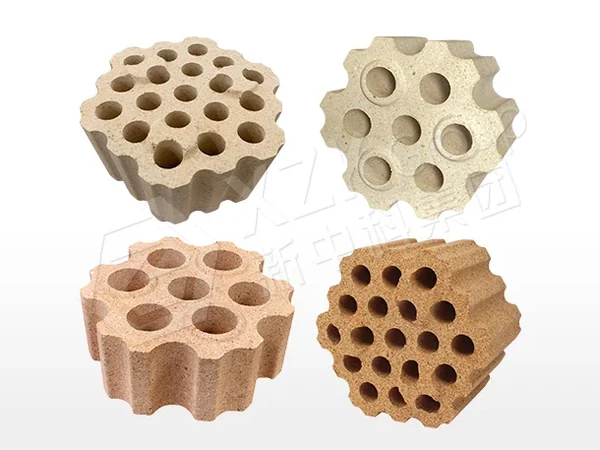
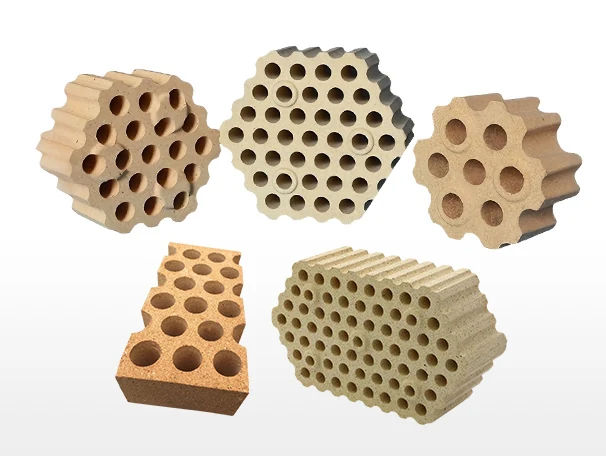
Low-Creep Hot Blast Stove Refractories and High-Capacity Checker Bricks
Zero-subsidence lining materials for top- and internal-combustion hot blast stoves: low-creep andalusite, sillimanite, mullite and fireclay bricks plus high-capacity checker bricks. Creep rate ≤1% at service temperature keeps checkerwork open and blast temperature high for the full campaign.
- Creep rate as low as ≤0.2% at 1400 °C × 50 h on andalusite grades
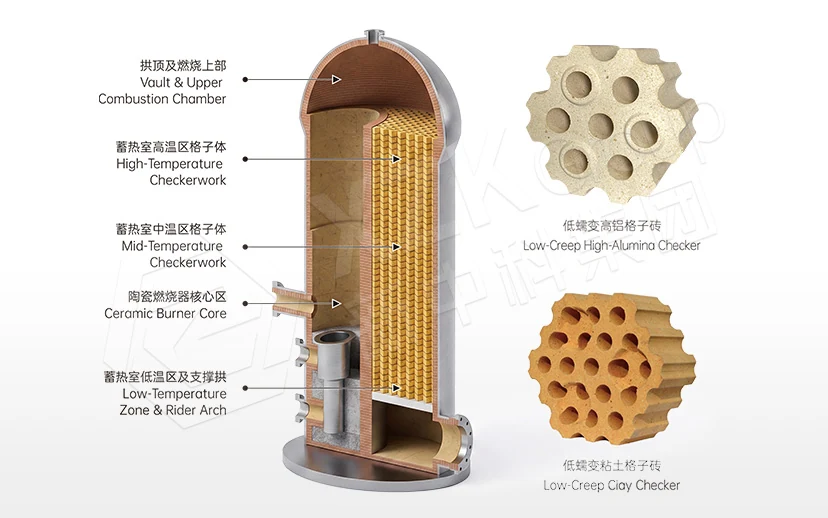
- Low-creep high-alumina, andalusite, sillimanite and fireclay checker options
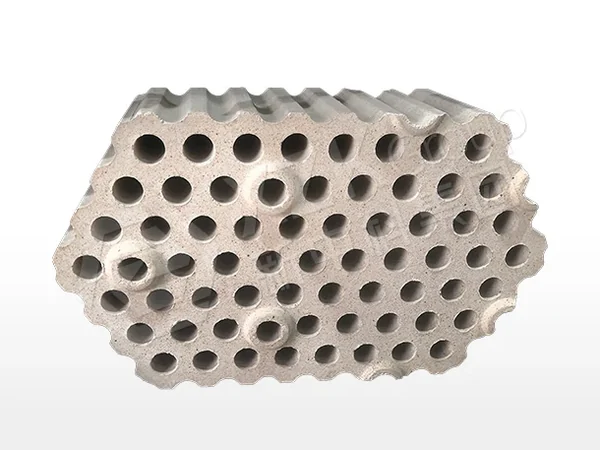
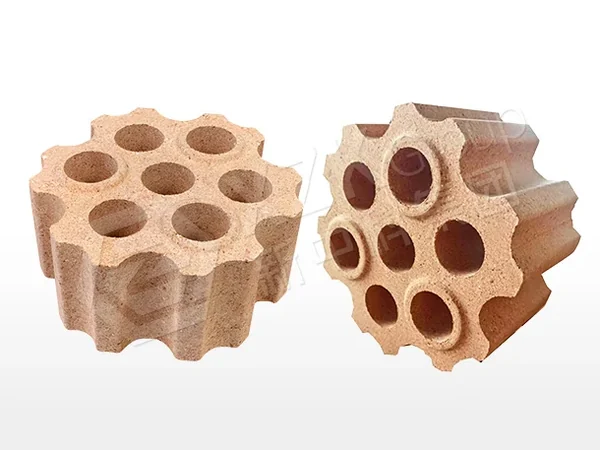
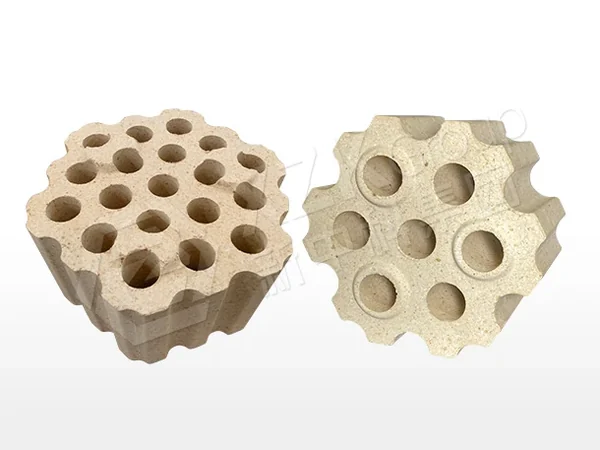
- High heat-storage capacity checker geometries for stable 1200 °C+ blast
- Refractoriness under load to 1580 °C on the hottest dome grades
- Density-graded backup insulation to cut shell temperature and fuel use
- Checker packages engineered for 25-year campaigns without subsidence
Hot Blast Stove Series Product List
Full TDS datasheets available on each product detail page. Click "Get Free Quote" to request factory pricing within 12 hours.
Selection Guide
Free Consultation with Our Engineer
How to Select the Right Hot Blast Stove Series Refractory Formulation for Your Furnace
Specifying a Hot Blast Stove Lining for Zero Subsidence
Hot blast stoves fail by deformation long before they fail by corrosion. The working lining is under sustained compressive load at high temperature for years; if the brick creeps, checker channels close, airflow falls, and the stove has to come down. The entire material selection therefore starts with creep rate, then works outward to thermal shock, refractoriness and insulation.
Step 1 — Start From Dome Temperature
Identify the peak dome and upper checker temperature. This single number determines the top grade:
- Above 1400 °C — low-creep andalusite (creep ≤0.2% at 1400 °C × 50 h) or premium low-creep high-alumina with RUL ≥1580 °C.
- 1300–1400 °C — low-creep sillimanite or high-alumina, RUL ≥1500 °C.
- Below 1300 °C — low-creep fireclay or standard high-alumina checkers, balancing cost against remaining life.
Step 2 — Grade the Checker Courses Downward
There is no reason to run the most expensive grade through the whole checker shaft. Temperature falls with depth, so the upper courses take the premium creep-resistant material, the middle courses a mid-grade sillimanite or high-alumina, and the lower courses an economical fireclay checker. This graded approach typically removes 15–25% from package cost without shortening the campaign.
Step 3 — Confirm Thermal Shock Behaviour
Stoves cycle. Every changeover moves the checkerwork through a temperature swing, and the upper courses see the largest amplitude. Confirm thermal shock resistance — normally expressed as cycles in water or air quench — alongside creep, because a brick with excellent creep but poor shock resistance will spall in the top courses.
Step 4 — Do Not Forget the Insulation
Backup insulation does more than save fuel: it lowers shell temperature, protects the shell steel from creep and acid condensation, and stabilises the thermal gradient through the working lining. Specify it as a density ladder rather than a single product, with the densest material nearest the working lining.
What to Send Us
Stove type (internal or external combustion, top-fired), target blast temperature, cycle pattern, existing checker geometry or drawing, and the campaign you are targeting. We will return a graded material schedule with creep data and a course-by-course layout.
Procurement FAQ — Hot Blast Stove Series
MOQ, lead time, packaging, shipment, payment — buyer-side concerns answered for this specific series.
What is the MOQ for checker brick?
20 metric tons for standard checker geometries; 30 metric tons and above for custom profiles requiring new dies. Complete stove packages are quoted per stove against the drawing.
How long does a stove reline package take?
30–50 days depending on grade mix and geometry complexity, because checker brick is pressed to tight dimensional tolerance and must be sorted and palletised by course.
Can you match an existing checker profile?
Yes. Send a drawing or a sample brick and we will reproduce the channel geometry, wall thickness and overall dimensions, or propose a higher-capacity alternative with the pressure-drop calculation.
How is checker brick packed for export?
Course-sorted and palletised on ISPM-15 heat-treated pallets with moisture-barrier wrapping, clearly labelled by course and grade to speed installation on site.
What payment and shipping terms apply?
T/T with deposit or L/C at sight; FOB Qingdao or Tianjin, CIF worldwide, or door-to-door. Stove packages are normally sequenced to the installation schedule.
Where Hot Blast Stove Series Products Are Installed
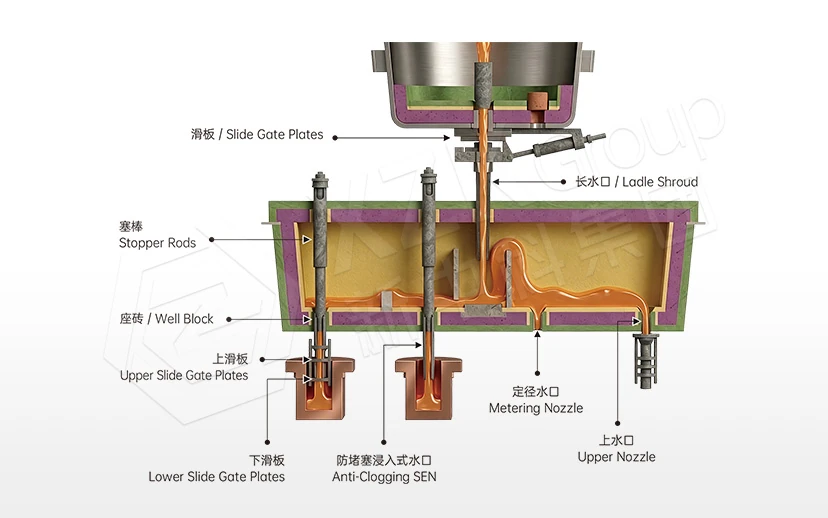
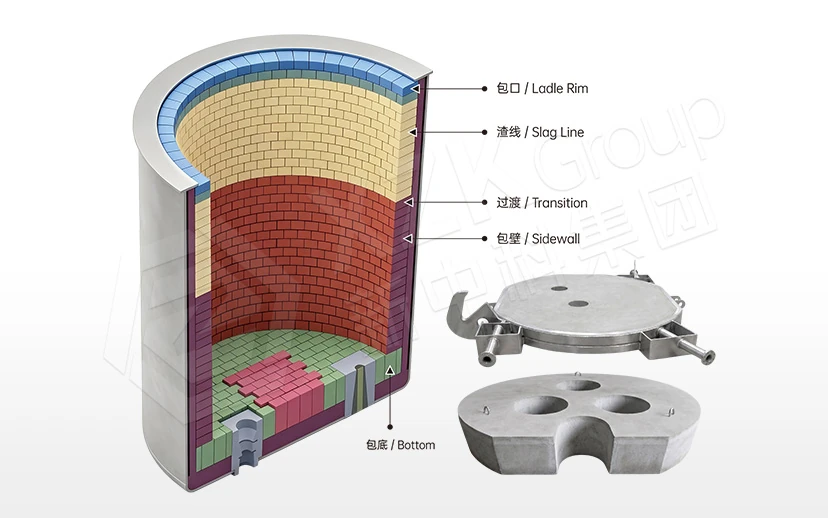
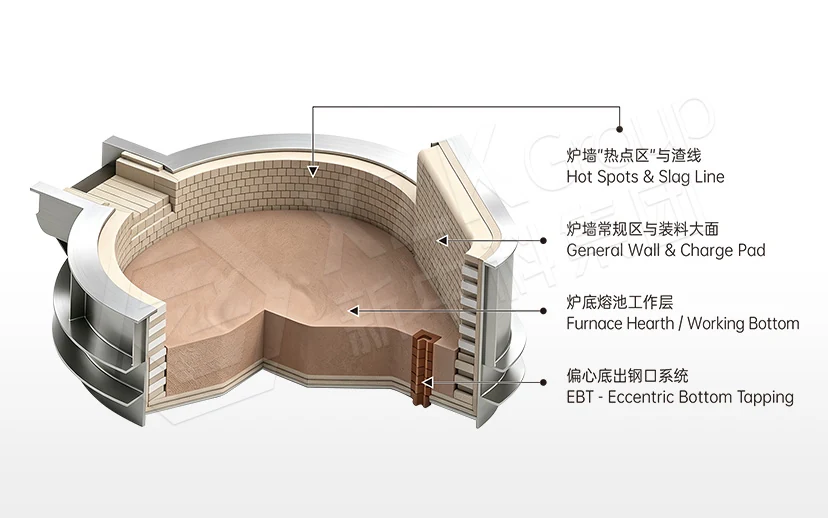
Explore the furnace systems these refractories are engineered for — from blast furnace hearths to continuous casting flow control.
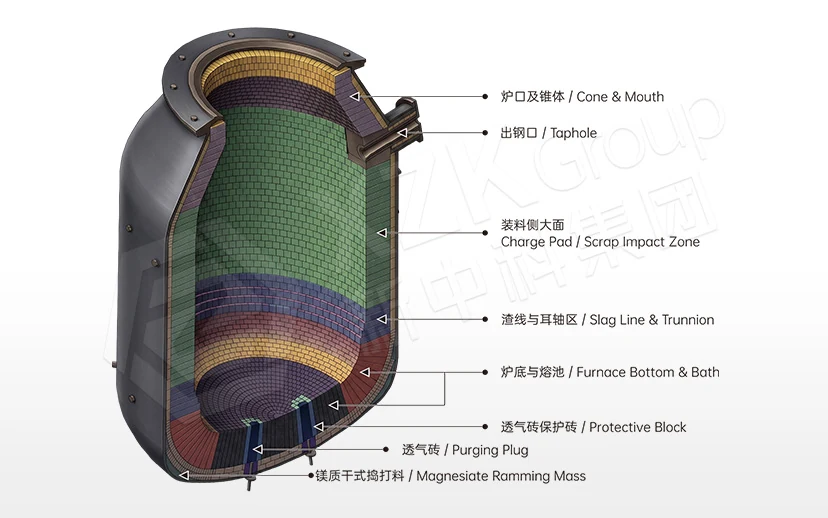
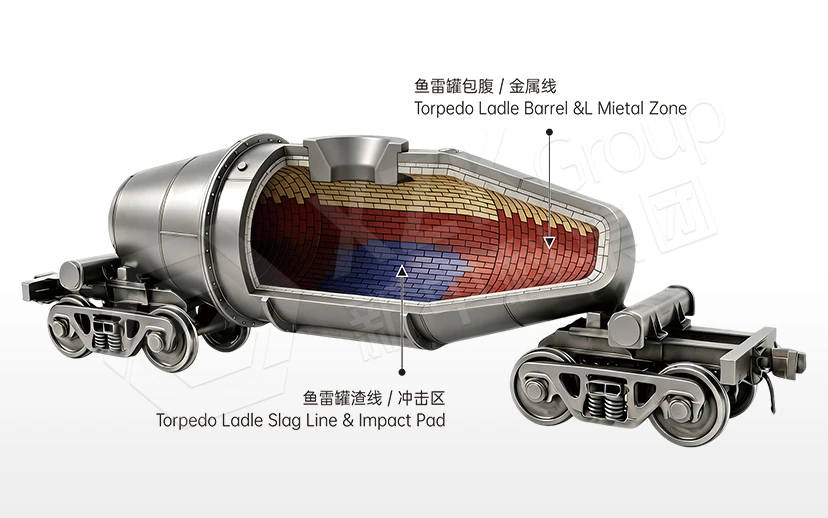
FAQs — Hot Blast Stove Series
Why is creep rate the critical property for stove checkers?
Checker failure is usually compressive creep, not corrosion. Once checker channels deform, airflow is restricted, heat exchange falls, and the stove has to be taken out of service. Holding creep at or below roughly 1% — and ≤0.2% on premium andalusite grades at 1400 °C × 50 h — keeps channels open for the full campaign.
Should I choose andalusite, sillimanite or high-alumina for the dome?
It depends on dome temperature and cycle severity. Andalusite offers the best combination of low creep and thermal shock resistance for the highest-temperature zones; sillimanite is a strong mid-range option; low-creep high-alumina suits the upper checker courses and combustion chamber where peak temperatures are lower.
What blast temperature can these materials support?
Correctly specified low-creep packages routinely support 1200 °C+ blast temperature. The practical ceiling is set by the dome and upper checker grades, so we select those first and grade downward from there.
How does checker geometry affect stove performance?
Heat storage capacity and pressure drop are governed by channel geometry and wall thickness. Higher specific surface area improves heat exchange but increases pressure drop and fouling risk. We supply standard high-capacity geometries and will match an existing profile from your drawings.
Do you supply the insulation behind the working lining?
Yes. Density-graded insulating firebrick — mullite, high-alumina, fireclay and lightweight silica — reduces shell temperature and fuel consumption. See our insulating range for the full density ladder.
What test data accompanies stove brick?
Creep in compression at the specified temperature and duration, refractoriness under load per ISO 1893, bulk density and apparent porosity per ASTM C830 / ISO 5017, cold crushing strength per ASTM C133, and full chemical analysis. Batch COA is issued for every shipment.
Why Steel Plants Choose XZK Refractories
Zonal Engineering, Not Just Bricks
Every proposal is a zone-by-zone material schedule matched to your furnace profile and operating practice — so all zones reach end-of-life together.
Source Factory Consistency
Fully automatic CNC batching and zero-defect quality control keep batch-to-batch variation at laboratory level.
Proven Global References
Supplied to Baosteel, Shougang, Hyundai Steel, JSW, Severstal, MMK and 400+ furnace projects across 60+ countries.
Full-Lifecycle Service
Lining design, masonry supervision, heat-up curves and failure analysis — plus EPC turnkey delivery for new builds and relines.
Send Us Your Furnace Drawing
Our engineers will return a zonal lining proposal with material schedule and quotation within 48 hours — even for non-standard shapes.
- Free material feasibility review
- Zonal architecture & installation drawings
- Heat-up curve & masonry guidance
Quality & Traceability
Strict ISO 9001 Process Control Across All 6 Workshops
Every batch of raw materials is chemically assayed. Finished refractory shapes undergo density, ultrasonic non-destructive testing, and pre-assembly gap verification prior to global packaging.
- Raw material ICP chemical assay on every incoming batch
- Density, porosity and cold crushing (CCS) tests per ASTM / ISO
- Ultrasonic non-destructive testing of finished shapes
- Pre-assembly gap verification before seaworthy packaging
100,000+
Metric Tons Annual Capacity
60+
Countries Export Footprint
6
Fully-Equipped Workshops
100%
ISO 9001:2015 Certified