Most of the refractory a steel plant buys is not the lining. It is the material consumed keeping that lining in service — taphole clay tapped every few hours, gunning mix applied to a worn converter wall, filler sand in every ladle, ramming mass worked into a hearth, mortar in every joint. These items are small in unit value and large in consequence, because a plant that runs out of them stops tapping.
They are also bought differently from a lining. The decision is made by the people closest to the furnace, the order is placed repeatedly, and what matters is batch-to-batch consistency, honest lead times and a price that does not move every quarter. We supply these materials direct from the factory that produces them, in repeatable grades, in quantities that suit a maintenance schedule rather than a reline programme.
Consumables & Hot Repair Materials
Nine product families cover almost everything a maintenance department orders on a recurring basis. Each is graded to the vessel it serves rather than offered as a single specification for all duty.
Waterless Taphole Clay
Anhydrous clay for blast furnace tapholes. Formulated for consistent tapping-hole length, clean opening and controlled erosion across the tapping cycle.
Magnesia Gunning Mix
For spray repair of converter, ladle and EAF linings. Graded for adhesion to the hot face and for sintering behaviour at the actual surface temperature.
Magnesia Hot Repairing Mass
Fettling material placed on a hot converter or electric furnace bottom and sintered in situ. For localised rebuilds between relines.
Magnesia Dry Ramming Mass
For EAF and ladle bottoms and banks. Installed dry and sintered by the first heat, with controlled shrinkage so the lining beds down without opening joints.
High-Conductivity Carbon Ramming Mass
Completes the hearth heat path from carbon brick through to the coolers. Thermal conductivity to 12 W/(m·K) with C+SiC ≥90%.
Tundish Dry Vibratable Mix
Carbon-free and low-carbon grades for tundish working linings. Installed dry, sintered by the first cast, and stripped cleanly afterwards.
Water-Free Injection Mix
For crack sealing and void filling in blast furnace and hot blast stove brickwork, injected under pressure without introducing water into the lining.
Refractory Mortar & Cement
Ten mortar families matched to the brick — fireclay, high-alumina, andalusite, corundum, silica, magnesia, carbon and SiC — plus calcium aluminate cement in CA50, CA70 and CA80 grades.
Ladle Filler Sand
Supplied as part of a ladle package alongside slide gates, purging plugs and castables. Graded to your nozzle bore and tap-to-cast time so free opening stays consistent shipment after shipment.
Which Consumables Belong to Which Vessel
The same plant may order six of these for six different vessels. Consumption intervals below are typical for continuous operation and vary with campaign intensity — the useful figure is your own historical consumption, which we can help you benchmark.
| Vessel | Consumables typically used | Typical consumption interval |
|---|---|---|
| Blast furnace | Waterless taphole clay, water-free injection mix, gunning mix, high-conductivity carbon ramming mass | Taphole clay: daily. Injection and gunning: as scheduled during stoppages. |
| BOF converter | Magnesia gunning mix, magnesia hot repairing mass, fettling material for banks and bottoms | Repair campaigns between heats or between campaigns, depending on wear rate. |
| Electric arc furnace | Magnesia hot repairing mass, magnesia dry ramming mass for hearth and banks, gunning mix | Hearth maintenance weekly to monthly; fettling in front of electrodes as required. |
| Steel ladle | Ladle filler sand, gunning mix, castables for impact pads and bottoms, mortar for brickwork | Filler sand: every ladle cycle. Castable repair: on condition. |
| Tundish | Tundish dry vibratable mix, gunning mix, mortars, coating materials | Every casting sequence, per tundish turnaround. |
| Casthouse | ASC castables for runners, taphole clay, gunning mix | Runner repair between casts; full reline on campaign schedule. |
The Three Things a Repeat Buyer Actually Cares About
Batch consistency
A maintenance crew installs the material the same way every time. If the mix behaves differently from the last delivery, the repair behaves differently too — and the crew gets blamed. Batching is computer-controlled and every batch is tested before it ships, so the second delivery behaves like the first.
Lead time you can plan around
Consumables are ordered against a maintenance schedule, and a late delivery moves the schedule. Standard consumable grades ship in 7–14 days. Where you have a predictable monthly consumption we can hold stock and ship against your programme rather than on request.
Price stability
Buying direct from the factory removes the trading margin, and it also removes a layer of price adjustment that a trading house has to apply. For consumables bought continuously, the total annual spend matters more than any single quotation.
Installation Notes That Decide Whether a Repair Works
Most failures with consumables are installation failures, not material failures. These are the points we specify with each material, and the ones most often skimmed at site level.
Taphole clay
- Tapping-hole length and diameter should be measured and logged, not estimated. Clay formulation follows the target drill diameter and the tapping duration the plant wants.
- Mud gun pressure and fill volume determine whether the hole is filled completely. Under-filling leaves voids at the back of the hole that open up during tapping.
- Consistency between deliveries matters more than an absolute figure. The crew adjusts to the material, so a change between batches resets that adjustment.
Gunning mix
- Surface temperature decides the grade. Material sprayed onto a cooler shoulder needs a different sintering response from material on a hot bottom, and one grade used everywhere will under-perform somewhere.
- Water addition at the nozzle is the single most influential variable and the least well controlled in practice. Too much water and the material dusts off; too little and it does not adhere.
- Layer thickness per pass is specified for a reason. Building thickness too quickly traps moisture and produces a repair that spalls on the first heat.
Dry ramming and vibratable mixes
- Install dry, in controlled lifts. Compaction quality governs the installed density, and in-service performance follows installed density.
- Do not wet the mix to ease placement. It changes the sintering behaviour and the shrinkage, and it is the most common shortcut we see.
- First-heat sintering is part of the specification. Heat-up rate through the first cycle determines whether the lining beds down correctly or opens joints.
Ladle filler sand
- Grading follows nozzle bore and steel head, not a standard size. Give us those two figures and the tap-to-cast time and the grade follows.
- Keep it dry. Moisture causes splashing on tap and contributes hydrogen pickup, which matters on sensitive steel grades.
Ask us for the installation procedure with the material. Each consumable ships with written guidance covering the figures above for that specific grade. If a repair fails, send us the details and we will look at the material, the installation and the operating conditions together — the cause is usually identifiable and usually fixable without changing supplier.
Packaging, Storage and Shipment
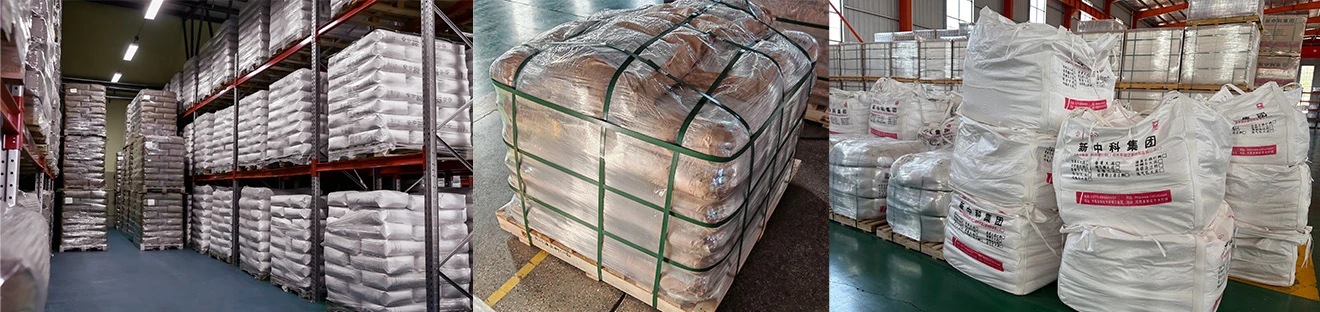
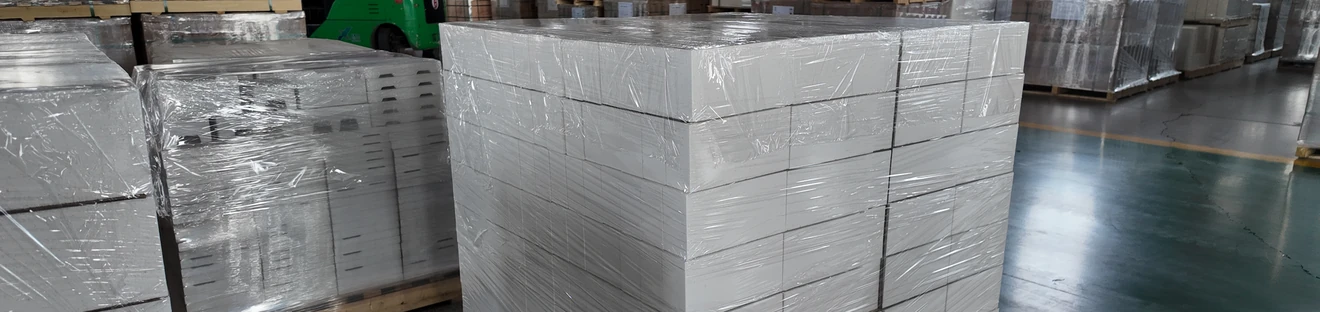
- 25 kg moisture-barrier bags with an internal PE liner as standard, on ISPM-15 heat-treated pallets and date-stamped on every bag.
- 1,000 kg big bags available for bulk consumables and for high-volume fettling, gunning and ramming materials.
- Shipment quantities planned to the container, with a loading plan supplied so a 20 ft or 40 HQ is filled properly rather than approximately.
- Storage guidance with each delivery. Cementitious and resin-bonded materials are moisture-sensitive; shelf life and storage conditions are stated on the documentation.
- Mixed pallets available where a single order covers several consumable types, so a maintenance store can be restocked in one delivery.
Ordering Consumables from XZK
Send the product, the vessel it is for, the quantity and the frequency you expect to consume it. For repeat business we will match the grading across deliveries and, where it helps your planning, quote a period price rather than a per-order price. A batch Certificate of Analysis ships with every lot. If you are currently running a product that works and want a comparable grade, send the data sheet — matching an existing specification is usually straightforward and we will confirm in writing whether the figures are achievable.