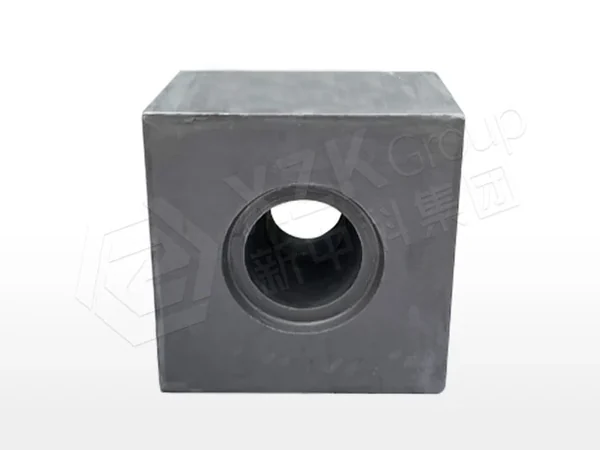
Continuous Casting Functional · Refractory Series
Continuous Casting Flow Control Refractories — Slide Gates, Stoppers, Shrouds and SENs
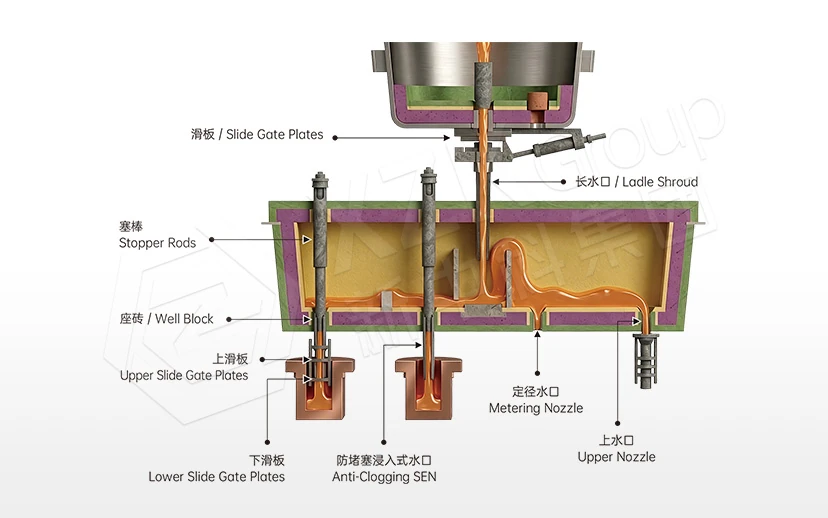
Precision flow-control refractories for ultra-long casting sequences: Al-Zr-C and spinel slide gate plates, monobloc stopper rods, alumina-carbon ladle shrouds, anti-clogging SENs, upper and metering nozzles, purging plugs and well blocks — balancing erosion resistance with anti-clogging performance.
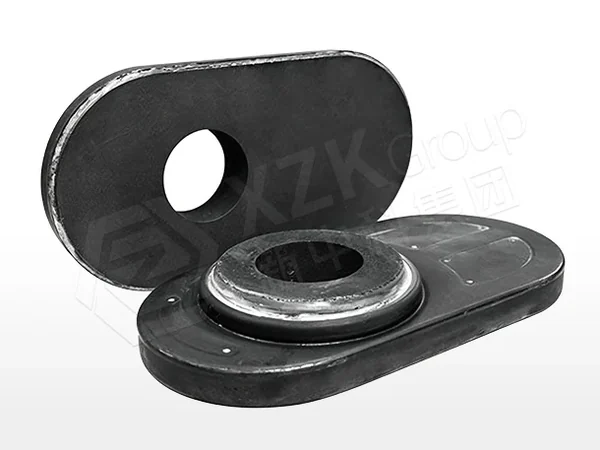
- Al-Zr-C and magnesia-spinel slide gate plates for long casting sequences
- Monobloc stopper rods, including argon-blowing and preheat-free designs
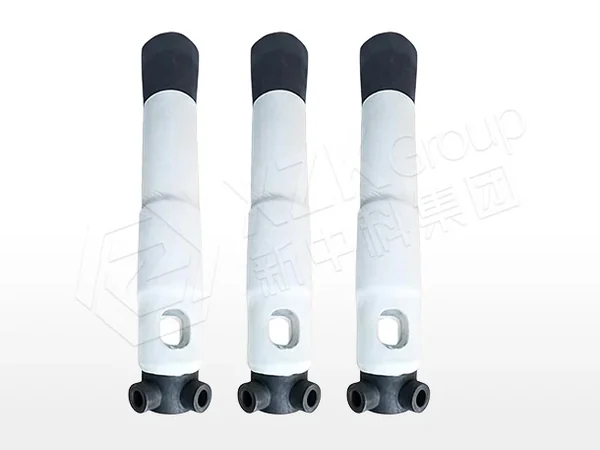
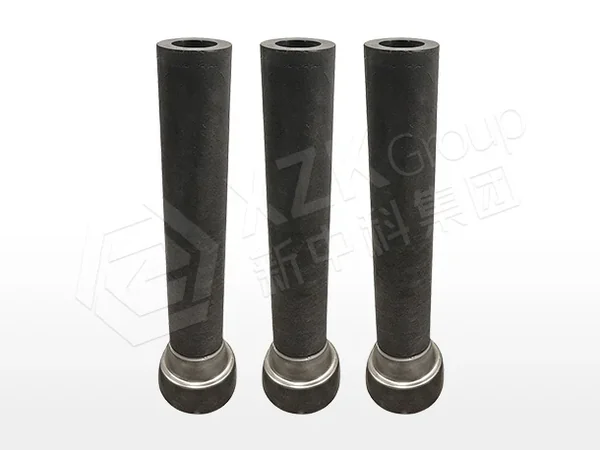
- Ladle shrouds with zirconia slag-line bands for extended sequence casting
- Anti-clogging SENs: preheat-free, argon-blowing, carbon-free and zirconia grades
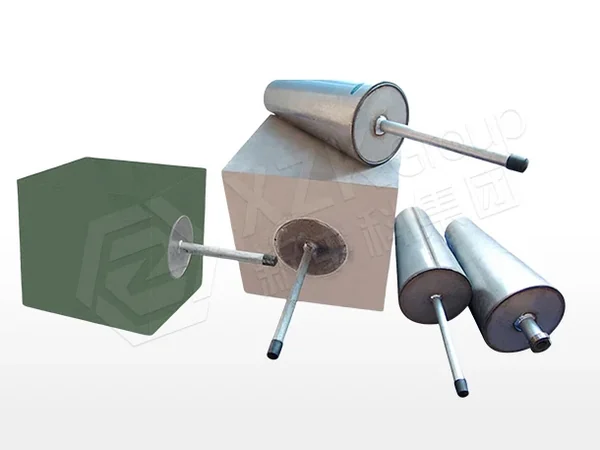
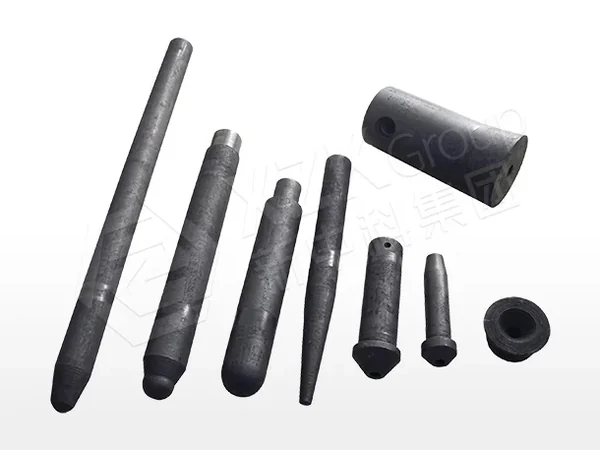
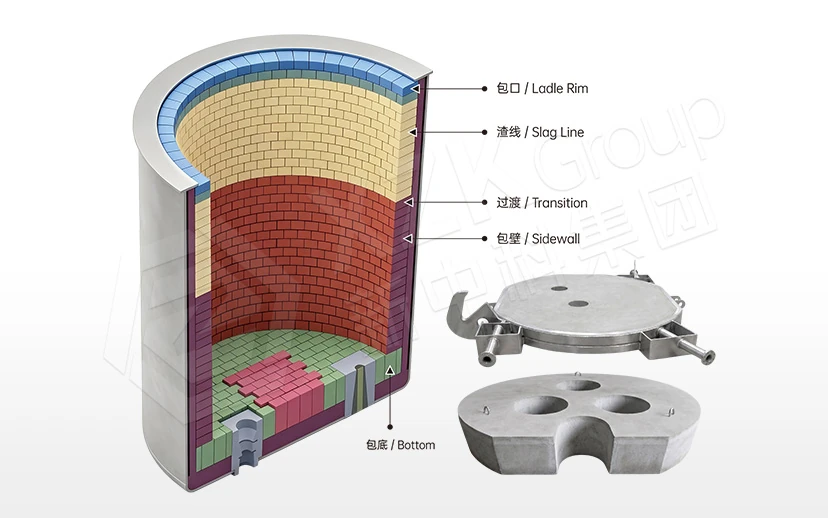
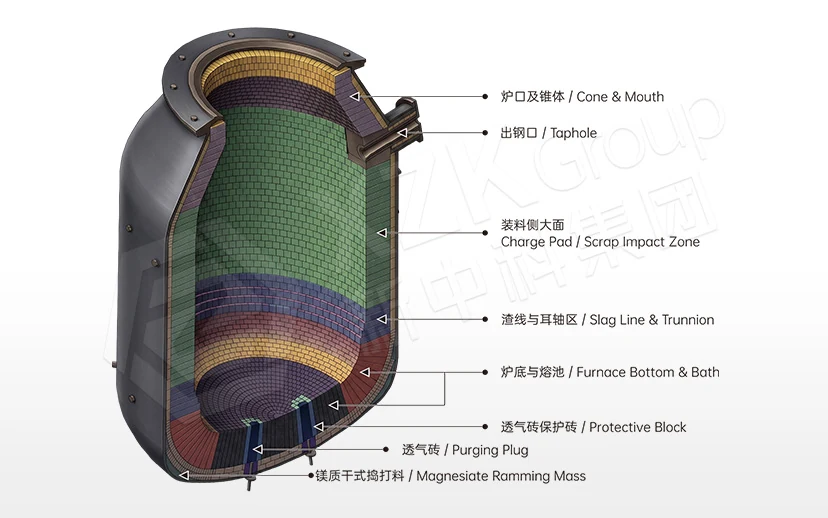
- Purging plugs and well blocks for ladle and converter bottom gas stirring
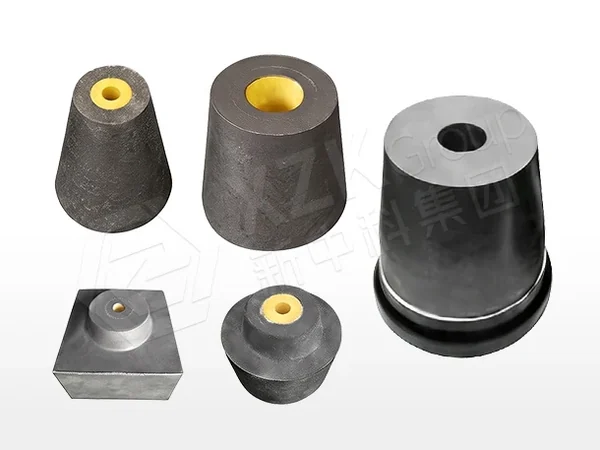
- Metering, upper and lower nozzles machined to fit major mechanism brands
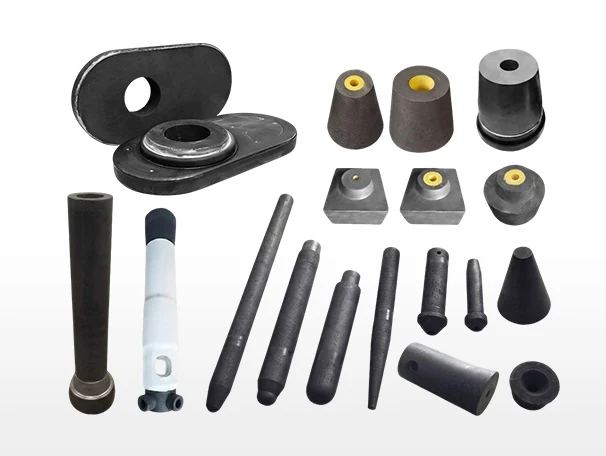
Continuous Casting Functional Product List
Full TDS datasheets available on each product detail page. Click "Get Free Quote" to request factory pricing within 12 hours.
Selection Guide
Free Consultation with Our Engineer
How to Select the Right Continuous Casting Functional Refractory Formulation for Your Furnace
Specifying Flow Control Refractories for Sequence Length
Continuous casting refractories are judged on one outcome: how many heats you can cast before a change is forced. Every specification decision — plate grade, SEN liner, shroud band, purging plug type — should be traced back to sequence length, steel grade and the failure mode that actually ends your sequences today.
Step 1 — Identify Why Sequences End
- Clogging (alumina build-up, common on Al-killed and low-carbon grades): move to carbon-free or zirconia-lined SENs, consider argon-blowing designs, and check calcium treatment practice.
- Slag-band erosion on shrouds and SENs: specify zirconia slag-line bands.
- Plate cracking or bore erosion: review preheating practice first, then plate grade — thermal shock at start-up is the most common cause of early plate failure.
- Oxidation between heats: consider argon-blowing stoppers or assemblies with improved joint sealing.
Step 2 — Match Materials to the Route
- Slide gate plates — Al-Zr-C for general long-sequence duty; magnesia-spinel for high-oxygen and high-manganese steels where alumina-carbon dissolves quickly.
- Stopper rods — monobloc alumina-carbon bodies with a higher-strength head; argon-blowing designs where inclusion flotation or clogging control is required.
- Ladle shrouds — alumina-carbon bodies with a zirconia band at the slag line for extended sequences.
- SENs — select from preheat-free, argon-blowing, carbon-free and zirconia-lined options according to steel grade and clogging tendency.
- Purging assemblies — slit or porous plugs with matching well blocks, selected on stirring intensity and treatment time.
Step 3 — Confirm Mechanical Compatibility
Flow-control items are only as good as their fit. Confirm mechanism type, plate dimensions and bore geometry, nozzle seating angles and clamping method before ordering. We machine to the major mechanism interfaces and will verify dimensions against your drawings before production.
Step 4 — Control the Thermal Envelope
Most premature failures in this category are thermal, not chemical. Preheat to the specified curve, avoid extended holding of a cold assembly above the mould, and follow recommended start-of-cast opening practice. We supply heat-up and operating guidance with every product family.
Procurement FAQ — Continuous Casting Functional
MOQ, lead time, packaging, shipment, payment — buyer-side concerns answered for this specific series.
What is the MOQ for functional flow-control items?
Functional items are quoted per set or per piece rather than by tonnage. Typical minimum is 200–500 pieces per item depending on complexity; mixed containers combining plates, shrouds, SENs and nozzles are common and reduce unit freight.
What is the lead time?
20–35 days for standard configurations from drawing approval. New plate geometries or custom SEN designs requiring tooling take longer; we confirm the schedule with the quotation.
Can you supply samples for trial?
Yes. Trial sets are supplied for evaluation on a commercial basis, and we ask for casting conditions and the current product being used so we can select the closest equivalent and interpret trial results with you.
How are fragile functional items packed?
Individually boxed with foam or moulded protection, then palletised on ISPM-15 heat-treated pallets with moisture-barrier wrapping. Zirconia-banded and pre-assembled items receive additional edge protection; we can also supply desiccant for long sea voyages.
What documentation is provided?
Dimensional inspection reports, batch physical and chemical test data, and material certificates. Third-party inspection can be arranged. For pre-assembled sets we also provide assembly drawings and recommended installation torque or clamping values.
Where Continuous Casting Functional Products Are Installed
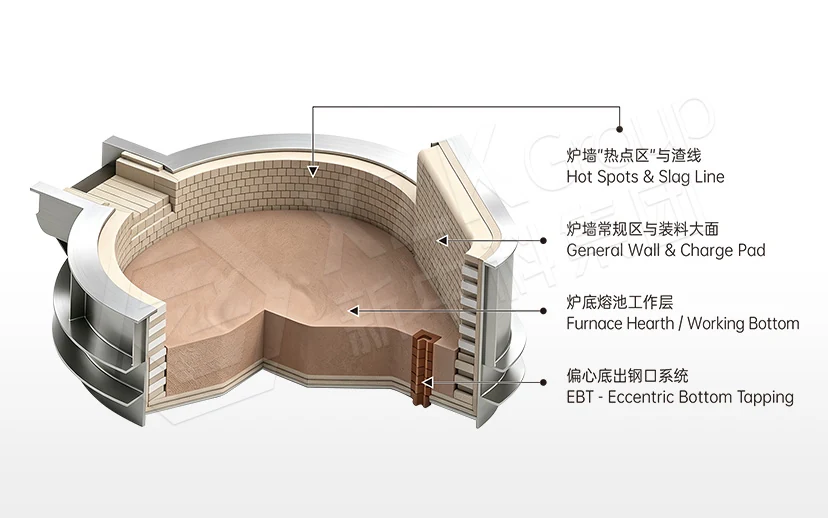
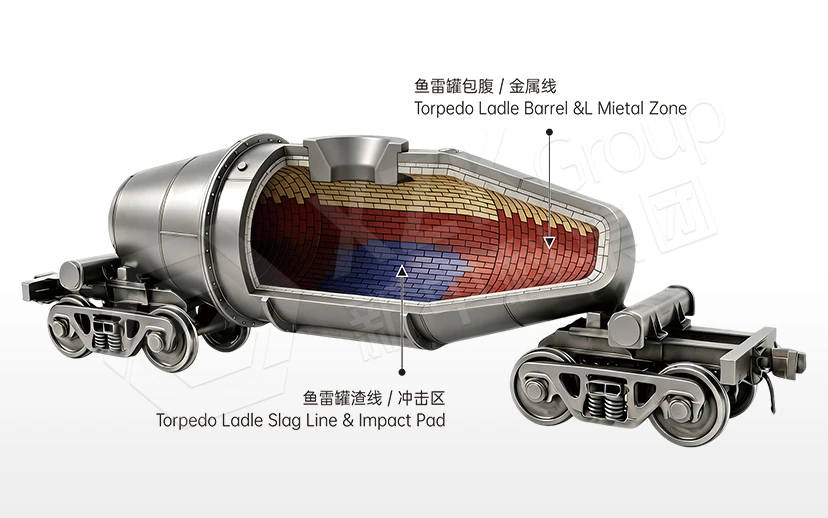
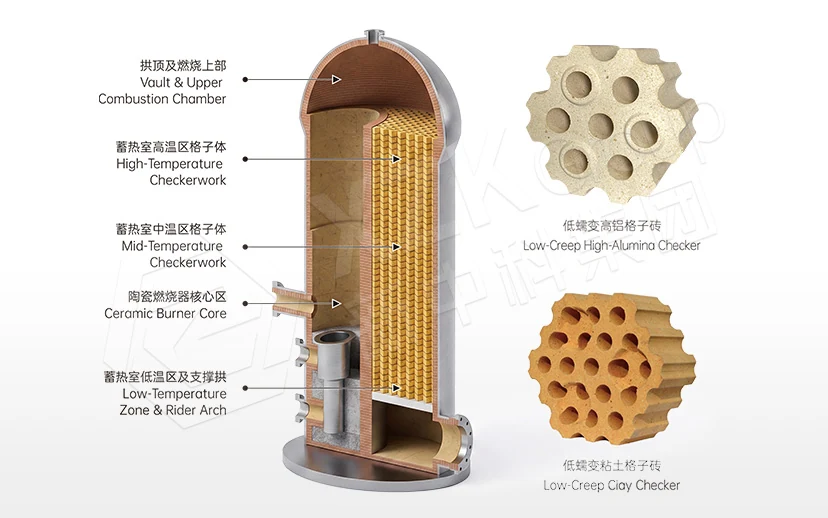
Explore the furnace systems these refractories are engineered for — from blast furnace hearths to continuous casting flow control.
FAQs — Continuous Casting Functional
How do I balance erosion resistance against anti-clogging in an SEN?
They pull in opposite directions. Higher carbon and denser bodies resist erosion but promote alumina deposition, which causes clogging; lower carbon and carbon-free liners reduce deposition but wear faster. The practical answer is to match the liner to steel grade: carbon-free or zirconia liners for aluminium-killed and low-carbon grades prone to clogging, standard alumina-carbon bodies for grades where erosion dominates.
When is a zirconia slag-line band worth specifying?
On long sequence casting and on ladle shrouds and SENs running aggressive or high-manganese slags. Zirconia resists slag-band dissolution far better than alumina-carbon, and the additional cost is normally recovered through extended sequence length and fewer shroud changes.
What causes slide gate plate failure and how is it prevented?
Three mechanisms dominate: thermal shock cracking at the start of casting, erosion and corrosion at the bore, and oxidation of the carbon bond between casts. Prevention means correct preheating, selecting a plate grade matched to sequence length and steel grade, and using argon-blowing or gasketed assemblies where oxidation is the limiting factor.
Can you supply nozzles and plates to fit our existing mechanisms?
Yes. We machine upper, metering and lower nozzles plus plates to fit the major mechanism types, including Interstop and Vesuvius styles. Send the mechanism model or a drawing of the current set and we will confirm the interface dimensions before quoting.
What is the difference between slit-type and porous purging plugs?
Slit-type plugs deliver directional, higher-volume flow and suit vigorous stirring and longer treatment times; porous plugs give finer, more uniform bubble dispersion and better cleaning, but are more sensitive to thermal and mechanical shock. Slit designs are common in ladles; porous and directional designs are chosen according to stirring intensity and steel grade requirements.
Do you offer preheat-free products?
Yes. Preheat-free ladle shrouds and, where appropriate, stopper rods remove the preheating step, cutting turnaround time and eliminating a common source of thermal shock damage. They suit plants running tight ladle turnaround or operating without dedicated preheating stations.
Why Steel Plants Choose XZK Refractories
Zonal Engineering, Not Just Bricks
Every proposal is a zone-by-zone material schedule matched to your furnace profile and operating practice — so all zones reach end-of-life together.
Source Factory Consistency
Fully automatic CNC batching and zero-defect quality control keep batch-to-batch variation at laboratory level.
Proven Global References
Supplied to Baosteel, Shougang, Hyundai Steel, JSW, Severstal, MMK and 400+ furnace projects across 60+ countries.
Full-Lifecycle Service
Lining design, masonry supervision, heat-up curves and failure analysis — plus EPC turnkey delivery for new builds and relines.
Send Us Your Furnace Drawing
Our engineers will return a zonal lining proposal with material schedule and quotation within 48 hours — even for non-standard shapes.
- Free material feasibility review
- Zonal architecture & installation drawings
- Heat-up curve & masonry guidance
Quality & Traceability
Strict ISO 9001 Process Control Across All 6 Workshops
Every batch of raw materials is chemically assayed. Finished refractory shapes undergo density, ultrasonic non-destructive testing, and pre-assembly gap verification prior to global packaging.
- Raw material ICP chemical assay on every incoming batch
- Density, porosity and cold crushing (CCS) tests per ASTM / ISO
- Ultrasonic non-destructive testing of finished shapes
- Pre-assembly gap verification before seaworthy packaging
100,000+
Metric Tons Annual Capacity
60+
Countries Export Footprint
6
Fully-Equipped Workshops
100%
ISO 9001:2015 Certified