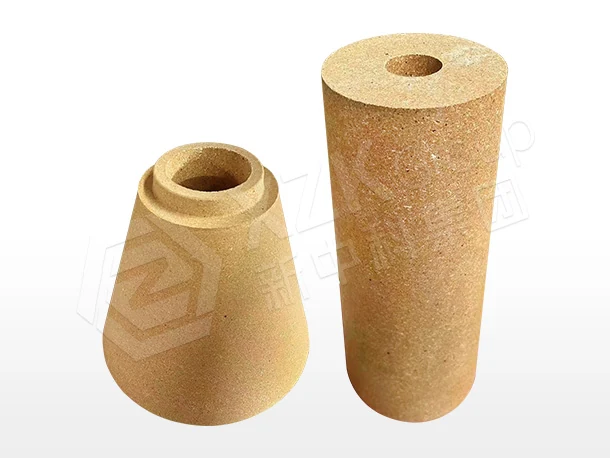
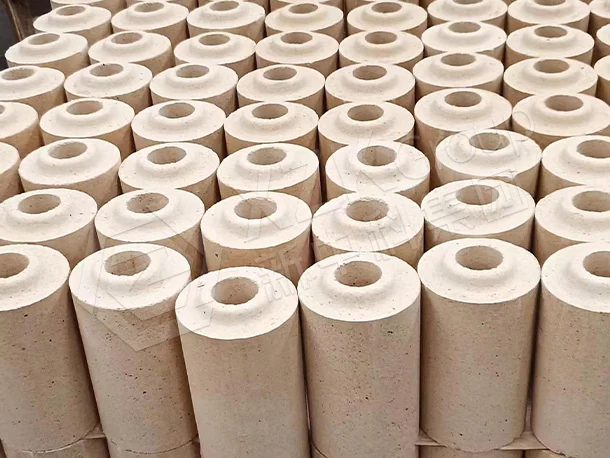
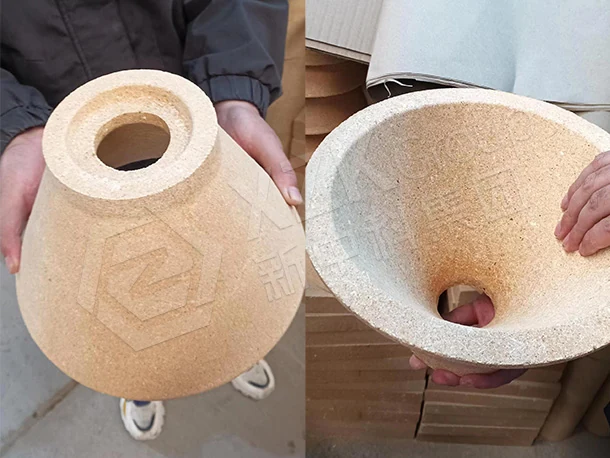
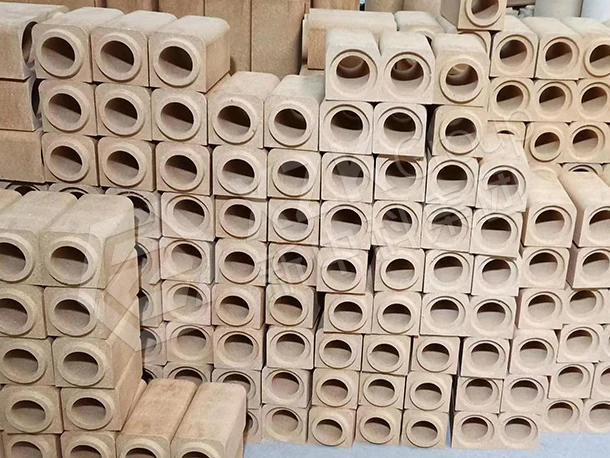
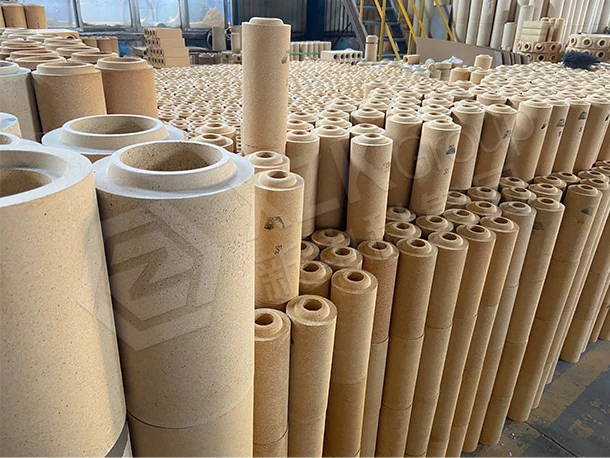
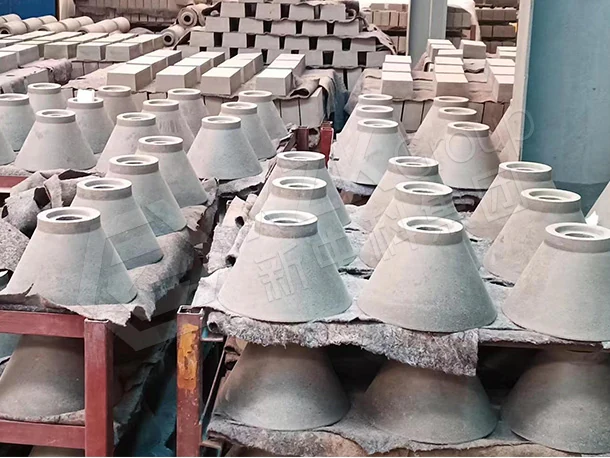
High-Alumina Runner Brick — Teeming Hollow Ware for Ingot Pouring
XZK-TR65 and XZK-TR75 hollow runner bricks with smooth, inclusion-free bores: controlled Fe₂O₃, tight dimensional bore alignment and verified thermal shock resistance for bottom-pour teeming.
Specifications of XZK High-Alumina Runner Brick (Teeming Hollow Ware)
Manufactured strictly in accordance with ASTM, ISO, and YB/T metallurgical refractory standards.
| Property | XZK-TR65 | XZK-TR75 | Test Standard |
|---|---|---|---|
| Al₂O₃ (%) ≥ | 65.0 | 75.0 | GB/T 6900 |
| Fe₂O₃ (%) ≤ | 2.0 | 1.5 | GB/T 6900 |
| Bulk Density (g/cm³) ≥ | 2.40 | 2.55 | ASTM C830 |
| Apparent Porosity (%) ≤ | 22.0 | 20.0 | ASTM C830 |
| Cold Crushing Strength (MPa) ≥ | 40 | 50 | ASTM C133 |
| Refractoriness (°C) ≥ | 1750 | 1770 | ISO 528 |
| Thermal Shock Resistance (1100 °C water quench, cycles) ≥ | 8 | 10 | GB/T 30873 |
| Property Reported Above | ASTM | ISO | GB/T |
|---|---|---|---|
| Chemical composition — Al₂O₃, SiO₂, Fe₂O₃, TiO₂, alkali oxides | ASTM C573 | ISO 12677 | GB/T 6900 |
| Apparent porosity and bulk density | ASTM C20 | ISO 5017 | GB/T 2997 |
| Cold crushing strength | ASTM C133 | ISO 10059-1 | GB/T 5072 |
| Refractoriness (pyrometric cone equivalent) | ASTM C24 | ISO 528 | GB/T 7322 |
| Thermal shock resistance | ASTM C1171 | — | GB/T 30873 |
About XZK High-Alumina Runner Brick (Teeming Hollow Ware)
Where Ingot Quality Is Actually Decided
Bottom-pour teeming looks like a simple operation: steel leaves the ladle, runs through a set of hollow refractory channels, and fills a mould. Everything that can go wrong with ingot cleanliness happens in those channels.
If a bore is rough, the metal stream becomes turbulent and picks up refractory particles. If two joints do not align, the stream spills at the step — picking up air and reoxidising. If the set is cold, the first stream cracks the bore wall. And if the brick itself carries enough iron oxide to form low-melting phases at pouring temperature, the bore surface softens and erodes, feeding inclusions straight into the ingot. None of this shows up on a chemistry certificate, which is why it is so often misdiagnosed as a melting problem.
The Two Grades and What Separates Them
XZK teeming hollow ware comes in two grades, both from the same high-alumina body family:
- XZK-TR65 — 65% Al₂O₃, Fe₂O₃ ≤ 2.0%, bulk density ≥ 2.40 g/cm³, CCS ≥ 40 MPa, refractoriness ≥ 1750 °C, thermal shock ≥ 8 cycles. The economical choice for plain carbon ingots and short sequences.
- XZK-TR75 — 75% Al₂O₃, Fe₂O₃ ≤ 1.5%, bulk density ≥ 2.55 g/cm³, CCS ≥ 50 MPa, refractoriness ≥ 1770 °C, thermal shock ≥ 10 cycles. Specified for alloy and special grades where inclusion count drives rejection, and for runner systems expected to run repeated sequences.
The step between them is not just alumina content. The lower iron limit on TR75 is the property that matters most for cleanliness, followed by the higher strength and the better thermal shock figure.
Why Thermal Shock Gets Tested Per Batch
Every set takes a hard thermal transient when the first stream arrives. A brick that survives eight 1100 °C water quench cycles and one that survives ten may look equivalent on paper, but on a multi-sequence set that difference compounds.
We test thermal shock per production batch rather than only at type approval, because it is the property most sensitive to firing curve drift. If a kiln runs slightly cool one week, thermal shock is where it shows up first — and the certificate is where you should be able to see it.
Matched Sets, Not Loose Pieces
A runner system is a fitted assembly: well block, collector nozzle, straight runners, branches, elbows and mould gates. When these come from different suppliers, each piece is individually within tolerance and the assembly still does not seal — because the tolerances stack across the interfaces.
We supply matched sets with bore alignment checked before shipment, and diamond grind the seating faces where it matters. Ordering the set as one package removes the interface problem and, in our experience, saves more platform time than any other single change.
What We Need to Quote
Steel grade or grades, pouring temperature range, number of ingots per sequence, whether the set is single-use or reused, and a layout drawing if you have one. If you are replacing an existing set, the dimensions of the current one are enough.
If you are chasing an inclusion or surface-finish problem rather than buying to print, tell us what the rejection looks like. Bore erosion, joint aspiration and thermal cracking leave different signatures, and the fix is different in each case. We would rather diagnose first than sell you a higher grade that does not address the actual mechanism.
Where This Grade Sits in the Lining System
Corundum and high-alumina grades earn their place on hot strength and creep resistance, and those properties only pay back if the surrounding zones survive as long as they do. Putting the strongest brick into the harshest zone and leaving the rest to habit is how most of the refractory budget is actually lost.
XZK supplies high-alumina runner brick (teeming hollow ware) as one zone of a zoned package rather than as a standalone item: the grades normally zoned alongside it — among them high-alumina brick — are documented on the corundum and high-alumina refractories page, and the vessel-level architecture — where each zone starts and ends, and which mechanism actually limits the campaign — is set out on the steel ladle and RH/VD and tundish flow control pages.
Campaign data measured on this class of lining — including the wear profile that drove grade selection — is published in the JFE Steel RH degasser snorkel and ladle flow control programme project reference.
High-Alumina Runner Brick (Teeming Hollow Ware) — Production & Application Scenarios
Premium raw materials, CNC pressing, high-temp firing, and on-site installation.
Advantages of Choosing XZK High-Alumina Runner Brick (Teeming Hollow Ware)
Clean Internal Bore
Diamond-finished flow channels with aligned joints, so the metal stream stays laminar and carries fewer exogenous inclusions into the mould.
Verified Thermal Shock
≥ 8 cycles (TR65) and ≥ 10 cycles (TR75) at 1100 °C water quench — tested per batch, not only at type approval.
Low Iron Content
Fe₂O₃ held to ≤ 2.0% (TR65) and ≤ 1.5% (TR75), limiting low-melting phase formation and bore erosion at pouring temperature.
Matched Sets
Runners, nozzles and well blocks supplied as a fitted set with bore alignment checked, so assembly on the pouring platform is not a trial-and-error exercise.
Specific Applications of High-Alumina Runner Brick (Teeming Hollow Ware)
Proven performance across diverse heavy industrial thermal equipment.
Bottom-Pour Ingot Teeming
Runner systems feeding ingot moulds where inclusion count and surface finish are inspected downstream.
Ladle-to-Mould Transfer
Hollow-ware channels between the ladle collector nozzle and the mould gate, including branches and elbows.
Special & Alloy Steel Pouring
Grades where reoxidation and exogenous inclusions are the dominant rejection cause — TR75 with its lower iron and higher strength is usually specified here.
400+ Furnaces Trust XZK Refractory Solutions
Over 75% of our international steel and kiln clients continue multi-year long-term procurement partnerships.
The bores line up. That sounds trivial until you have spent a shift grinding runner joints on the platform.
We moved to TR75 on the alloy grades and the inclusion rejections came down enough to pay for the difference within two campaigns.
They sent thermal shock data for the actual batch, with the water quench cycle count on it. Most suppliers quote the standard and stop there.
Runners, nozzles and well blocks arrived as a matched set with the bore alignment already checked. Assembly was uneventful, which is the best outcome.
Frequently Asked Engineering Questions
Click any question to expand; only one answer is shown at a time.
TR65 or TR75 — how do we choose?
TR75 gives you higher strength (50 vs 40 MPa CCS), lower iron (1.5% vs 2.0%) and better thermal shock (10 vs 8 cycles). It is the right call for alloy and special grades where inclusion count drives rejection, and for repeated-use runner systems. TR65 is the economical choice for plain carbon ingots on a single-use or short-sequence basis.
Why is Fe₂O₃ so tightly controlled?
Iron oxide forms low-melting phases with alumina and silica at pouring temperature. Those phases soften the bore surface, and the flowing metal then erodes it — which is exactly where exogenous inclusions come from. Holding Fe₂O₃ at 1.5–2.0% is a cleanliness specification, not a purity badge.
How many pours can we expect per set?
It depends on steel grade, pouring temperature and how the set is preheated. Give us those three and your current consumption per tonne and we will give you a realistic figure rather than a marketing number. We would rather under-promise here, because this is a component where a surprise failure is expensive.
Do you preheat before pouring?
You should, and more than most shops do. A cold runner set takes thermal shock on the first stream and can crack through the bore wall. Preheat to at least 800 °C and hold. If you tell us your current practice we will tell you whether it is the likely cause of any cracking you are seeing.
Can you supply the well block and collector nozzle too?
Yes. We supply matched sets — well block, collector nozzle, runners, branches and gates — with bore alignment checked before shipment. Ordering the set from one source removes the interface tolerance problems that come from mixing suppliers.
What dimensional tolerance do you hold?
Seating faces and bore alignment are held to ±1.0 mm, and critical pieces are diamond ground. Joints that do not line up are the single biggest cause of both metal leakage and air aspiration during teeming, so this is where we spend the machining time.
Are custom runner geometries available?
Yes. Send the layout drawing or the dimensions of your existing set. Non-standard branches, elbows and multi-gate configurations are produced to drawing, and we will confirm the pressing route before quoting.
What is the minimum order and lead time?
Twenty metric tons is the working minimum for a custom set; standard shapes can sometimes be consolidated with other orders. Lead time is typically 20–30 days from drawing approval. Tell us your outage date and we will tell you honestly whether we can make it.
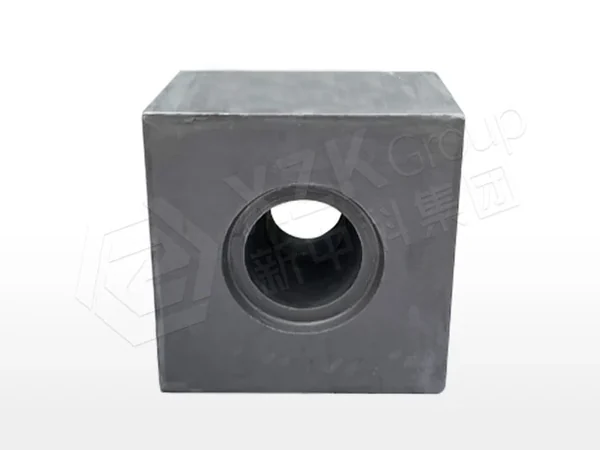
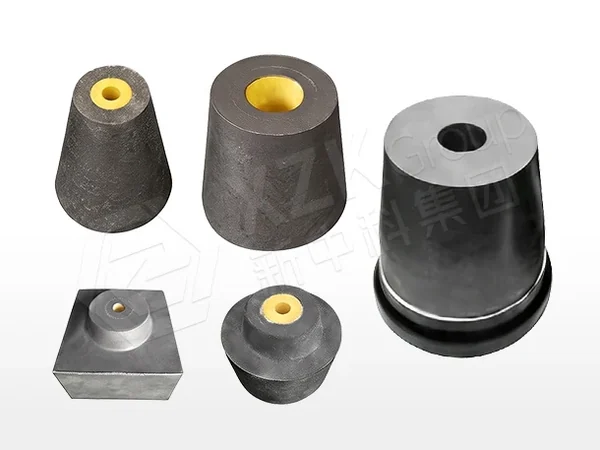
Related Refractories & Lining Materials
Explore complementary refractory brick grades and monolithic materials for your furnace relining.
Get Your High-Alumina Runner Brick (Teeming Hollow Ware) Quote within 12 Hours
Please specify your refractory requirements by referring to the following aspects:
- ✓ Target Application: Furnace type, lining position (slag line, hearth, roof)
- ✓ Technical Specs: Operating temperature, slag chemistry, chemistry requirements
- ✓ Quantity & Dimensions: Tonnage requirement, standard or custom CAD drawing
- ✓ Delivery Terms: FOB Qingdao/Tianjin, CIF destination port
Why Steel Plants Choose XZK Refractories
Zonal Engineering, Not Just Bricks
Every proposal is a zone-by-zone material schedule matched to your furnace profile and operating practice — so all zones reach end-of-life together.
Source Factory Consistency
Fully automatic CNC batching and zero-defect quality control keep batch-to-batch variation at laboratory level.
Proven Global References
Supplied to Baosteel, Shougang, Hyundai Steel, JSW, Severstal, MMK and 400+ furnace projects across 60+ countries.
Full-Lifecycle Service
Lining design, masonry supervision, heat-up curves and failure analysis — plus EPC turnkey delivery for new builds and relines.
Send Us Your Furnace Drawing
Our engineers will return a zonal lining proposal with material schedule and quotation within 48 hours — even for non-standard shapes.
- Free material feasibility review
- Zonal architecture & installation drawings
- Heat-up curve & masonry guidance
Strict ISO 9001 Process Control Across All 6 Workshops
Every batch of raw materials is chemically assayed. Finished refractory shapes undergo density, ultrasonic non-destructive testing, and pre-assembly gap verification prior to global packaging.
- Raw material ICP chemical assay on every incoming batch
- Density, porosity and cold crushing (CCS) tests per ASTM / ISO
- Ultrasonic non-destructive testing of finished shapes
- Pre-assembly gap verification before seaworthy packaging