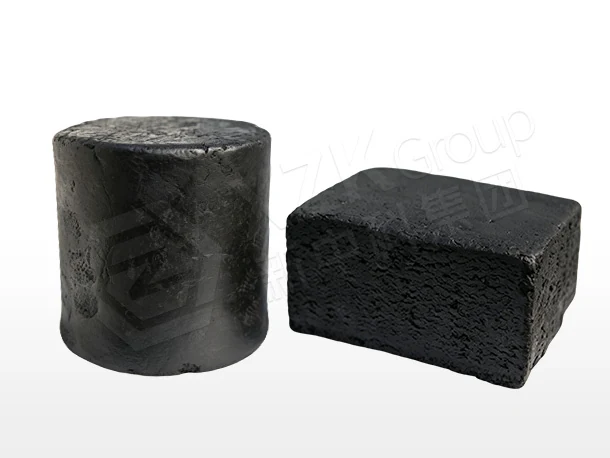
Eco-Friendly Waterless Taphole Clay for Blast Furnace & EAF
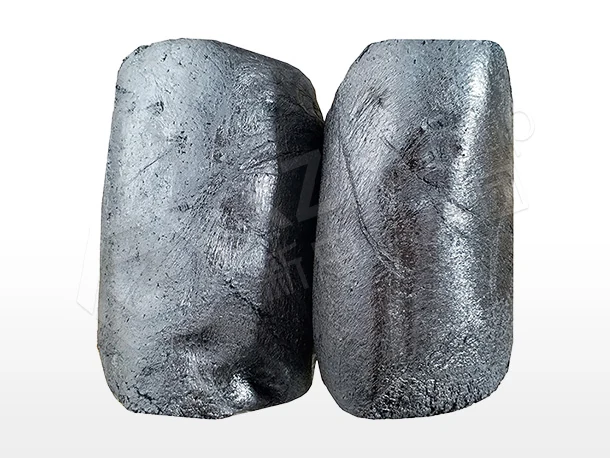
Resin-bonded, water-free · Stable opening performance · Low fume emission · Consistent taphole length — packed for standard clay guns.
Specifications of XZK Waterless Taphole Clay
Manufactured strictly in accordance with ASTM, ISO, and YB/T metallurgical refractory standards.
| Property | Typical Value |
|---|---|
| Type | Resin-bonded, water-free |
| Al₂O₃ + SiC + C (%) ≥ | 75 |
| Bulk Density (g/cm³) | 2.00 – 2.30 |
| Plasticity (at clay gun temperature) | Controlled to gun specification |
| Max Service Temperature (°C) | 1600 |
Values are typical production averages, not guaranteed minima. A batch-specific Certificate of Analysis is issued for every shipment; third-party inspection (SGS / BV / TÜV) can be arranged on request.
| Property Reported Above | ASTM | ISO | GB/T |
|---|---|---|---|
| Chemical composition — Al₂O₃, SiO₂, Fe₂O₃, TiO₂, alkali oxides | ASTM C573 | ISO 12677 | GB/T 6900 |
| Carbon / SiC content (carbon-bearing grades) | ASTM C571 | — | GB/T 17732 |
| Apparent porosity and bulk density | ASTM C20 | ISO 5017 | GB/T 2997 |
Every value in the tables above is determined by the method stated in this reference table, and the method is identified on the batch Certificate of Analysis. Where a property is not covered by a directly corresponding ISO method, the ASTM or GB/T method is applied as the reference method and stated accordingly. Third-party verification (SGS / BV / TÜV) can be arranged on request.
About XZK Waterless Taphole Clay
Waterless taphole clay has become the default on most medium and large furnaces for one reason above all: consistency. A taphole that opens when expected, with predictable drill torque and time, is worth more to a casthouse than one that occasionally lasts longer but sometimes does not open at all.
What Waterless Actually Changes
Removing water from the bond system removes the steam generation that occurs when water-bonded clay hits the furnace. That has three practical consequences:
- Predictable opening — no steam pressure spike, so the plug behaves consistently.
- Longer, more stable taphole length — the channel holds its geometry better through the tap, which protects the taphole face and slows recession.
- Lower fume — less visible emission at the taphole, which the crew notices immediately and the fume capture system has to work less hard to handle.
Plasticity Is the Variable to Control
Clay must be soft enough to extrude through the gun and stiff enough to hold the channel. That window is temperature-sensitive, which is why we control plasticity to your gun specification and supply storage guidance with every order. In hot climates or unheated stores, storage temperature is the most common reason a good product behaves badly.
Diagnosing Tapping Problems Honestly
Inconsistent opening usually has one of three causes: plasticity outside the range your gun is set up for, storage temperature outside the recommended band, or variable taphole length carried over from the previous tap. The first two we control directly. The third needs your data — which is why we ask for tapping records, drill times and length measurements before recommending a product change. Sometimes the answer is not the clay at all.
That last point is worth dwelling on. A casthouse experiencing erratic tapping will usually be offered a different clay, and sometimes that is correct. But if the underlying cause is taphole length variability from the previous tap, or a gun pressure that has drifted out of specification, a new product will mask the symptom for a few weeks and then the problem returns. We would rather look at your records first, because diagnosing the mechanism is cheaper than changing material repeatedly.
Supply
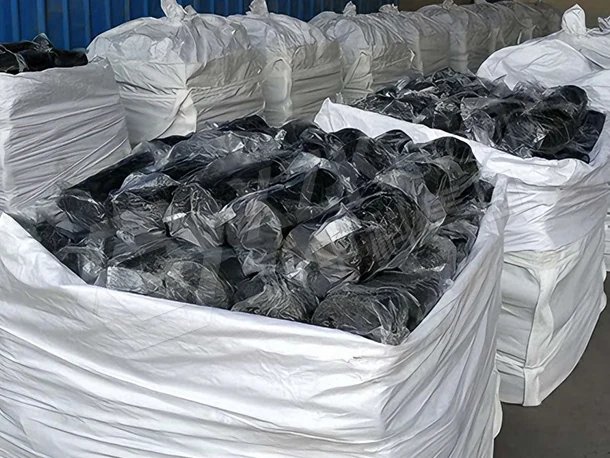
Minimum order 5 metric tons, shipped in 7–14 days, with custom pack sizes available to suit your clay gun. Batch test data covering composition, density and plasticity ships with every lot, along with storage, handling and safety documentation.
Where This Grade Sits in the Lining System
Monolithic materials fail more often on installation than on specification. Water demand, mixing time, vibration and the first heat-up curve decide the outcome before the lining ever sees metal — which is why installation parameters are issued with the material instead of being left to site practice.
XZK supplies waterless taphole clay as one zone of a zoned package rather than as a standalone item: the grades normally zoned alongside it — among them casthouse asc castable — are documented on the monolithic refractories page, and the vessel-level architecture — where each zone starts and ends, and which mechanism actually limits the campaign — is set out on the blast furnace and electric arc furnace pages.
Campaign data measured on this class of lining — including the wear profile that drove grade selection — is published in the MMK Magnitogorsk No.10 BF and 375 t ladle programme project reference.
Waterless Taphole Clay — Production & Application Scenarios
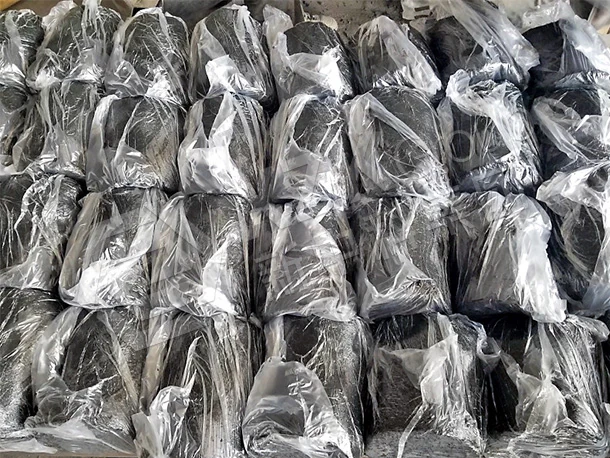
Premium raw materials, CNC pressing, high-temp firing, and on-site installation.
Advantages of Choosing XZK Waterless Taphole Clay
Predictable Tapping
The single biggest operational benefit is consistency: a taphole that opens when expected, at a predictable drill torque and time, is worth more than one that occasionally lasts longer but sometimes does not open.
Longer, More Stable Taphole Length
Waterless clay maintains channel length better through the tap, which protects the taphole area and reduces the rate at which the taphole face recedes.
Lower Fume Emissions
Without water there is no steam generation and less visible fume at the taphole, which improves working conditions and reduces the load on the casthouse fume capture system.
Stable Across Storage Conditions
Plasticity is controlled to suit your clay gun, and we supply storage temperature guidance so the material behaves the same in summer and winter.
Specific Applications of Waterless Taphole Clay
Proven performance across diverse heavy industrial thermal equipment.
Blast Furnace Taphole
Standard clay gun operation on medium and large blast furnaces, including high-throughput casthouses.
EAF Taphole & EBT
EAF tapping channels and EBT filler applications.
Other Tapping Operations
Ferro-alloy and non-ferrous furnaces using clay gun taphole systems.
400+ Furnaces Trust XZK Refractory Solutions
Over 75% of our international steel and kiln clients continue multi-year long-term procurement partnerships.
Opening became predictable, which is what the operators actually care about. Drill time is consistent shift to shift.
Taphole length is holding better and we are seeing less recession at the face.
Fume at the taphole dropped noticeably after the switch, which the crews noticed immediately.
Packed to our clay gun and the plasticity was right for our conditions.
Frequently Asked Engineering Questions
Click any question to expand; only one answer is shown at a time.
Waterless or water-bonded — how do I decide?
Waterless clay gives more consistent opening, longer taphole length and lower fume, and it is now the default on most medium and large furnaces. Water-bonded clay remains in use on smaller furnaces where cost sensitivity and existing practice outweigh those benefits. If your casthouse is fighting unpredictable opening, waterless is usually the answer.
What causes inconsistent opening?
Three things, in practice: clay plasticity outside the range your gun is set up for, storage temperature outside the recommended band, and variable taphole length from the previous tap. We address the first two directly and can help diagnose the third from your tapping records.
Does it need temperature-controlled storage?
Plasticity is temperature-sensitive, so yes — storage guidance is supplied with every order and matters more in hot climates or unheated stores. We date-stamp every pallet and will advise on your specific conditions.
Does it suit EBT systems?
Yes, waterless clay is used for EAF tapping channels and EBT filler applications as well as blast furnace tapholes.
What is the MOQ and lead time?
5 metric tons, shipped in 7–14 days. Custom pack sizes are available to suit your clay gun.
What documentation is provided?
Batch test data covering composition, density and plasticity, plus storage and handling guidance. Safety documentation is included.
Can you help diagnose tapping problems?
Yes. Send your tapping records, drill times and taphole length measurements and we will work through the likely causes with you rather than simply changing the product.
How is it packed?
Wrapped blocks or cartridges on ISPM-15 pallets, date-stamped, with storage temperature guidance.
Related Refractories & Lining Materials
Explore complementary refractory brick grades and monolithic materials for your furnace relining.
Get Your Waterless Taphole Clay Quote within 12 Hours
Please specify your refractory requirements by referring to the following aspects:
- ✓ Target Application: Furnace type, lining position (slag line, hearth, roof)
- ✓ Technical Specs: Operating temperature, slag chemistry, chemistry requirements
- ✓ Quantity & Dimensions: Tonnage requirement, standard or custom CAD drawing
- ✓ Delivery Terms: FOB Qingdao/Tianjin, CIF destination port
Why Steel Plants Choose XZK Refractories
Zonal Engineering, Not Just Bricks
Every proposal is a zone-by-zone material schedule matched to your furnace profile and operating practice — so all zones reach end-of-life together.
Source Factory Consistency
Fully automatic CNC batching and zero-defect quality control keep batch-to-batch variation at laboratory level.
Proven Global References
Supplied to Baosteel, Shougang, Hyundai Steel, JSW, Severstal, MMK and 400+ furnace projects across 60+ countries.
Full-Lifecycle Service
Lining design, masonry supervision, heat-up curves and failure analysis — plus EPC turnkey delivery for new builds and relines.
Send Us Your Furnace Drawing
Our engineers will return a zonal lining proposal with material schedule and quotation within 48 hours — even for non-standard shapes.
- Free material feasibility review
- Zonal architecture & installation drawings
- Heat-up curve & masonry guidance
Strict ISO 9001 Process Control Across All 6 Workshops
Every batch of raw materials is chemically assayed. Finished refractory shapes undergo density, ultrasonic non-destructive testing, and pre-assembly gap verification prior to global packaging.
- Raw material ICP chemical assay on every incoming batch
- Density, porosity and cold crushing (CCS) tests per ASTM / ISO
- Ultrasonic non-destructive testing of finished shapes
- Pre-assembly gap verification before seaworthy packaging