A refractory lining is a thermal and mechanical structure, not a pile of bricks. The material matters, but what determines whether a furnace reaches a fifteen-year campaign or comes out at eight is how the lining was designed: which grade in which zone, how the wear rates were balanced, how the joints were specified and how the heat-up was controlled.
Zhengzhou XZK Industrial Group designs linings zone by zone against your furnace drawing and operating data, then supplies the material and supports the installation. Send us a drawing and you receive a zonal lining proposal with a material schedule, recommended grades and factory-direct pricing — typically within 48 hours.
The Service, Step by Step
Requirements review
Furnace type, geometry, campaign target, fuel and slag chemistry, operating practice and any known problem zones. A drawing, existing specification or a description of the current lining is enough to start.
Operating condition analysis
Service temperatures, thermal cycling pattern, slag composition and basicity, alkali load and mechanical duty are worked through zone by zone to establish which wear mechanism governs where.
Zonal material selection
Each zone is assigned a material chemistry and grade matched to its governing wear mechanism, and the wear rates are balanced so the lining fails as a whole rather than at one weak point.
Proposal, material schedule and quotation
You receive a zone-by-zone schedule with grade, quantity, key property figures, drawing-matched shapes where required, and factory-direct pricing. Any assumptions are stated explicitly so you can check them.
Supply and installation support
Material is produced to the approved schedule and shipped with batch test data. Masonry guidance, joint specification, pre-assembly verification where the geometry warrants it and the heat-up curve are provided with the delivery.
Performance follow-up
After commissioning we review actual wear against the design assumption. Where a zone under-performs, the cause is identified from the wear pattern and the next campaign adjusted accordingly.
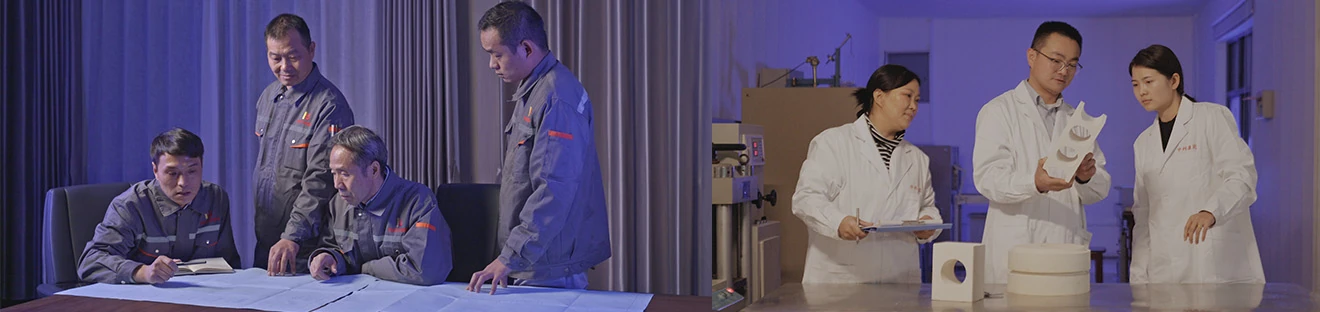
Zonal Design: How the Detail Actually Works
Three technical decisions carry most of the campaign life. All three are commonly left to the material supplier to decide, which is how a lining ends up specified by price rather than by duty.
Thermal model and the position of the skull layer
In a blast furnace hearth, campaign life is governed by where the 1150 °C isotherm sits inside the lining. Keep it inside the refractory and molten iron never reaches the lining interior. Move it outward, and penetration followed by brittle-layer formation begins. That position is a function of thermal conductivity, lining thickness and cooling capacity working together — which is why hearth designs pair microporous carbon with a high-conductivity ramming layer against the coolers rather than choosing either material in isolation.
Wear-rate matching across zones
A lining is only as long-lived as its fastest-wearing zone. Specifying a premium grade everywhere is wasteful; under-specifying one zone ends the campaign while the rest of the lining still has years of life. We deliberately balance wear rates so that zones reach their limit at approximately the same time — which is what makes a planned reline possible rather than an emergency one.
Joints, tolerances and pre-assembly
Joint thickness and mortar chemistry decide whether a correctly specified lining performs. Joints beyond the design thickness become a porous layer with poor slag resistance; undersized joints fail to seal. Where geometry is complex — stove domes, converter cones, RH snorkels — we verify fit by pre-assembly at the factory, and the as-built drawing is supplied with the material so site masonry matches what was designed.
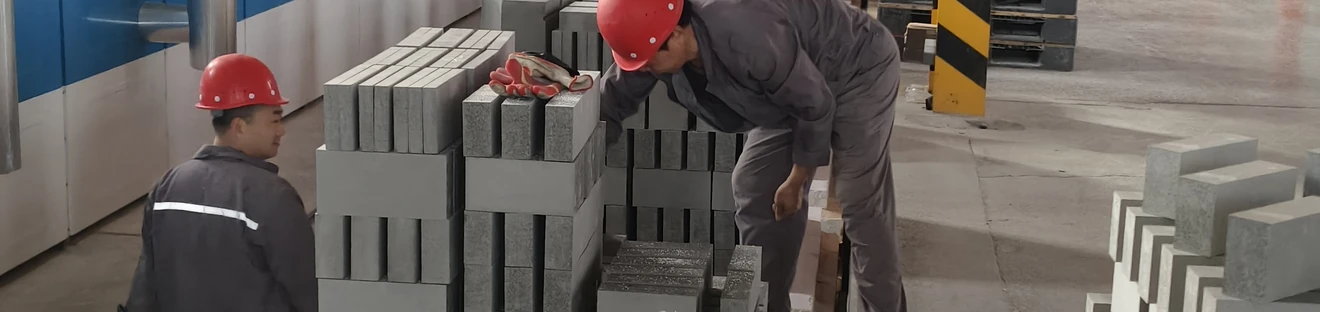
What You Receive
Zonal lining configuration
A zone-by-zone arrangement showing which grade sits where, with lining thicknesses and the reasoning behind each selection.
Material schedule (BoM)
Every specification with quantity, shape list and drawing-matched pieces, in a form that can be issued straight to procurement and to site.
Consumption forecast
Expected wear rates and the consumables profile for the campaign, so maintenance planning and consumable stocks can be built around it.
Masonry guidance
Joint specification, mortar selection and mixing guidance, brick sequence and tolerances.
Heat-up curve
Drying and heat-up schedule matched to the bonding systems in the lining. Rushing this stage is the most common cause of a good lining failing early.
Inspection criteria
What to check, at which stage, and against which tolerance — so problems are caught during installation rather than at start-up.
Project Types We Support
New furnace builds
Full lining design from the furnace drawing through to material supply and installation support. Early involvement is worth a great deal here — lining geometry decisions constrain campaign life for the whole of that furnace's first life, and they are hard to revise later.
Scheduled relines and major repairs
Re-design for an existing vessel, often with the objective of extending campaign life beyond what the previous lining achieved. We start from the wear pattern of the outgoing lining, which is the most useful evidence available.
Localised hot repair
Where a specific zone has failed ahead of the rest, we specify a repair material and method that restores that zone and matches the remaining life of the surrounding lining, rather than replacing more than the situation requires.
Cost-reduction programmes
Where refractory cost per tonne is the target, the analysis is usually about campaign life and zonal balance rather than material price. In our experience the material accounts for a minority of the total cost of a lining over its life.
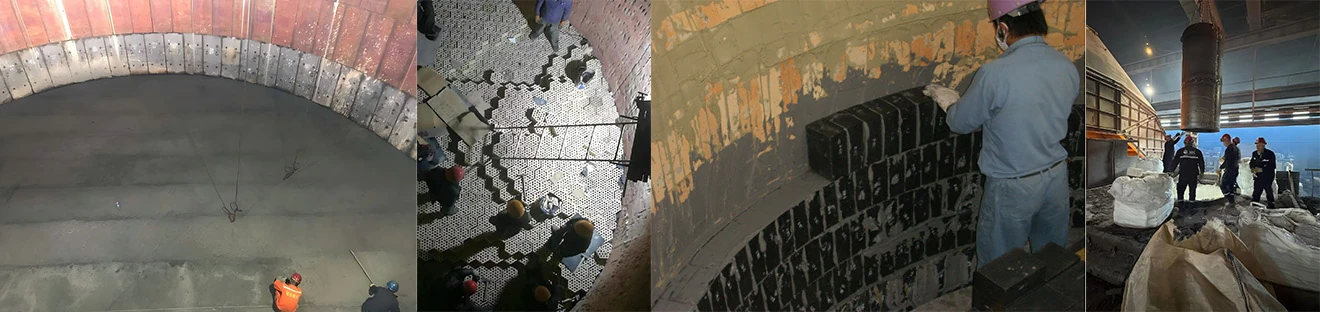
Engineering Capability Behind the Service
- R&D led by Prof. Shi Gan — professor-level senior engineer and national-level refractory expert, first inventor of several composite refractory technologies in industrial use today.
- 40-strong dedicated R&D team working on green refractory materials and new processing technology.
- 90+ national patents granted and participation in 4 industry standards — the design work is backed by material development, not catalogue selection.
- In-house laboratory for chemical analysis, cold crushing strength, refractoriness under load, thermal expansion, apparent porosity and hot modulus of rupture.
- Three specialised production bases — insulating materials, high-temperature specialties and mid-to-high-grade refractories — covering the full grade spectrum under one quality system.
- 400+ furnace projects delivered across 60+ countries, from blast furnace hearths and stove relines to converter campaigns and continuous casting flow control.
Send Your Furnace Drawing
The fastest way to start is a drawing with the furnace type, the zones involved and any operating data — service temperature, slag chemistry, campaign target and any known problem areas. A photograph of the worn lining is useful too, and often explains more about the failure than the drawing does.
Drawings and specifications are best sent by email to market@xzkgroup.com, where attachments of any size are handled directly by the engineering team. If you prefer, submit the form below with a short description and we will reply requesting whatever else is needed. Documents are treated as confidential and are covered by NDA on request.
What you get back: a zonal lining proposal with recommended grades, quantities and factory-direct pricing — typically within 48 hours where a full reline schedule is involved, and within 12 hours for a single-vessel repair scope.