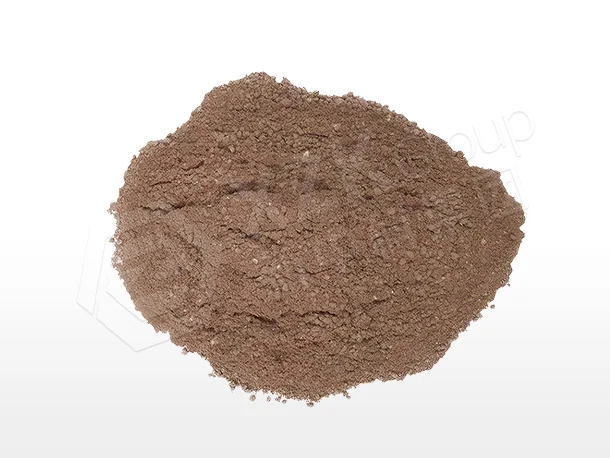
Magnesia Gunning Mix for BOF, EAF and Ladle Maintenance
MgO ≥80% · SiO₂ ≤8% · HMOR ≥4 MPa at 1500 °C · Bulk density ≥2.10 g/cm³ at 1500 °C — hot and cold repair of slag lines and hot spots.
Specifications of XZK Magnesia Gunning Mix
Manufactured strictly in accordance with ASTM, ISO, and YB/T metallurgical refractory standards.
| Property | Unit | Typical Value |
|---|---|---|
| MgO | % ≥ | 80.0 |
| SiO₂ | % ≤ | 8.0 |
| Bulk density (1500 °C × 3 h) | g/cm³ ≥ | 2.10 |
| Hot modulus of rupture (1500 °C × 3 h) | MPa ≥ | 4.0 |
| Permanent linear change (1500 °C × 3 h) | % | 0 to −2.0 |
Values are typical production averages, not guaranteed minima. A batch-specific Certificate of Analysis is issued for every shipment; third-party inspection (SGS / BV / TÜV) can be arranged on request.
| Property Reported Above | ASTM | ISO | GB/T |
|---|---|---|---|
| Chemical composition — MgO, CaO, SiO₂, Fe₂O₃, Al₂O₃ | ASTM C574 | ISO 12677 | GB/T 5069 |
| Apparent porosity and bulk density | ASTM C20 | ISO 5017 | GB/T 2997 |
| Hot modulus of rupture (elevated temperature) | ASTM C583 | ISO 5013 | GB/T 3002 |
| Permanent linear change on heating | ASTM C113 | ISO 2478 | GB/T 5988 |
Every value in the tables above is determined by the method stated in this reference table, and the method is identified on the batch Certificate of Analysis. Where a property is not covered by a directly corresponding ISO method, the ASTM or GB/T method is applied as the reference method and stated accordingly. Third-party verification (SGS / BV / TÜV) can be arranged on request.
About XZK Magnesia Gunning Mix
Magnesia gunning mix is the cheapest campaign life you will ever buy — provided it is used for what it is. It is a maintenance tool for levelling a wear profile, not a fix for a zone that was specified with the wrong grade.
What Gunning Actually Buys You
A lining comes down when its thinnest zone reaches the safety lining. Everything else — every other course with 60 mm still on it — is thrown away at that moment. Restoring the thin zone in service means the vessel keeps running on the thickness that is already there. That is the entire economic argument for gunning, and it is a strong one when the wear profile is uneven.
Where the wear profile is even, gunning buys much less, because there is no single zone holding the campaign back. This is why we ask about your wear pattern before recommending a gunning regime.
Why SiO₂ Content Matters Here
Gunning mixes need a bond that develops quickly at the gunned surface but does not melt at service temperature. Silica helps bonding, but too much of it forms low-melting phases with FeO and CaO at 1500 °C and above — and a patch that softens will slough off within a few heats, taking the repair cost with it. Holding SiO₂ to 8% maximum keeps the patch dimensionally stable while still achieving a working bond.
Hot MOR Is the Number to Check
Cold strength is easy to quote and largely irrelevant here. What determines whether a patch survives is hot modulus of rupture at service temperature — how well the material resists slag wash and thermal cycling while hot. XZK-MG-80 is specified at ≥4 MPa at 1500 °C, which is a working figure for slag-line and hot-spot repair rather than a laboratory curiosity.
Getting Rebound Under Control
Rebound is material that hits the wall and falls to the floor. It is pure waste, and it is usually caused by a mismatch between mix grading and gunning equipment rather than by a bad product. Nozzle pressure, water addition, nozzle angle and standoff distance all matter. Give us the machine make and model and we will grade the mix to suit — that single adjustment often recovers more material than changing supplier would.
Supply
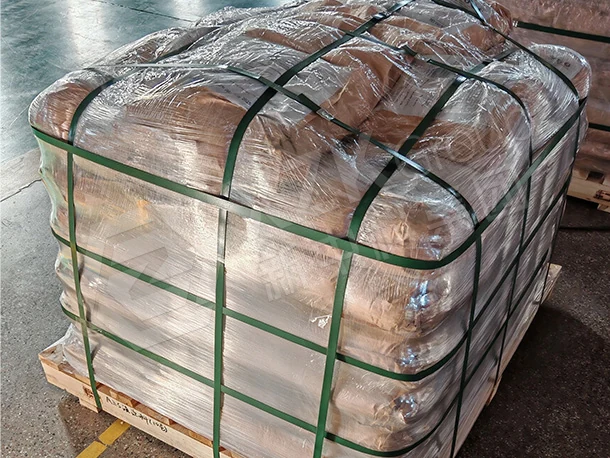
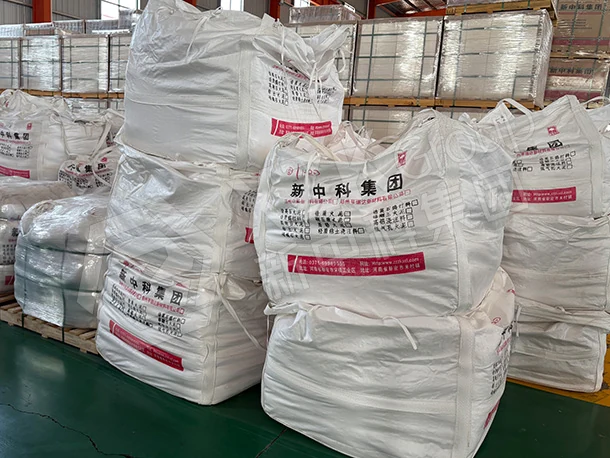
Supplied in 25 kg moisture-barrier bags on ISPM-15 pallets or 1,000 kg big bags, date-stamped. Minimum order 5 metric tons. Every batch ships with chemical analysis and physical test data, and a written gunning procedure covering water addition, nozzle distance and angle, and layer thickness.
Where This Grade Sits in the Lining System
Carbon-bonded basic grades are never specified in isolation. Carbon level, antioxidant package and bulk density are all set by the zone, and the zone map is set by the vessel — which is why a grade that performs well in one position can fail early in the next.
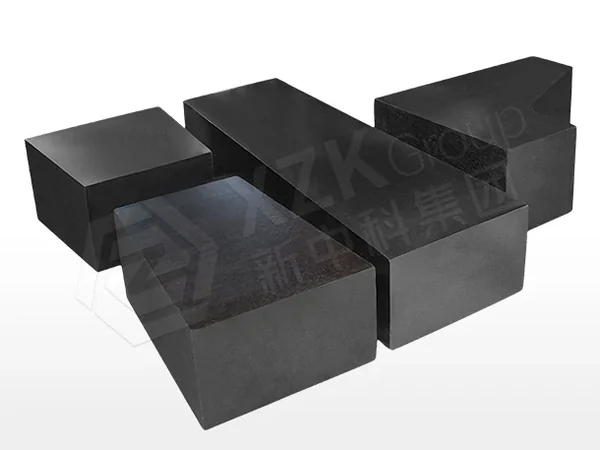
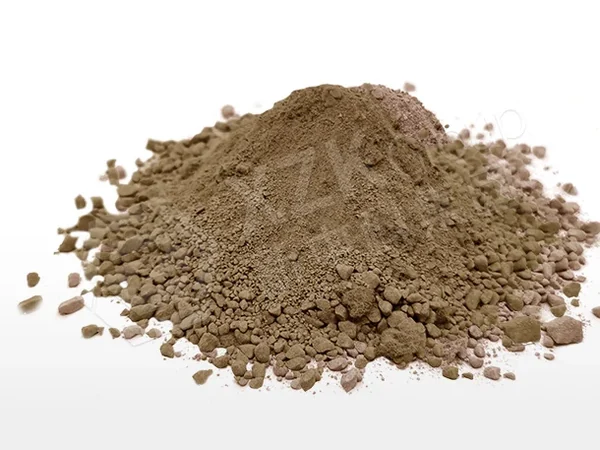
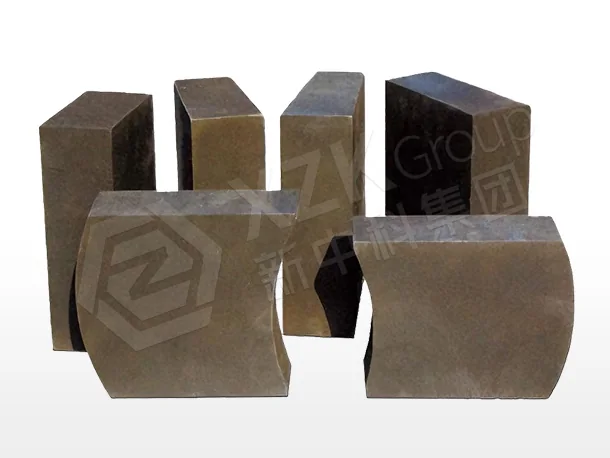
XZK supplies magnesia gunning mix as one zone of a zoned package rather than as a standalone item: the grades normally zoned alongside it — among them magnesia carbon brick — are documented on the magnesia-carbon and basic refractories page, and the vessel-level architecture — where each zone starts and ends, and which mechanism actually limits the campaign — is set out on the BOF converter and electric arc furnace pages.
Campaign data measured on this class of lining — including the wear profile that drove grade selection — is published in the ArcelorMittal Kryvyi Rih 300 t BOF lining programme project reference.
Magnesia Gunning Mix — Production & Application Scenarios
Premium raw materials, CNC pressing, high-temp firing, and on-site installation.
Advantages of Choosing XZK Magnesia Gunning Mix
Recovers Campaign Life Cheaply
Gunning restores the zone that is wearing fastest, so the vessel is no longer taken out of service on a single thin spot while the rest of the lining still has useful thickness.
Low Silica for High-Temperature Duty
SiO₂ held to 8% or below keeps the bond from forming excessive low-melting phases at service temperature, which is what causes gunned patches to slough off in high-FeO zones.
Good Adhesion and Hot Strength
Hot modulus of rupture ≥4 MPa at 1500 °C means the patch survives slag wash and thermal cycling rather than eroding away in a few heats.
Matched to Your Equipment
Rebound and water demand are tuned to the gunning machine and nozzle setup. Tell us the equipment and we will grade the mix to suit rather than supplying a generic product that rebounds excessively.
Specific Applications of Magnesia Gunning Mix
Proven performance across diverse heavy industrial thermal equipment.
BOF Converter Maintenance
Slag line, trunnion and charge pad repair between campaigns, including combined-blowing and slag-splashing operations.
EAF Hot Spot and Slag Line Repair
Localised repair of electrode hot spots, slag line and the EBT area, including hot gunning during short power-off windows.
Ladle Slag Line and Lip
Restoration of slag-line courses and lip areas where mechanical damage from deskulling has removed material locally.
400+ Furnaces Trust XZK Refractory Solutions
Over 75% of our international steel and kiln clients continue multi-year long-term procurement partnerships.
We gun the slag line every few days and it has become routine rather than an event. Campaign length went up because we stopped running to the thin spot.
Hot MOR was the number we cared about and it held up. The patches survive slag wash instead of washing out in a handful of heats.
Rebound dropped noticeably once they graded the mix to our machine. Less material on the floor.
Consistent chemistry bag to bag, which matters when the crew is gunning on a schedule and not checking every batch.
Frequently Asked Engineering Questions
Click any question to expand; only one answer is shown at a time.
Is gunning a substitute for correct grade selection?
No. Gunning is a maintenance tool that levels a wear profile; it cannot compensate for a zone that was specified with the wrong grade. If a particular zone needs gunning every few heats, that is a signal to re-grade it at the next reline, and we will tell you so.
Hot gunning or cold gunning?
Both are possible. Hot gunning between taps gives the best bond because the surface is already at temperature, but it needs a competent crew and a suitable window. Cold gunning during a planned stop is easier to control. We will recommend based on your operating pattern.
How much rebound should I expect?
Rebound depends on the mix grading, the machine, the nozzle angle and the water addition. A correctly matched mix typically rebounds far less than a generic product. Tell us your equipment and we will grade accordingly.
What is the shelf life?
Typically 6–12 months in original sealed bags, stored dry and off the ground. Gunning mixes are hygroscopic; damp material will not flow or bond correctly. Every bag is date-stamped.
What is the MOQ?
5 metric tons, supplied in 25 kg moisture-barrier bags on ISPM-15 pallets or in 1,000 kg big bags.
Can you supply for a specific gunning machine?
Yes. Rebound and water demand are graded to the machine and nozzle configuration. Send us the make and model, or the nozzle pressure and water setup, and we will match the mix.
What documentation comes with the material?
Batch chemical analysis and physical test data, plus a written gunning procedure covering water addition, nozzle distance and angle, and layer thickness.
Does gunning add carbon to the steel?
This is a magnesia gunning mix, not a carbon-bearing one, so carbon pickup from the patch is not the concern it would be with MgO-C repair materials. For carbon-critical grades we will confirm the route before recommending any repair material.
Related Refractories & Lining Materials
Explore complementary refractory brick grades and monolithic materials for your furnace relining.
Get Your Magnesia Gunning Mix Quote within 12 Hours
Please specify your refractory requirements by referring to the following aspects:
- ✓ Target Application: Furnace type, lining position (slag line, hearth, roof)
- ✓ Technical Specs: Operating temperature, slag chemistry, chemistry requirements
- ✓ Quantity & Dimensions: Tonnage requirement, standard or custom CAD drawing
- ✓ Delivery Terms: FOB Qingdao/Tianjin, CIF destination port
Why Steel Plants Choose XZK Refractories
Zonal Engineering, Not Just Bricks
Every proposal is a zone-by-zone material schedule matched to your furnace profile and operating practice — so all zones reach end-of-life together.
Source Factory Consistency
Fully automatic CNC batching and zero-defect quality control keep batch-to-batch variation at laboratory level.
Proven Global References
Supplied to Baosteel, Shougang, Hyundai Steel, JSW, Severstal, MMK and 400+ furnace projects across 60+ countries.
Full-Lifecycle Service
Lining design, masonry supervision, heat-up curves and failure analysis — plus EPC turnkey delivery for new builds and relines.
Send Us Your Furnace Drawing
Our engineers will return a zonal lining proposal with material schedule and quotation within 48 hours — even for non-standard shapes.
- Free material feasibility review
- Zonal architecture & installation drawings
- Heat-up curve & masonry guidance
Strict ISO 9001 Process Control Across All 6 Workshops
Every batch of raw materials is chemically assayed. Finished refractory shapes undergo density, ultrasonic non-destructive testing, and pre-assembly gap verification prior to global packaging.
- Raw material ICP chemical assay on every incoming batch
- Density, porosity and cold crushing (CCS) tests per ASTM / ISO
- Ultrasonic non-destructive testing of finished shapes
- Pre-assembly gap verification before seaworthy packaging