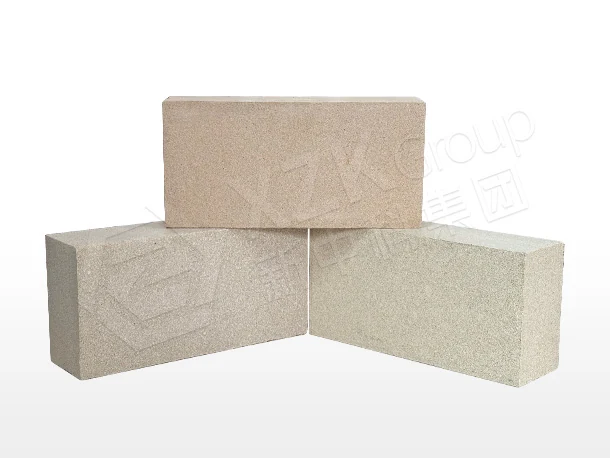
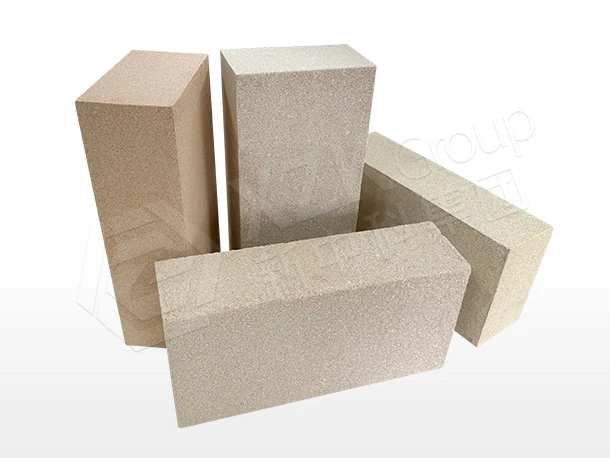
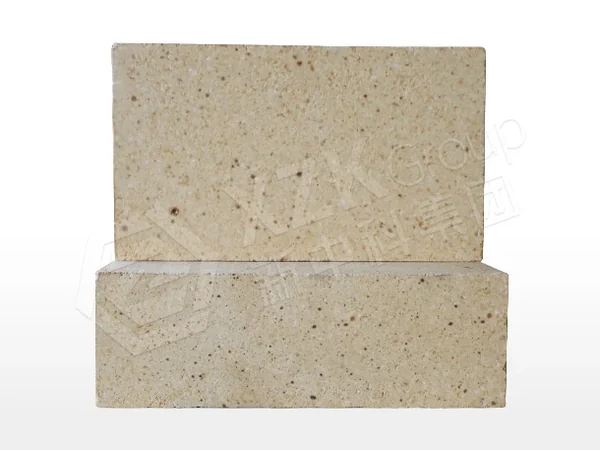
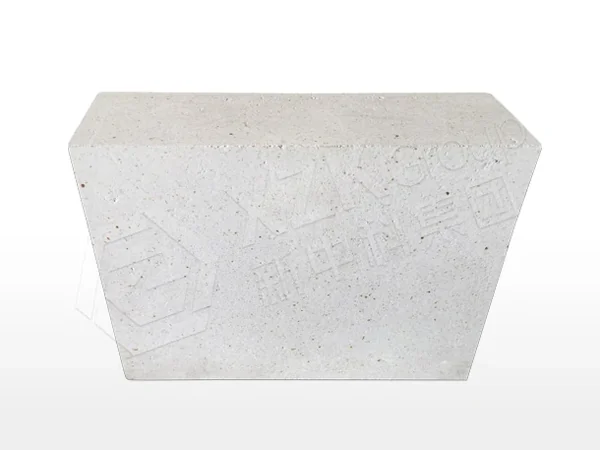
Lightweight High-Alumina Insulating Brick (LI Series) for Furnace Backup
Al₂O₃ ≥48% · BD ≤0.6–1.2 g/cm³ · CCS ≥1.5–8.0 MPa · Thermal conductivity ≤0.25–0.50 W/(m·K) — the general-duty insulation grade.
Specifications of XZK High-Alumina Insulating Brick
Manufactured strictly in accordance with ASTM, ISO, and YB/T metallurgical refractory standards.
| Property | XZK-LI140-1.2 | XZK-LI140-1.0 | XZK-LI140-0.8 | XZK-LI135-0.6 |
|---|---|---|---|---|
| Al₂O₃ (%) ≥ | 48 | 48 | 48 | 48 |
| Bulk Density (g/cm³) ≤ | 1.2 | 1.0 | 0.8 | 0.6 |
| Cold Crushing Strength (MPa) ≥ | 8.0 | 3.0 | 2.5 | 1.5 |
| Thermal Conductivity 350 ± 25 °C (W/m·K) ≤ | 0.50 | 0.40 | 0.35 | 0.25 |
Values are typical production averages, not guaranteed minima. A batch-specific Certificate of Analysis is issued for every shipment; third-party inspection (SGS / BV / TÜV) can be arranged on request.
| Property Reported Above | ASTM | ISO | GB/T |
|---|---|---|---|
| Chemical composition — Al₂O₃, SiO₂, Fe₂O₃, TiO₂, alkali oxides | ASTM C573 | ISO 12677 | GB/T 6900 |
| Apparent porosity and bulk density | ASTM C20 | ISO 5017 | GB/T 2997 |
| Cold crushing strength | ASTM C133 | ISO 10059-1 | GB/T 5072 |
| Thermal conductivity | ASTM C201 | ISO 8894-1 | GB/T 5990 |
Every value in the tables above is determined by the method stated in this reference table, and the method is identified on the batch Certificate of Analysis. Where a property is not covered by a directly corresponding ISO method, the ASTM or GB/T method is applied as the reference method and stated accordingly. Third-party verification (SGS / BV / TÜV) can be arranged on request.
About XZK High-Alumina Insulating Brick
Lightweight high-alumina insulating brick is the general-duty workhorse of furnace backup linings. At 48% Al₂O₃ across four densities from 0.6 to 1.2 g/cm³, it covers the great majority of insulation duty — and it does so at a cost that mullite insulation cannot match below about 1350 °C.
Use the Cheaper Grade Where It Works
Most furnace backup never reaches the temperature at which mullite becomes necessary. Specifying mullite throughout a backup lining is one of the more common ways insulation budgets get inflated: the premium buys temperature capability that most of the lining will never use.
The correct design is usually graded by depth and temperature — high-alumina insulation through the bulk of the backup, mullite only in the hottest courses where dimensional stability genuinely matters.
Reading the Density Range
- XZK-LI140-1.2 — 1.2 g/cm³, CCS ≥8.0 MPa, conductivity ≤0.50 W/(m·K). Nearest the working lining, where incidental load is possible.
- XZK-LI140-1.0 — 1.0 g/cm³, CCS ≥3.0 MPa, ≤0.40 W/(m·K). Mid backup.
- XZK-LI140-0.8 — 0.8 g/cm³, CCS ≥2.5 MPa, ≤0.35 W/(m·K). Mid to outer backup.
- XZK-LI135-0.6 — 0.6 g/cm³, CCS ≥1.5 MPa, ≤0.25 W/(m·K). Near the shell, pure insulation.
Note how strength falls with density. That is the trade you are managing: strength where load is possible, insulation where it is not.
What It Is Not
Insulating brick is not a working lining. High porosity and low strength mean slag, abrasion and dust-laden gas destroy it quickly. It belongs behind the working lining, and its job is thermal resistance and shell protection — nothing else. Where a zone is exposed, dense refractory is the answer, not denser insulation.
Two Practical Failure Modes
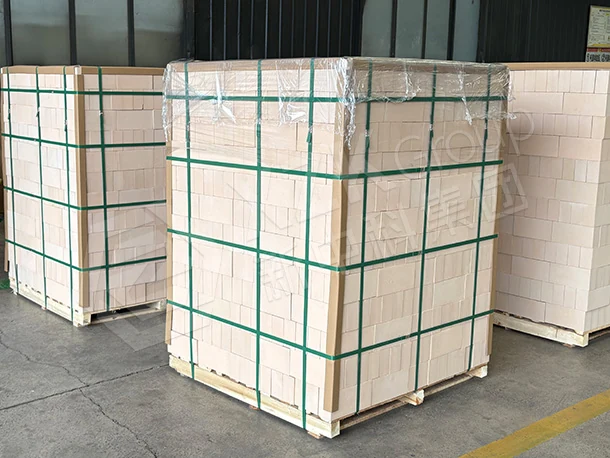
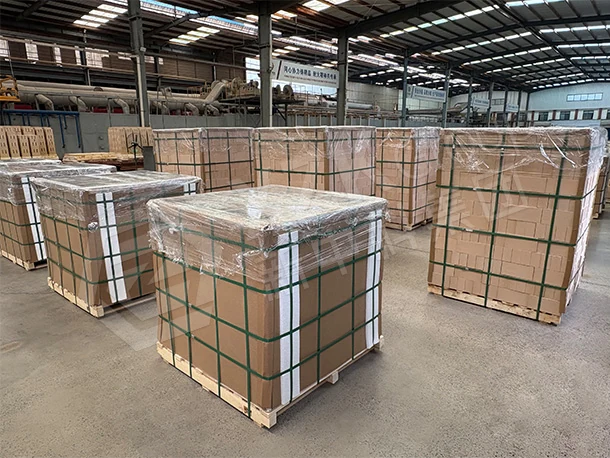
First, moisture: saturated insulation loses strength and can spall on first heat-up, and that failure is routinely blamed on the product. Store dry and under cover. Second, mechanical damage: insulating brick is fragile, and damage in transit or from site traffic is the most common reason an insulation layer underperforms. Low-density grades are crated rather than palletised, and traffic over installed insulation should be avoided.
Supply
Minimum order 10 metric tons for standard shapes and 20 metric tons for cut-to-fit work, 20–35 days where cutting is involved. Density, crushing strength, thermal conductivity, permanent linear change, classification temperature and chemistry are tested per batch with a Certificate of Analysis on every shipment.
Where This Grade Sits in the Lining System
Insulating grades are specified backwards, from the shell temperature or the fuel figure you need to hit, and then checked against the mechanical load the backup lining actually carries. Picking a density out of a catalogue is the usual reason insulation underperforms its own datasheet.
XZK supplies high-alumina insulating brick as one zone of a zoned package rather than as a standalone item: the grades normally zoned alongside it — among them mullite insulating brick — are documented on the insulating refractories page, and the vessel-level architecture — where each zone starts and ends, and which mechanism actually limits the campaign — is set out on the blast furnace and hot blast stove pages.
Campaign data measured on this class of lining — including the wear profile that drove grade selection — is published in the MMK Magnitogorsk No.10 BF and 375 t ladle programme project reference.
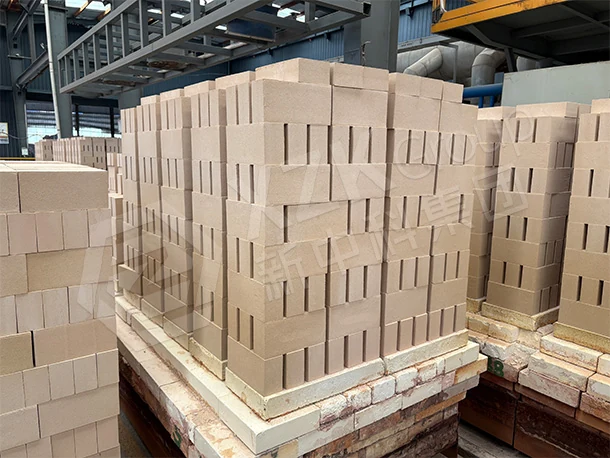
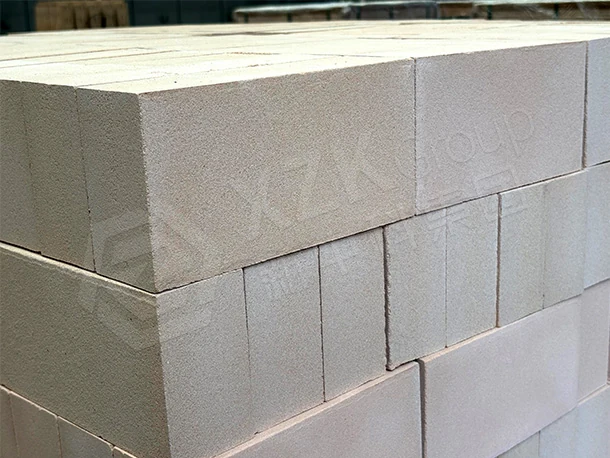
High-Alumina Insulating Brick — Production & Application Scenarios
Premium raw materials, CNC pressing, high-temp firing, and on-site installation.
Advantages of Choosing XZK High-Alumina Insulating Brick
The Right Economics Below 1350 °C
Most furnace backup linings never see the temperatures that justify mullite insulation. Below roughly 1350 °C, lightweight high-alumina delivers equivalent service at a lower cost.
Four Densities for a Graded Backup
1.2 g/cm³ with 8.0 MPa strength next to the working lining, stepping down to 0.6 g/cm³ at 0.25 W/(m·K) near the shell. Grading is what turns insulation into a designed system.
Low Thermal Conductivity
From 0.25 W/(m·K) at the lowest density, cutting shell temperature and fuel consumption measurably.
Better Strength Than Fireclay Insulation
At equivalent density, high-alumina insulation carries more load and holds its shape better, which matters where the backup may see incidental contact or vibration.
Specific Applications of High-Alumina Insulating Brick
Proven performance across diverse heavy industrial thermal equipment.
Blast Furnace & Stove Backup
Backup insulation behind working linings in stack, stove and checker areas below the mullite range.
Reheating & Heat Treatment Furnaces
Wall, roof and hearth backup in reheating, forging and heat treatment furnaces.
Ladle & Torpedo Backup
Insulation layers behind working linings to reduce heat loss and shell temperature.
Kiln & Incinerator Backups
General industrial furnace backup linings and flue insulation.
400+ Furnaces Trust XZK Refractory Solutions
Over 75% of our international steel and kiln clients continue multi-year long-term procurement partnerships.
We switched from mullite to lightweight high-alumina in the cooler zones and the performance was identical at a lower cost.
Grading density through the backup cut our shell temperature and the fuel bill moved in the right direction.
Strength at 1.2 density was what we needed next to the working lining, and it was met on every batch.
Low-density grades were crated properly and arrived undamaged.
Frequently Asked Engineering Questions
Click any question to expand; only one answer is shown at a time.
When should I use mullite insulation instead?
Above roughly 1350 °C. Lightweight high-alumina begins to lose dimensional stability above that, joints open, and the insulation layer stops performing. Below it, mullite is usually an unnecessary premium.
Which density for which depth?
1.2 g/cm³ nearest the working lining, where incidental load and higher temperature demand strength; 1.0 and 0.8 through the middle; 0.6 g/cm³ near the shell, where only thermal resistance matters. A graded backup outperforms a uniform one.
Is insulating brick ever a working lining?
Generally no. It has high porosity and low strength, so slag, abrasion and dust-laden gas destroy it. It belongs behind the working lining. There are exceptions in clean, low-velocity zones, and we will advise case by case.
How much fuel can insulation save?
It depends entirely on your existing shell temperature and duty. On reheating furnaces and stove backups, a correctly graded system commonly reduces shell temperature by 40–80 °C. We calculate against your measured figures rather than quoting a generic percentage.
What is the MOQ and lead time?
10 metric tons for standard shapes and 20 metric tons for cut-to-fit work, with 20–35 days lead time where cutting is involved.
What test data is supplied?
Bulk density, cold crushing strength, thermal conductivity at 350 °C, permanent linear change, classification temperature and chemical analysis per ASTM and ISO methods. Batch COA ships with every lot.
How should it be stored?
Dry and under cover. Saturated insulation loses strength and can spall on first heat-up — a failure that is routinely misattributed to the product.
How is it packed?
Palletised with edge protection, interleaved cushioning and stretch wrap on ISPM-15 heat-treated pallets. Grades below 0.8 g/cm³ are crated or boxed.
Related Refractories & Lining Materials
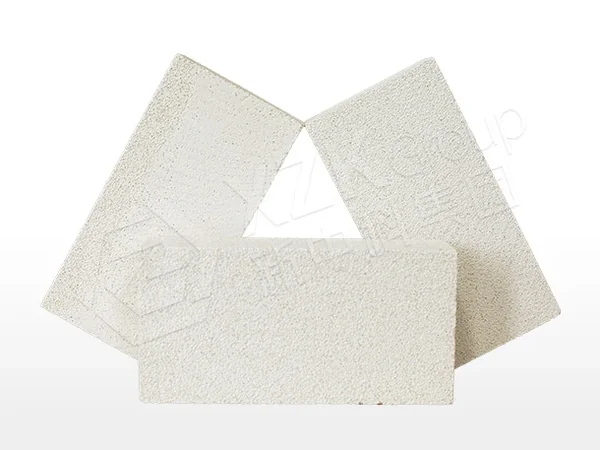
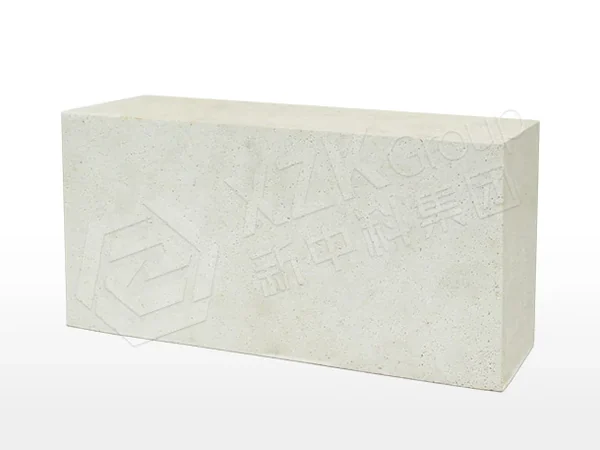
Explore complementary refractory brick grades and monolithic materials for your furnace relining.
Get Your High-Alumina Insulating Brick Quote within 12 Hours
Please specify your refractory requirements by referring to the following aspects:
- ✓ Target Application: Furnace type, lining position (slag line, hearth, roof)
- ✓ Technical Specs: Operating temperature, slag chemistry, chemistry requirements
- ✓ Quantity & Dimensions: Tonnage requirement, standard or custom CAD drawing
- ✓ Delivery Terms: FOB Qingdao/Tianjin, CIF destination port
Why Steel Plants Choose XZK Refractories
Zonal Engineering, Not Just Bricks
Every proposal is a zone-by-zone material schedule matched to your furnace profile and operating practice — so all zones reach end-of-life together.
Source Factory Consistency
Fully automatic CNC batching and zero-defect quality control keep batch-to-batch variation at laboratory level.
Proven Global References
Supplied to Baosteel, Shougang, Hyundai Steel, JSW, Severstal, MMK and 400+ furnace projects across 60+ countries.
Full-Lifecycle Service
Lining design, masonry supervision, heat-up curves and failure analysis — plus EPC turnkey delivery for new builds and relines.
Send Us Your Furnace Drawing
Our engineers will return a zonal lining proposal with material schedule and quotation within 48 hours — even for non-standard shapes.
- Free material feasibility review
- Zonal architecture & installation drawings
- Heat-up curve & masonry guidance
Strict ISO 9001 Process Control Across All 6 Workshops
Every batch of raw materials is chemically assayed. Finished refractory shapes undergo density, ultrasonic non-destructive testing, and pre-assembly gap verification prior to global packaging.
- Raw material ICP chemical assay on every incoming batch
- Density, porosity and cold crushing (CCS) tests per ASTM / ISO
- Ultrasonic non-destructive testing of finished shapes
- Pre-assembly gap verification before seaworthy packaging