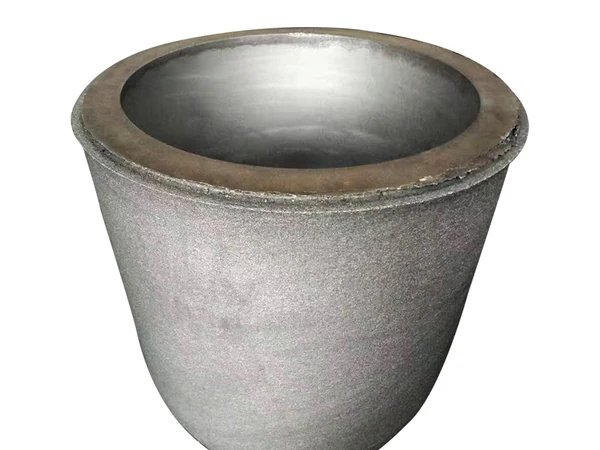
SiC & Carbon Series (Blast Furnace) · Refractory Series
Silicon Carbide & Carbon Refractories for Long Blast Furnace Campaigns
The blast furnace core defense line: Si₃N₄-bonded and SiALON-bonded SiC bricks, microporous carbon bricks, ceramic cups, ASC bricks and high-conductivity carbon ramming mass. High thermal conductivity moves heat to the cooling system while nitride bonding resists alkali attack — the foundation of 15+ year BF campaigns.
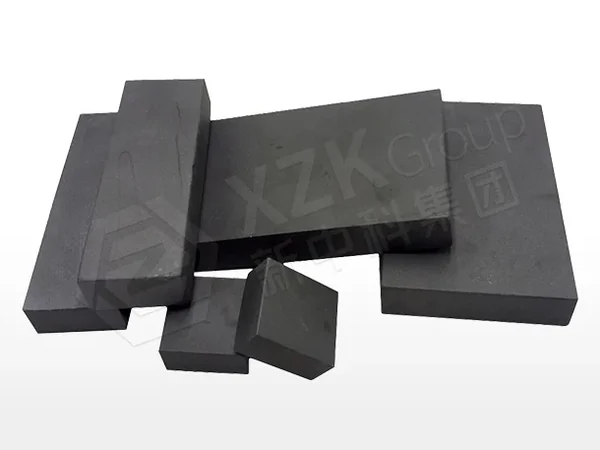
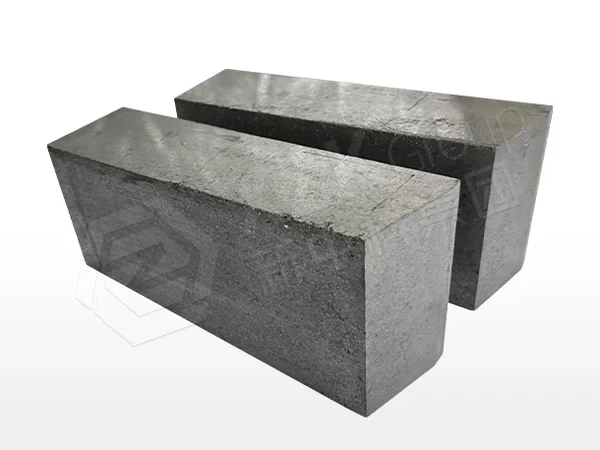
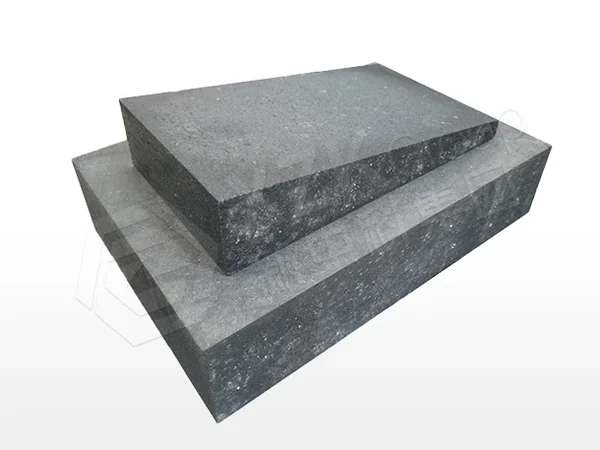
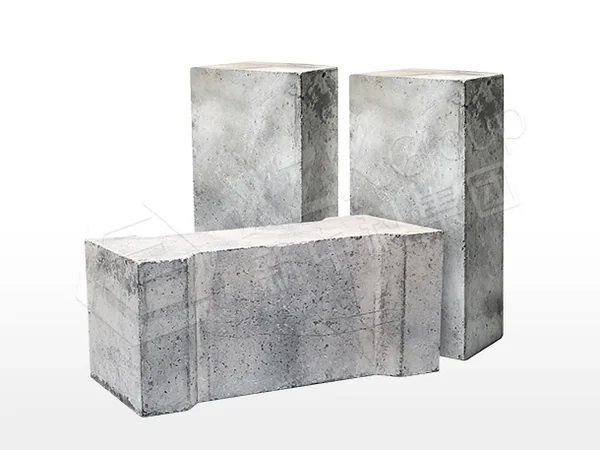
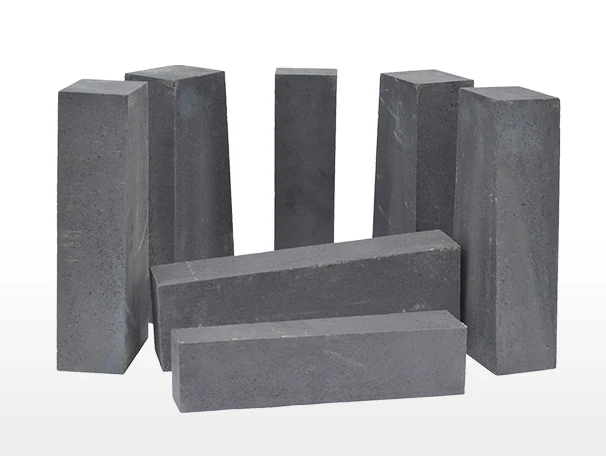
- Si₃N₄-bonded and SiALON-bonded SiC bricks with thermal conductivity to 35 W/(m·K)
- Microporous carbon brick with pore sizes that resist iron penetration
- Ceramic cup systems that lock the 1150 °C isotherm inside the lining
- High-conductivity carbon ramming mass for the hearth and cooling interface
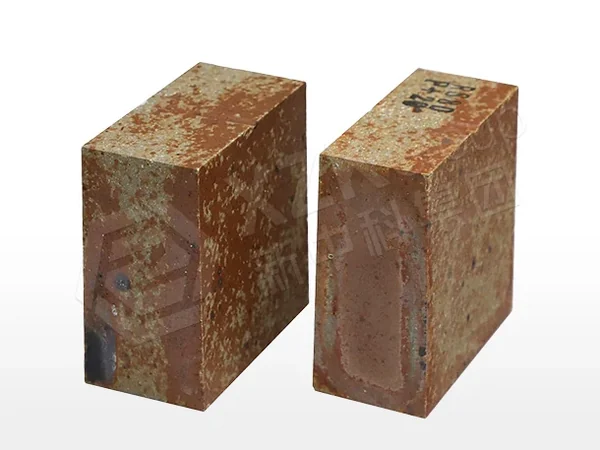
- ASC (Al₂O₃-SiC-C) bricks for torpedo cars and hot metal ladles
- Engineered for 15–20 year blast furnace campaigns without unplanned relining
SiC & Carbon Series (Blast Furnace) Product List
Full TDS datasheets available on each product detail page. Click "Get Free Quote" to request factory pricing within 12 hours.
Selection Guide
Free Consultation with Our Engineer
How to Select the Right SiC & Carbon Series (Blast Furnace) Refractory Formulation for Your Furnace
Designing the Blast Furnace Defence Line
Blast furnace refractory design is a thermal management problem before it is a materials problem. The lining survives when heat is conducted into the cooling system fast enough to keep the 1150 °C isotherm — the temperature at which molten iron solidifies — inside the refractory. Every material choice below follows from that principle.
Zone-by-Zone Material Logic
- Hearth and bottom — microporous carbon brick plus a ceramic cup barrier, backed by high-conductivity carbon ramming mass against the cooling staves. Carbon provides the thermal pathway; the ceramic cup protects it during start-up and against alkali and zinc attack.
- Bosh and belly — Si₃N₄-bonded or SiALON-bonded SiC brick. These zones carry the highest heat load and the worst alkali vapour attack, which is exactly where nitride bonding earns its cost.
- Lower and mid stack — SiC-mullite or high-strength high-alumina brick, balancing abrasion resistance from the burden against thermal cycling.
- Upper stack — dense high-alumina or fireclay grades, where abrasion rather than chemical attack controls.
- Taphole and casthouse — ASC castables and waterless taphole clay, covered in our monolithic range.
Why Conductivity Beats Thickness
Adding refractory thickness without adding conductivity is counterproductive: it moves the hot face further from the cooling system and can actually raise the temperature at the isotherm. Where hearth temperatures are climbing, the correct response is usually higher conductivity in the carbon build-up and a verified cooling circuit — not simply more brick.
Carbon Oxidation: The Main Life Limiter Outside the Hearth
In the stack and bosh, carbon-containing materials can be lost to oxidation if the cooling system or gas flow allows oxygen ingress. Selecting oxidation-protected grades, controlling the ramming and jointing materials, and monitoring shell temperature are all part of the package we specify.
What to Send Us
Furnace volume and drawing, cooling configuration, campaign history, hearth temperature trend, and the alkali and zinc load if known. We will return a full zonal build-up with a material schedule, thermal rationale and installation guidance.
Procurement FAQ — SiC & Carbon Series (Blast Furnace)
MOQ, lead time, packaging, shipment, payment — buyer-side concerns answered for this specific series.
What is the MOQ for carbon and SiC refractories?
10 metric tons for standard SiC and ASC grades; 20 metric tons for microporous carbon, ceramic cup systems and custom large blocks. Hearth packages are quoted as a complete set against the furnace drawing.
How long does a full hearth package take?
35–60 days depending on block complexity, because large carbon and ceramic cup blocks require individual machining, numbering and dry trial-fitting prior to shipment.
How are carbon blocks protected against oxidation in transit?
Carbon materials are palletised and wrapped with moisture-barrier film on ISPM-15 heat-treated pallets, with edge protection on machined faces. Storage should be dry and covered; we date-stamp every pallet and provide handling instructions.
Can you supply the complete hearth design, not just the materials?
Yes. Send the furnace drawing and cooling configuration and we will propose the full zonal build-up — ceramic cup, microporous carbon, high-conductivity ramming mass and the stack, bosh and belly SiC grades — with a material schedule and installation guidance.
What payment and shipping terms apply?
T/T with deposit or L/C at sight; FOB Qingdao or Tianjin, CIF worldwide, or door-to-door. Hearth packages are normally shipped as a numbered, sequenced set matched to the installation sequence.
Where SiC & Carbon Series (Blast Furnace) Products Are Installed
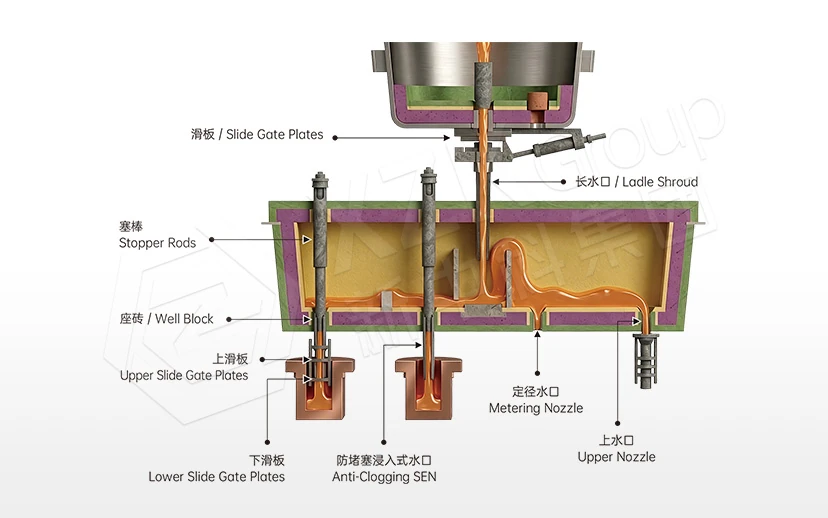
Explore the furnace systems these refractories are engineered for — from blast furnace hearths to continuous casting flow control.
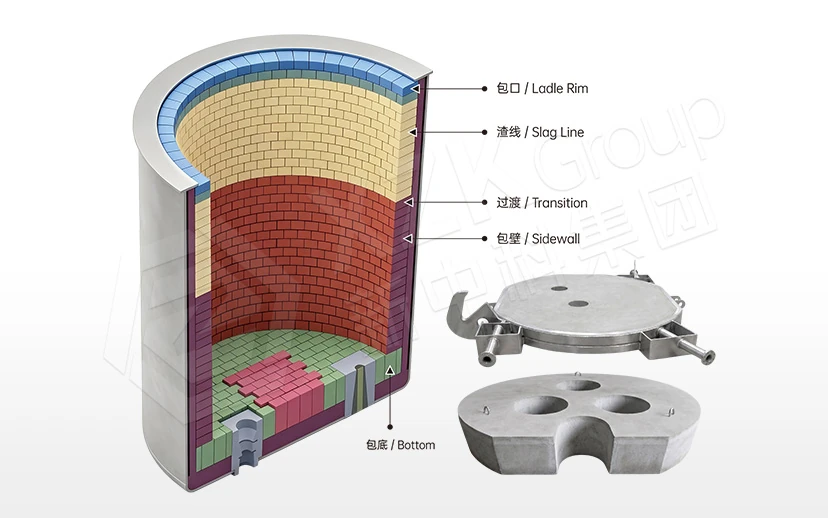
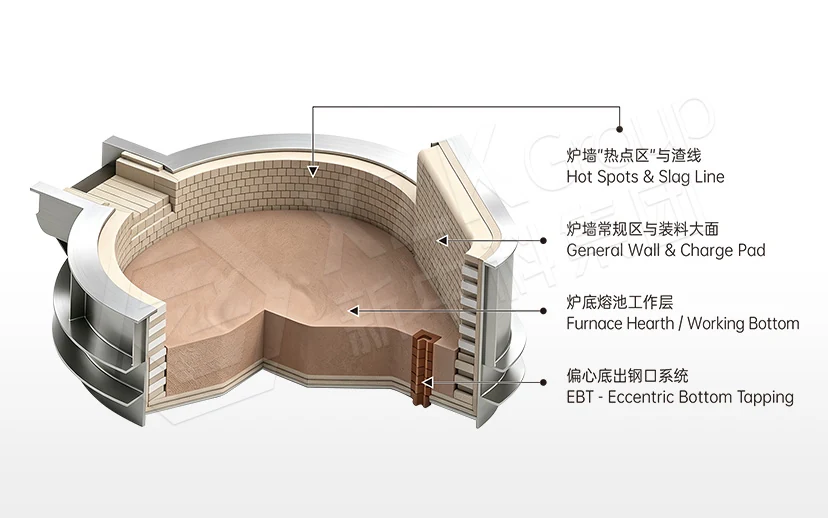
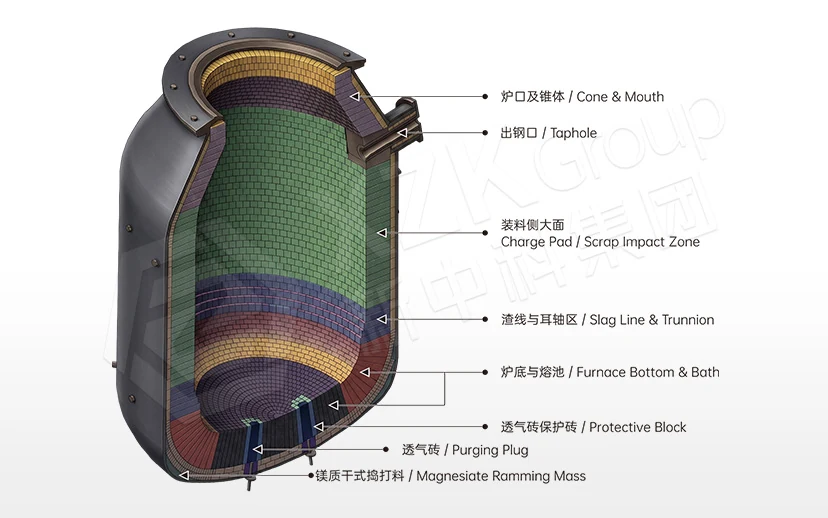
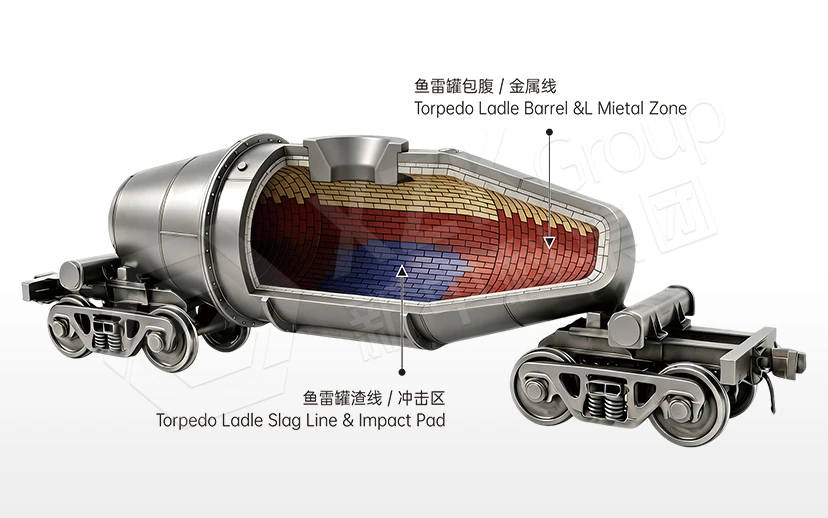
FAQs — SiC & Carbon Series (Blast Furnace)
Why is thermal conductivity so important in a blast furnace hearth?
The hearth survives by moving heat into the cooling system, not by resisting it. High-conductivity SiC and carbon materials keep the refractory below its critical temperature and push the 1150 °C isotherm — the iron solidification front — inward, so liquid iron cannot penetrate the lining. Low conductivity is the most common cause of premature hearth failure.
What is a ceramic cup and when is it specified?
A ceramic cup is a high-purity corundum or corundum-mullite barrier installed inside the carbon hearth. It protects the carbon during start-up and against early alkali and zinc attack, while the carbon behind it provides the thermal pathway. It is standard practice where 15-year-plus campaigns are targeted.
How does nitride bonding differ from oxide bonding in SiC brick?
Si₃N₄ and SiALON bonding give SiC bricks substantially better alkali resistance, thermal conductivity and hot strength than oxide or clay bonding. They are the reason SiC can be used in the lower stack, bosh and belly where alkali vapour and high heat load coincide.
What causes microporous carbon brick to outperform standard carbon block?
Iron penetration is governed by pore throat diameter. Microporous carbon holds pore sizes small enough that molten iron cannot enter the pore network, which markedly reduces penetration and the associated brittle-layer formation that leads to hearth erosion.
When should ASC brick be used instead of high-alumina in a torpedo car?
Where the car sees alternating iron and slag, mechanical cleaning, or desulfurisation and de-siliconisation reagent attack. ASC (Al₂O₃-SiC-C) combines slag resistance from alumina, erosion resistance and thermal conductivity from SiC, and non-wetting behaviour from carbon — a combination high-alumina brick cannot match.
What test data do you supply with carbon and SiC products?
Bulk density and apparent porosity per ASTM C830, cold crushing strength per ASTM C133, hot modulus of rupture per ASTM C583, thermal conductivity by laser flash or comparative method, SiC and Si₃N₄ content by chemical analysis, and — for microporous carbon — pore size distribution data. Batch COA accompanies every shipment.
Why Steel Plants Choose XZK Refractories
Zonal Engineering, Not Just Bricks
Every proposal is a zone-by-zone material schedule matched to your furnace profile and operating practice — so all zones reach end-of-life together.
Source Factory Consistency
Fully automatic CNC batching and zero-defect quality control keep batch-to-batch variation at laboratory level.
Proven Global References
Supplied to Baosteel, Shougang, Hyundai Steel, JSW, Severstal, MMK and 400+ furnace projects across 60+ countries.
Full-Lifecycle Service
Lining design, masonry supervision, heat-up curves and failure analysis — plus EPC turnkey delivery for new builds and relines.
Send Us Your Furnace Drawing
Our engineers will return a zonal lining proposal with material schedule and quotation within 48 hours — even for non-standard shapes.
- Free material feasibility review
- Zonal architecture & installation drawings
- Heat-up curve & masonry guidance
Quality & Traceability
Strict ISO 9001 Process Control Across All 6 Workshops
Every batch of raw materials is chemically assayed. Finished refractory shapes undergo density, ultrasonic non-destructive testing, and pre-assembly gap verification prior to global packaging.
- Raw material ICP chemical assay on every incoming batch
- Density, porosity and cold crushing (CCS) tests per ASTM / ISO
- Ultrasonic non-destructive testing of finished shapes
- Pre-assembly gap verification before seaworthy packaging
100,000+
Metric Tons Annual Capacity
60+
Countries Export Footprint
6
Fully-Equipped Workshops
100%
ISO 9001:2015 Certified