Ladle & Converter Purging Plugs — Slit and Porous Designs
Al₂O₃ ≥80% / MgO ≥80% · CCS ≥40–60 MPa · Gas flow to spec at 0.4–0.6 MPa · Service life matched to ladle campaign — slit and porous geometries.
Specifications of XZK Purging Plug
Manufactured strictly in accordance with ASTM, ISO, and YB/T metallurgical refractory standards.
| Property | Slit-type (corundum) | Porous (corundum) | Converter bottom (MgO-C) |
|---|---|---|---|
| Al₂O₃ (%) ≥ | 80 | 80 | — |
| MgO (%) ≥ | — | — | 80 |
| Bulk Density (g/cm³) ≥ | 2.95 | 2.60 | 2.90 |
| Apparent Porosity (%) ≤ | 18 | 22 | — |
| Cold Crushing Strength (MPa) ≥ | 60 | 40 | 45 |
| Max Service Temperature (°C) | 1750 | 1750 | 1750 |
Values are typical production averages, not guaranteed minima. A batch-specific Certificate of Analysis is issued for every shipment; third-party inspection (SGS / BV / TÜV) can be arranged on request.
| Property Reported Above | ASTM | ISO | GB/T |
|---|---|---|---|
| Chemical composition — MgO, CaO, SiO₂, Fe₂O₃, Al₂O₃ | ASTM C574 | ISO 12677 | GB/T 5069 |
| Apparent porosity and bulk density | ASTM C20 | ISO 5017 | GB/T 2997 |
| Cold crushing strength | ASTM C133 | ISO 10059-1 | GB/T 5072 |
Every value in the tables above is determined by the method stated in this reference table, and the method is identified on the batch Certificate of Analysis. Where a property is not covered by a directly corresponding ISO method, the ASTM or GB/T method is applied as the reference method and stated accordingly. Third-party verification (SGS / BV / TÜV) can be arranged on request.
About XZK Purging Plug
Purging plugs are the interface between the gas system and the steel, and they are specified by duty more than by chemistry. Get the geometry wrong and the stirring does not work, regardless of how good the refractory is.
Slit or Porous: Choose by Duty
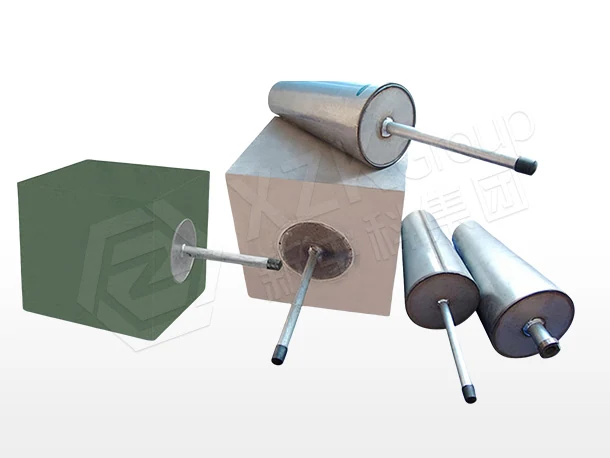
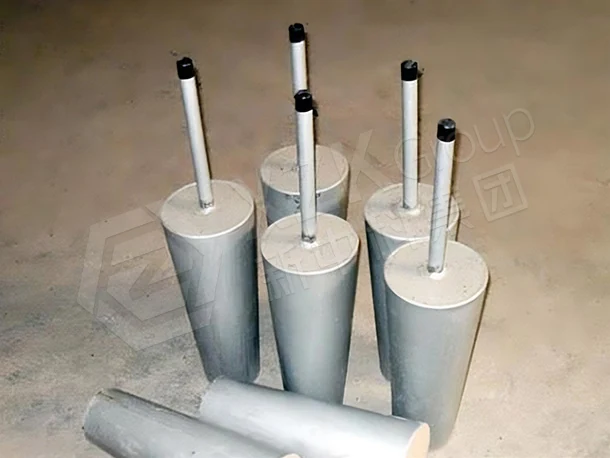
- Slit-type — directional, higher-volume flow. Suits vigorous stirring and long treatment times. More robust mechanically, and the usual choice for demanding LF and CAS-OB duty.
- Porous — finer, more uniform bubble dispersion. Better for inclusion flotation and gentle stirring, but more sensitive to thermal and mechanical shock.
If your priority is mixing energy and campaign length, use slit. If it is cleanliness through fine bubble dispersion, use porous. Running one type everywhere is a compromise that usually costs you something in both directions.
Why the Seat Matters More Than People Expect
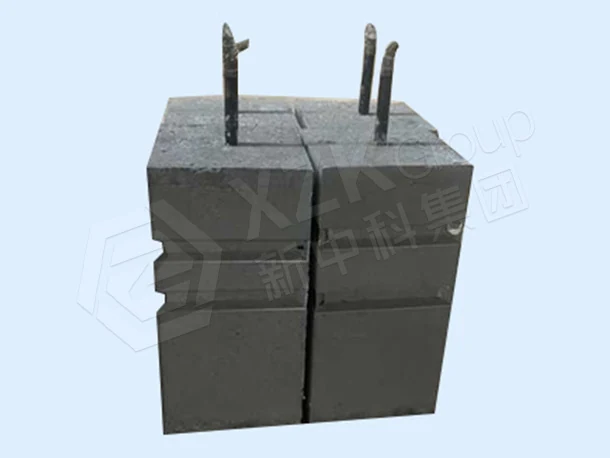
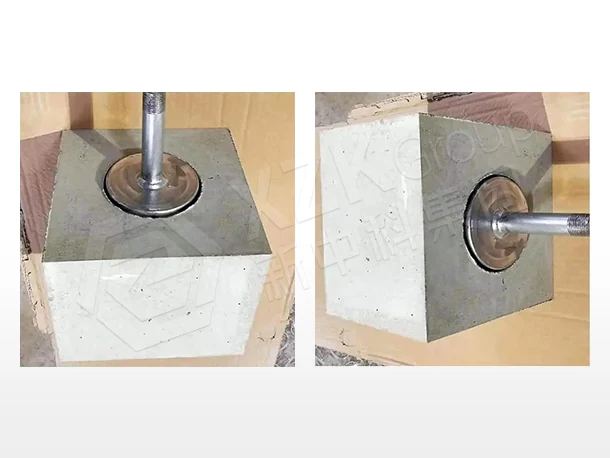
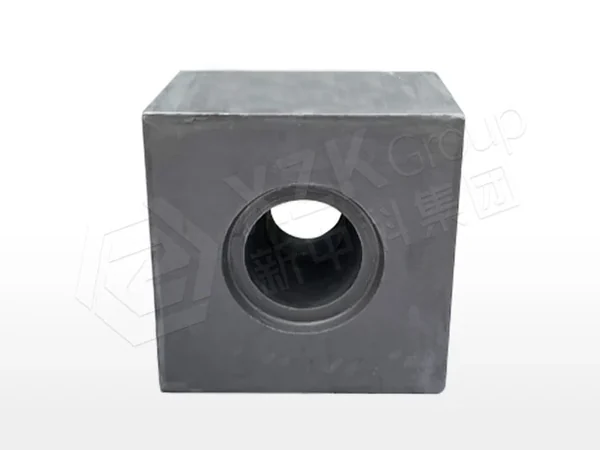
The well block and seat are where plug problems actually begin. A plug that does not seat correctly leaves a path for steel to penetrate around it — which is a performance failure first and a safety concern second. It is also one of the most avoidable problems in the ladle, because the fix is dimensional.
We supply plug and well block as a matched set with the interface machined to your drawing, so the assembly fits rather than being persuaded to fit on site.
Three Causes of Premature Failure
In order of how often we see them:
- Erosion — from excessive gas flow or stirring intensity beyond what the plug design carries.
- Thermal shock — from rapid heating or cooling between heats, particularly on a cold plug going into a hot ladle.
- Steel penetration — through an ill-fitting seat or a worn well block.
Each has a different fix, so diagnosing the actual mechanism is worth doing before changing the plug specification. We will help with that from photographs of the worn plug.
Supply
Quoted per set, typically 50–200 pieces minimum, 20–35 days from drawing approval. Gas flow characteristics are verified before shipment, and dimensional inspection reports and batch test data accompany every order.
Where This Grade Sits in the Lining System
Flow-control refractories are consumed on the caster's schedule, so the specification is as much about dimensional repeatability and interchangeability with your existing mechanism as it is about composition. A plate or shroud that fits but varies by a millimetre between lots costs more in breakouts than it saves in unit price.
XZK supplies purging plug as one zone of a zoned package rather than as a standalone item: the grades normally zoned alongside it — among them well block (seat brick) — are documented on the continuous casting functional refractories page, and the vessel-level architecture — where each zone starts and ends, and which mechanism actually limits the campaign — is set out on the steel ladle and RH/VD and BOF converter pages.
Campaign data measured on this class of lining — including the wear profile that drove grade selection — is published in the JFE Steel RH degasser snorkel and ladle flow control programme project reference.
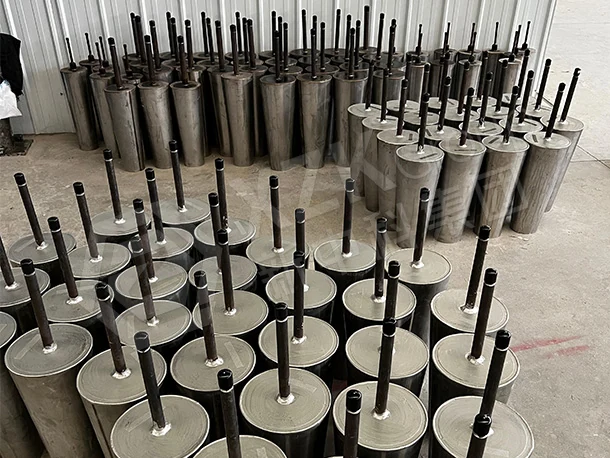
Purging Plug — Production & Application Scenarios
Premium raw materials, CNC pressing, high-temp firing, and on-site installation.
Advantages of Choosing XZK Purging Plug
Two Geometries for Two Duties
Slit-type plugs deliver directional, higher-volume flow and suit vigorous stirring and long treatment times. Porous plugs give finer, more uniform bubble dispersion for cleaning and gentle stirring. Choosing by duty rather than by default is what makes stirring effective.
High Strength Where the Plug Takes Load
The plug sits in the ladle bottom and takes mechanical and thermal load from the steel column. Cold crushing strength to 60 MPa on slit-type designs resists that load and the thermal cycling between heats.
Supplied With Matched Well Blocks
Plug and seat are supplied as a matched set, because an ill-fitting seat is one of the most common causes of premature plug failure and, in the worst case, of steel penetration around the plug.
Gas Flow Verified
Flow characteristics are checked before shipment, so what you specified is what you install — rather than discovering a flow problem during the first heat.
Specific Applications of Purging Plug
Proven performance across diverse heavy industrial thermal equipment.
Ladle Bottom Stirring
Argon stirring in ladles on LF, CAS-OB, RH and VD routes, in single and dual plug configurations.
Converter Bottom Blowing
Combined blowing in BOF converters, using MgO-C plug bodies matched to the bottom lining.
Hot Metal Ladle Desulfurisation
Magnesium and lime injection through bottom plugs in hot metal treatment vessels.
400+ Furnaces Trust XZK Refractory Solutions
Over 75% of our international steel and kiln clients continue multi-year long-term procurement partnerships.
Slit-type plugs handled our stirring intensity on long LF treatments without the erosion we were seeing on the porous design.
Porous plugs gave us the finer bubble dispersion we wanted for inclusion flotation.
Supplied as a matched set with the well block, so there were no fitting problems at installation.
Flow characteristics were verified and documented before shipment, which is what we ask for.
Frequently Asked Engineering Questions
Click any question to expand; only one answer is shown at a time.
Slit or porous — how do I choose?
By stirring duty. Slit-type plugs deliver directional, higher-volume flow and suit vigorous stirring and long treatment times; they are also more robust mechanically. Porous plugs produce finer, more uniform bubble dispersion, which is better for inclusion flotation and gentle stirring, but they are more sensitive to thermal and mechanical shock.
Why does the well block matter so much?
Because the seat is where failures start. An ill-fitting well block leaves a gap for steel penetration around the plug, and that is both a performance problem and a safety one. We supply plug and seat as a matched set with the interface machined to your drawing.
What causes premature plug failure?
Three things, in order of frequency: erosion from excessive gas flow or stirring intensity, thermal shock from rapid heating or cooling between heats, and steel penetration through an ill-fitting seat. Diagnosing which one you have determines the fix.
Can you supply for converter bottom blowing?
Yes, using MgO-C plug bodies matched to the converter bottom lining, with dimensions to your vessel drawing.
What is the MOQ and lead time?
Quoted per set, typically 50–200 pieces minimum, with 20–35 days lead time from drawing approval.
What documentation is provided?
Dimensional inspection reports, gas flow verification, batch physical and chemical test data and material certificates. Third-party inspection can be arranged.
Can you supply for hot metal desulfurisation?
Yes — plugs for magnesium and lime injection in hot metal treatment vessels, with geometry and chemistry matched to the reagent and injection practice.
How are plugs packed?
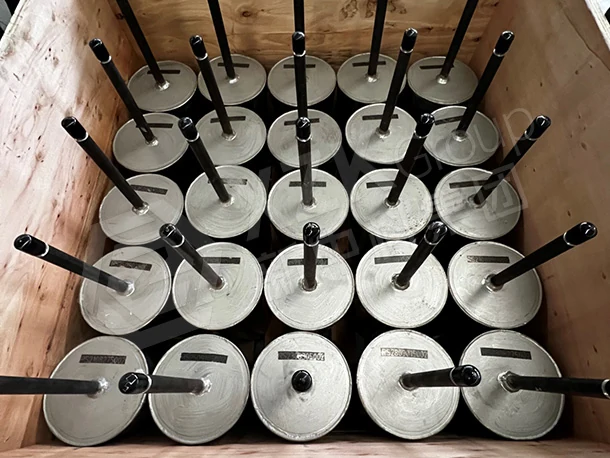
Individually boxed with moulded protection and palletised on ISPM-15 heat-treated pallets with moisture-barrier wrapping.
Related Refractories & Lining Materials
Explore complementary refractory brick grades and monolithic materials for your furnace relining.
Get Your Purging Plug Quote within 12 Hours
Please specify your refractory requirements by referring to the following aspects:
- ✓ Target Application: Furnace type, lining position (slag line, hearth, roof)
- ✓ Technical Specs: Operating temperature, slag chemistry, chemistry requirements
- ✓ Quantity & Dimensions: Tonnage requirement, standard or custom CAD drawing
- ✓ Delivery Terms: FOB Qingdao/Tianjin, CIF destination port
Why Steel Plants Choose XZK Refractories
Zonal Engineering, Not Just Bricks
Every proposal is a zone-by-zone material schedule matched to your furnace profile and operating practice — so all zones reach end-of-life together.
Source Factory Consistency
Fully automatic CNC batching and zero-defect quality control keep batch-to-batch variation at laboratory level.
Proven Global References
Supplied to Baosteel, Shougang, Hyundai Steel, JSW, Severstal, MMK and 400+ furnace projects across 60+ countries.
Full-Lifecycle Service
Lining design, masonry supervision, heat-up curves and failure analysis — plus EPC turnkey delivery for new builds and relines.
Send Us Your Furnace Drawing
Our engineers will return a zonal lining proposal with material schedule and quotation within 48 hours — even for non-standard shapes.
- Free material feasibility review
- Zonal architecture & installation drawings
- Heat-up curve & masonry guidance
Strict ISO 9001 Process Control Across All 6 Workshops
Every batch of raw materials is chemically assayed. Finished refractory shapes undergo density, ultrasonic non-destructive testing, and pre-assembly gap verification prior to global packaging.
- Raw material ICP chemical assay on every incoming batch
- Density, porosity and cold crushing (CCS) tests per ASTM / ISO
- Ultrasonic non-destructive testing of finished shapes
- Pre-assembly gap verification before seaworthy packaging