Mexico · Monclova
Altos Hornos de México (AHMSA) — 150 t Torpedo Car Full Refractory Package
150 t torpedo car — complete refractory supply
Read Case Study →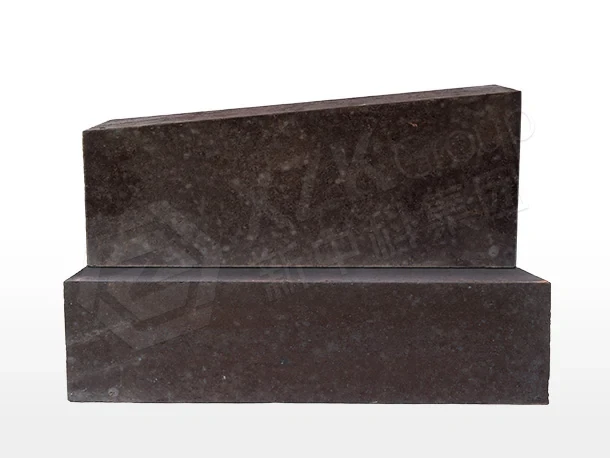
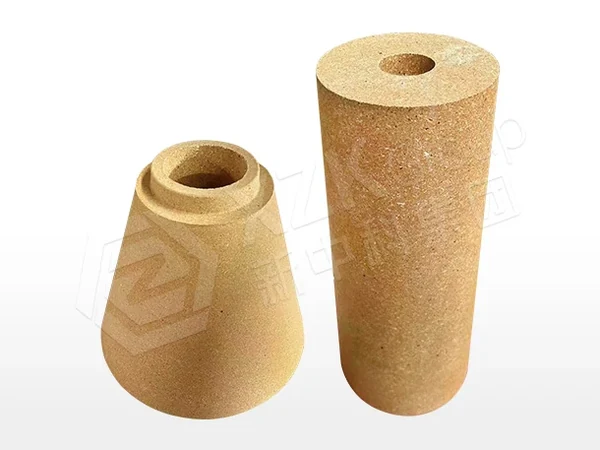
XZK supplies chrome corundum for RH degasser snorkels and matched slide gate components for JFE Steel ladle flow control.
RH degassers and ladle flow control share a characteristic that makes them awkward to specify: both are consumed on a cycle that has nothing to do with the vessel campaign. A snorkel and a slide gate plate are changed on their own schedules, and if those schedules do not match the production sequence, the plant pays for the mismatch every time.
JFE Steel's route runs RH vacuum degassing for grades with tight hydrogen and inclusion requirements, with ladle slide gate flow control downstream to the caster. Sequence length is set by steel grade and order structure, and the refractory consequence is that both the snorkel interval and the slide gate life must be matched to that sequence rather than merely maximised.
On the degasser, the snorkel interval was the controlling outage: the snorkel's working lining, exposed to vacuum, violent circulation and thermal cycling on every treatment, was reaching its limit before the lower vessel. On the ladle, slide gate plate life was shorter than the sequence in some grade blocks, which meant interventions at points in the sequence where an intervention is expensive. Neither was a material quality failure; both were matching failures.
Snorkel material shipped with Certificates of Analysis covering chemistry, density, porosity and strength, and dimensional reports on shapes, since snorkel geometry governs circulation as much as material does. Slide gate plates shipped to mechanism with dimensional verification and batch traceability, packed by grade so the correct plate was used for the scheduled steel grade rather than the nearest available one.
Snorkel lining was installed with joint thickness controlled because penetration into a snorkel joint under vacuum is fast and hard to detect before it matters. Slide gate plates were seated and the mechanism checked with the dimensional reports in hand rather than by feel. Both were commissioned with the argon and throttling practice the components were selected for.
Chrome corundum extended the snorkel interval enough that the snorkel stopped being the controlling outage on the degasser — the lower vessel and the snorkel now come due together, which is the condition that makes planning possible. Slide gate life matched to sequence length removed the mid-sequence interventions that had been occurring in specific grade blocks.
Snorkel performance was measured as treatment cycles per interval, with the residual thickness profile recorded at each change so the wear could be attributed to a section rather than to the component as a whole. That distinction is what made the second interval better than the first: the profile showed circulation-driven erosion concentrating at one level of the throat, and the grade map was revised at that level only, leaving the rest unchanged. Slide gate performance was tracked as heats per plate set by steel grade, because an aggregate figure hides exactly the grade-specific shortfall that causes interventions. The measurement discipline cost a few minutes per change and produced the data that made both components improvable rather than merely replaceable.
Where two consumables run on different cycles, the plant runs to the shorter one and pays for the difference on every cycle. The engineering question is not "how do I make each last longer" but "which cycle should they be matched to" — and the answer is usually the sequence, because that is where the cost of an intervention is highest.
The degasser system view is on the steel ladle, RH and VD page, flow control on the tundish and flow control page, and a comparable ladle-bottom application in the EZDK Steel ladle bottom case study.
150 t torpedo car — complete refractory supply
Read Case Study →
80–120 t EAF ladles — working lining, purging plug & well block
Read Case Study →
EAF slag line & ladle slide gate system
Read Case Study →Every batch of raw materials is chemically assayed. Finished refractory shapes undergo density, ultrasonic non-destructive testing, and pre-assembly gap verification prior to global packaging.