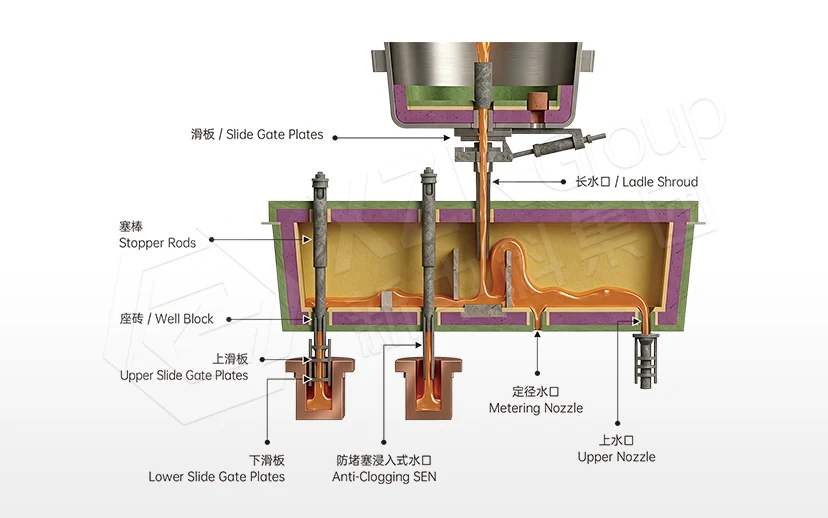
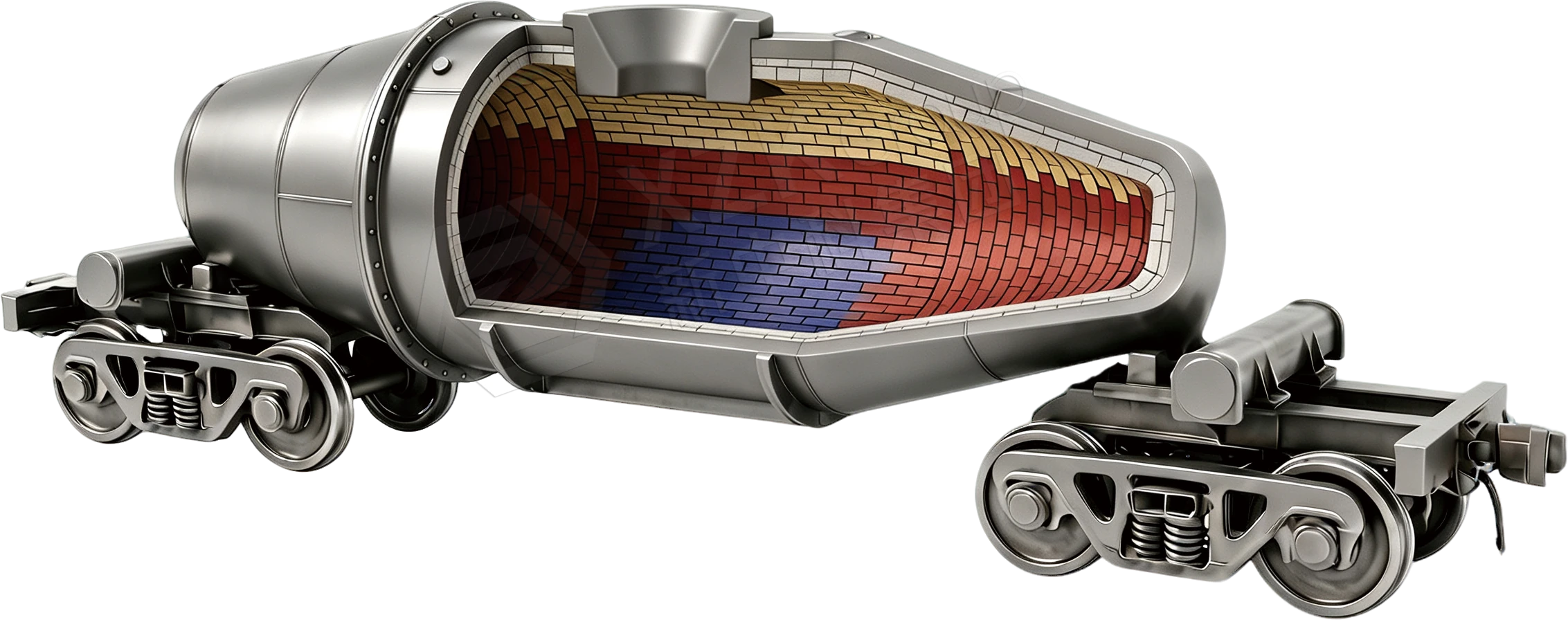
Altos Hornos de México (AHMSA) — 150 t Torpedo Car Full Refractory Package
150 t torpedo car — complete refractory supply
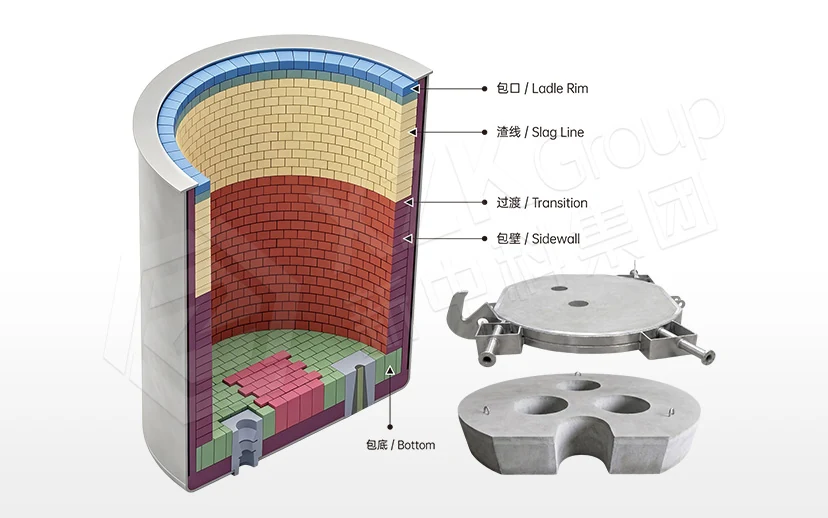
Primary Wear & Corrosion Factors: Alternating iron and slag erosion, desulfurisation reagent attack, thermal cycling, mechanical damage from cleaning and skull removal
XZK Group provides integrated refractory packages engineered for zoned thermal and chemical stress. Every brick shape, mortar joint, and castable density is calibrated to ensure balanced refractory erosion and synchronized campaign shutdown schedules.
Zoned lining design targeting synchronized campaign wear across all operational furnace zones. Click a hotspot above to highlight a row here.
| # | Furnace Lining Zone | XZK Recommended Refractory Grade | Key Physical & Chemical Properties | Operational Mechanism & Benefits | 操作 |
|---|---|---|---|---|---|
| 1 | Torpedo Impact & Slag Line | Al₂O₃-SiC-C (ASC) Bricks (XZK-ASC-A/B) | Al₂O₃ ≥53~62%, SiC ≥11.5~14%, C ≥11.5%, BD ≥2.75~2.90 | Graphite inhibits slag penetration while SiC provides oxidation barrier and anti-scouring toughness. | Quote |
| 2 | Torpedo Mouth | High-Strength Mouth Castable (XZK-Mouth-Cast) | Al₂O₃ ≥70%, CCS (110°C) ≥25 MPa, MOR ≥4.5 MPa | High mechanical shock resistance against hot metal splash and mechanical deslagging. | Quote |
| 3 | Main Casthouse Runner | ASC Main Runner Castable (XZK-Main-Runner) | Al₂O₃ ≥75%, SiC ≥10%, BD ≥2.92 g/cm³, CCS ≥42.96 MPa | Extremely low wear rate per 1000 MT hot metal, easy demolition for quick cold repairs. | Quote |
The casthouse and the torpedo car sit either side of the same taphole, but they fail differently. The casthouse is about throughput — how many tonnes of iron pass before the runner needs renewal. The torpedo car is about cycling — how many thermal and chemical cycles the working lining survives before it cracks or erodes through.
A casthouse is not one duty. The main runner carries full iron throughput at the highest temperature; branch iron runners see high-velocity iron and severe abrasion; slag runners see slag chemistry with little iron. XZK grades accordingly — from XZK-Main-Runner (75% Al₂O₃, 10% SiC, hot strength ~43 MPa) through XZK-Iron-Runner (30% SiC for maximum abrasion resistance) to dedicated slag-line grades.
Waterless taphole clay completes the system, giving predictable opening and stable taphole length. In practice, installation quality — water addition, vibration, curing, heat-up — influences campaign life more than small differences between products.
A torpedo lining faces three simultaneous attacks: slag erosion, thermal cycling on every trip, and chemical attack from desulfurisation and de-siliconisation reagents. A high-alumina brick addresses only the first. ASC (Al₂O₃-SiC-C) addresses all three — alumina for slag resistance, silicon carbide for erosion resistance and reagent tolerance, carbon for non-wetting behaviour and thermal compliance.
XZK-ASC-A holds apparent porosity to 8.5% for maximum penetration resistance in the metal zone and slag line; XZK-ASC-B carries higher density (2.90 g/cm³) and crushing strength (50 MPa) where erosion and mechanical duty dominate. Throat and mouth areas need dedicated wear-resistant shapes and a mouth castable, because mechanical cleaning rather than corrosion is what destroys them.
Every degree lost between furnace and steelmaking is fuel and temperature that has to be replaced. Insulation behind torpedo working linings reduces shell temperature and heat loss, and is specified as a density ladder rather than a single product.
Casthouse runner layout and iron throughput, or torpedo car capacity, trip pattern, reagent practice and cleaning method. We will return a complete material schedule covering runner castables, taphole clay, ASC working linings, throat shapes and insulation.
XZK delivers precise zonal lining packages for Torpedo Car & Casthouse Runner Solutions. Every grade in the matrix above is calibrated against three engineering levers: heat-flow management, chemical resistance, and mechanical anchoring. By tuning these three levers, we extend campaign length while keeping total refractory consumption per ton of steel competitive.
Our chief engineer Professor Shi Gan oversees every lining proposal — heat balance calculation, brick sequence optimization, and pre-assembly tolerance verification are all performed in-house before any shipment leaves Xinmi. The result: lining campaigns that match or beat OEM schedules with measurable per-ton savings.
Verified deliveries to leading steel groups across Asia, Europe and the Americas.
150 t torpedo car — complete refractory supply
80–120 t EAF ladles — working lining, purging plug & well block
EAF slag line & ladle slide gate system
Click to expand answers from our senior metallurgical engineers.
In the torpedo slag line, three failure mechanisms compete: thermal shock (every tap cycle), molten iron washing, and basic slag chemistry attack. ASC bricks combine the best of three worlds — corundum gives refractoriness, SiC provides oxidation resistance and scouring toughness, and graphite creates a non-wetted interface that physically stops slag penetration. Our XZK-ASC-A/B series covers 53–62% Al₂O₃ for both impact and slag-line zones.
Our XZK-Main-Runner castable delivers measured wear rates below 0.8 mm per 1000 MT of hot metal throughput, measured under standard iron desulfurization chemistry. This translates to over 150,000 MT per campaign on a typical 250-ton casthouse main runner.
We keep hot-stock for all ASC brick sizes and mouth castables — urgent casthouse repair orders can ship within 48 hours from Xinmi factory. Pre-mixed castables with our proprietary water-free binder system are ready-to-use on site without on-site batching.
Every batch of raw materials is chemically assayed. Finished refractory shapes undergo density, ultrasonic non-destructive testing, and pre-assembly gap verification prior to global packaging.