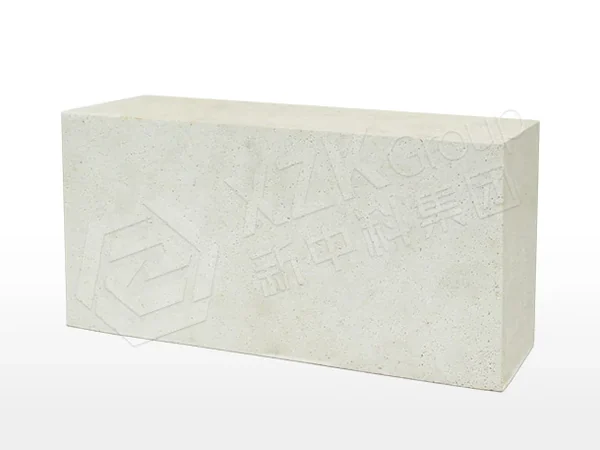
Insulating Series · Refractory Series
Insulating Fire Bricks for Steel Furnaces — Mullite, High-Alumina and Lightweight Silica
High-efficiency insulating bricks for energy-saving furnace linings: mullite, high-alumina, clay and lightweight silica insulating bricks in full density gradients — cutting shell temperature and fuel consumption across reheating furnaces, kilns and backup linings.
- Density ladder from 0.5 to 1.6 g/cm³ across mullite, high-alumina and fireclay grades
- Low thermal conductivity to cut shell temperature and fuel consumption
- Lightweight silica grades for hot blast stove insulation and silica-lined zones
- Graded backup systems designed alongside the working lining
- Classification temperature to 1600 °C on premium mullite grades
- Cut and shaped service available for arches, domes and complex backups
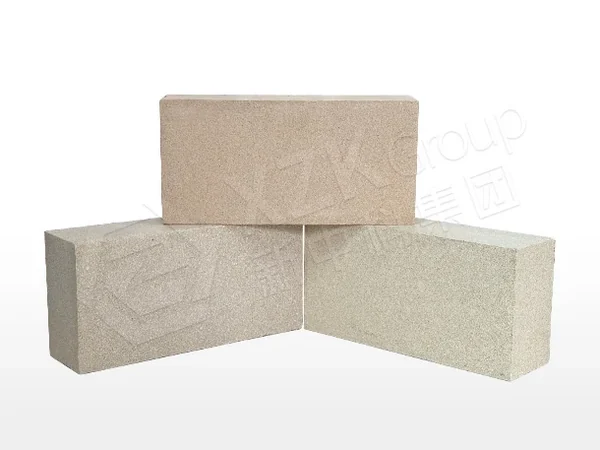
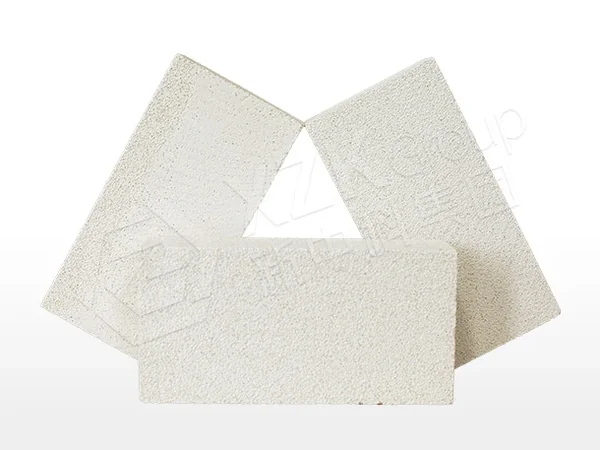
Insulating Series Product List
Full TDS datasheets available on each product detail page. Click "Get Free Quote" to request factory pricing within 12 hours.
Selection Guide
Free Consultation with Our Engineer
How to Select the Right Insulating Series Refractory Formulation for Your Furnace
Designing an Insulation System, Not Buying Insulating Brick
Insulation is a system decision. The objective is not minimum thermal conductivity — it is the lowest total cost of heat loss, shell protection and lining life at each depth. Specifying the lightest possible brick everywhere usually backfires through mechanical damage, shrinkage and reduced working-lining support.
Step 1 — Work From the Hot Face Inward
- Establish the temperature profile through the lining at the design hot-face temperature.
- Select the working lining for slag, abrasion and load — this is not an insulation decision.
- Choose the first backup layer: the densest insulation that still insulates well, because it must support the working lining mechanically.
- Step down in density toward the shell, keeping each layer below its classification temperature.
Step 2 — Pick the Chemistry by Temperature
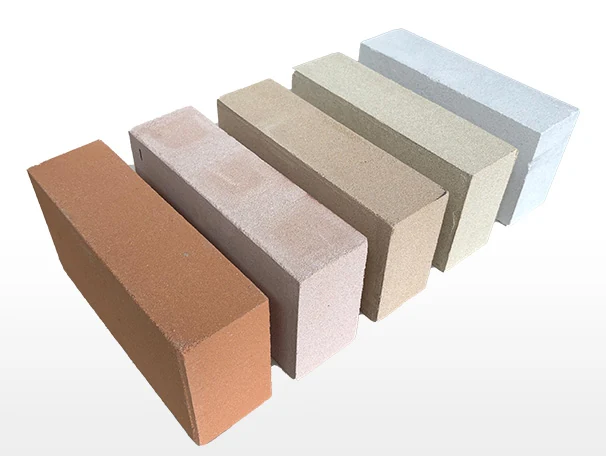
- Up to 1000 °C — fireclay or lightweight silica insulating brick.
- 1000–1350 °C — high-alumina insulating brick.
- 1350–1600 °C — mullite insulating brick or alumina bubble products.
- Stove high-temperature zones — lightweight silica, selected for volume stability under sustained load.
Step 3 — Respect Classification Temperature
Every insulating grade has a classification temperature — the point at which it undergoes a defined permanent linear change over 24 hours. Select with at least a 100 °C margin at each depth. Running closer than that causes shrinkage, joint opening and, eventually, a path for gas and heat to reach the shell.
Step 4 — Plan for Mechanical Reality
Insulating brick is fragile relative to dense refractory. It must be protected from abrasion, from direct flame impingement and from mechanical damage during installation. Where the backup is exposed during construction or maintenance, specify edge protection and handling procedures, and avoid traffic over installed insulation.
Procurement FAQ — Insulating Series
MOQ, lead time, packaging, shipment, payment — buyer-side concerns answered for this specific series.
What is the MOQ for insulating brick?
10 metric tons for standard grades; 20 metric tons for special shapes and cut-to-fit service. Mixed pallets across densities are available for trial and maintenance orders.
How is insulating brick packed given its fragility?
Palletised with edge protection, interleaved cushioning and stretch wrap on ISPM-15 heat-treated pallets. Low-density grades (below 0.8 g/cm³) are crated or boxed to prevent edge damage in transit.
Can you pre-cut shapes for arches and domes?
Yes. Send the drawing or the radius and skew dimensions and we will supply cut or pressed shapes to suit, numbered for installation.
What is the shelf life?
Insulating brick is not subject to chemical ageing in the same way as resin-bonded products, but it must be kept dry. Store under cover and off the ground; saturated insulation loses strength and can spall on first heat-up.
What payment and shipping terms apply?
T/T with deposit or L/C at sight; FOB Qingdao or Tianjin, CIF worldwide, or door-to-door. Low-density grades are normally shipped in full containers to minimise handling.
Where Insulating Series Products Are Installed
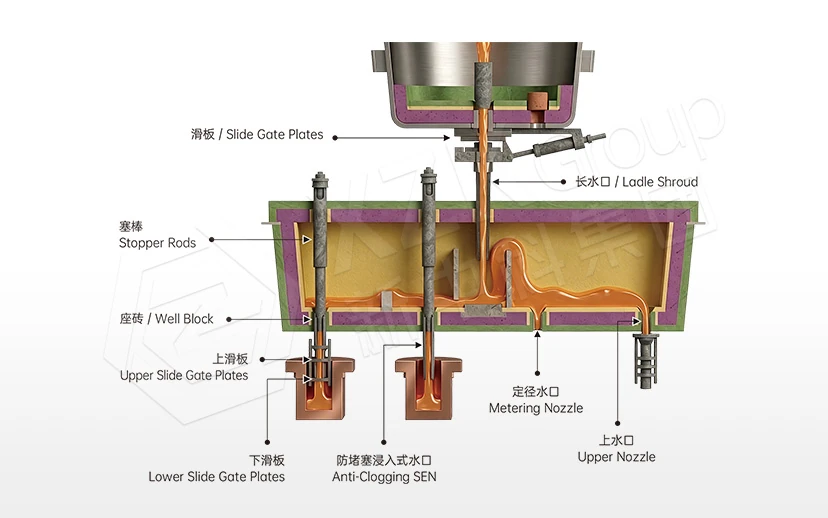
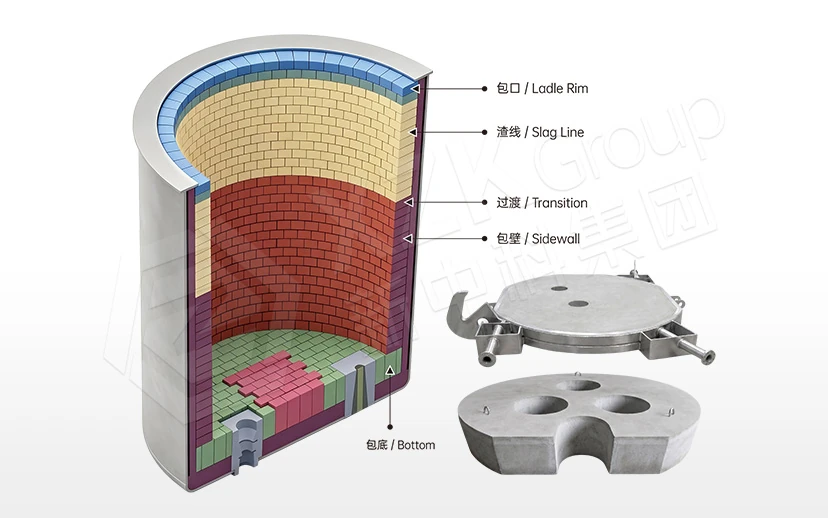
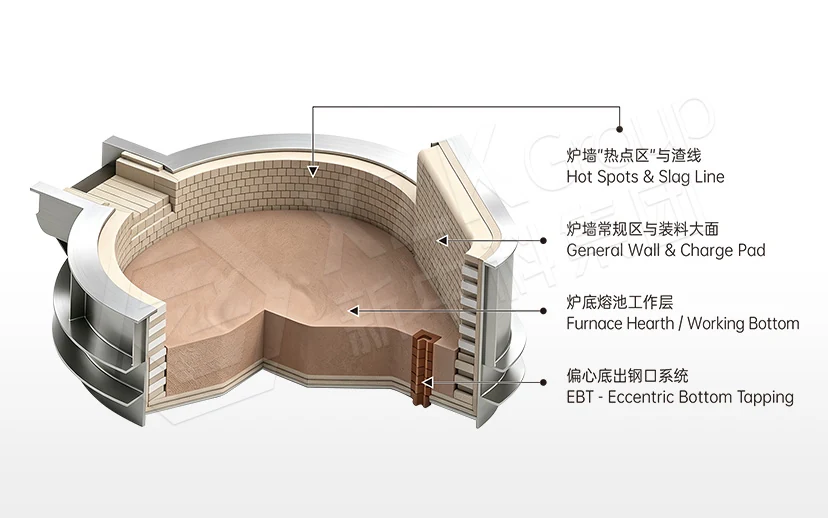
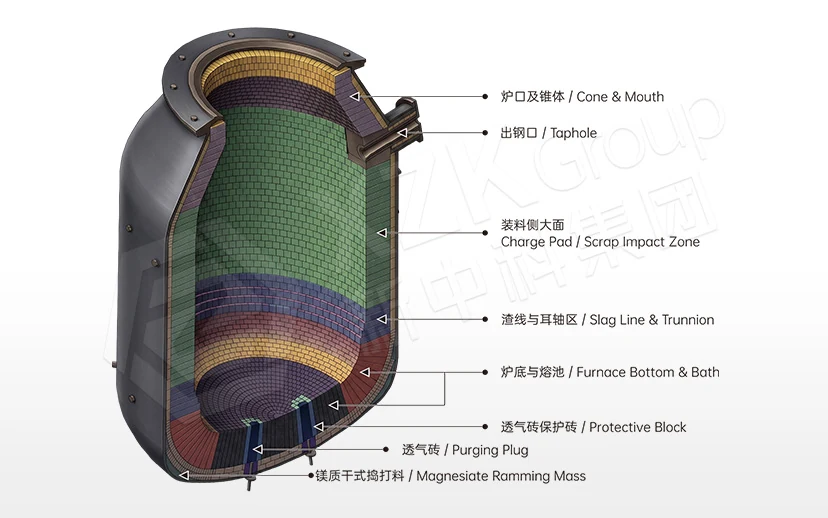
Explore the furnace systems these refractories are engineered for — from blast furnace hearths to continuous casting flow control.
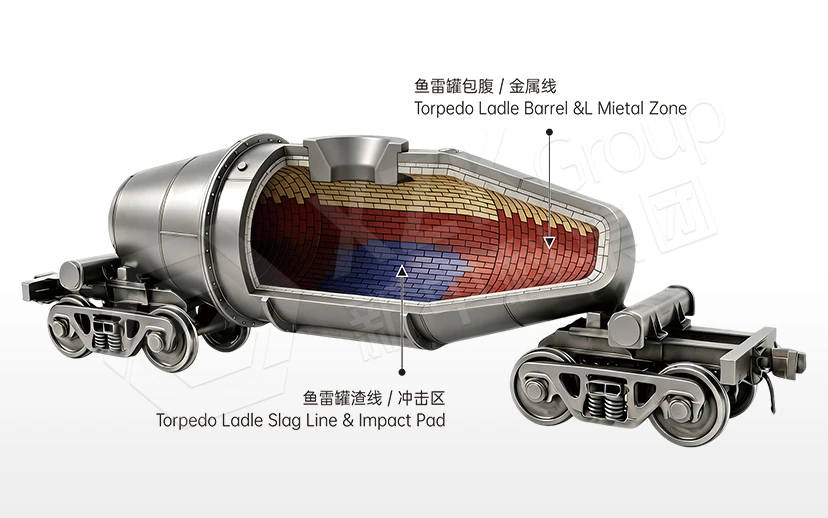
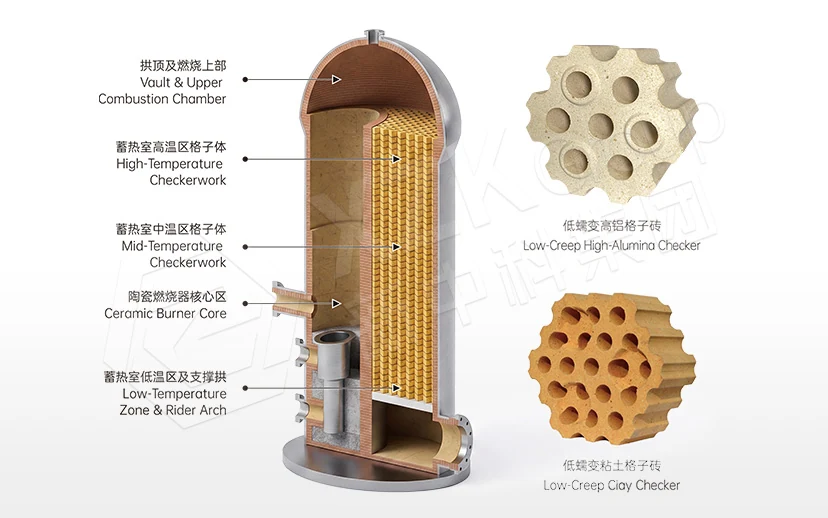
FAQs — Insulating Series
How do I select an insulating brick density?
Work from the hot face inward and choose the lowest density that still satisfies the temperature and mechanical load at that depth. Insulating brick has lower strength than dense refractory, so the densest insulation goes nearest the working lining and density decreases toward the shell.
What is classification temperature and why does it matter?
It is the temperature at which a defined permanent linear change occurs during a 24-hour soak — effectively the practical ceiling for continuous service. Specify insulating brick with a classification temperature comfortably above the operating temperature at that depth; running near the limit causes shrinkage and joint opening.
Can insulating brick be used as a working lining?
Generally no. Insulating brick has high porosity and low strength, so it is vulnerable to slag attack, abrasion and gas-borne dust. It belongs behind the working lining. Exceptions exist in clean, low-velocity, non-contact zones, and we will advise case by case.
Why use lightweight silica in a hot blast stove?
Lightweight silica combines very low bulk density with excellent volume stability at high temperature and good resistance to the stove atmosphere, which makes it well suited to the high-temperature insulation zones behind the working lining.
How much fuel can insulation realistically save?
It depends on the existing shell temperature and the furnace duty. In reheating furnaces and stove backups, a correctly graded insulation system commonly reduces shell temperature by 40–80 °C and delivers a measurable fuel saving — but the calculation should be done against your measured shell temperatures, not from a generic percentage.
What test data do you supply?
Bulk density, cold crushing strength, thermal conductivity at specified mean temperatures, permanent linear change and classification temperature per ASTM and ISO methods, plus full chemical analysis. Batch COA accompanies every shipment.
Why Steel Plants Choose XZK Refractories
Zonal Engineering, Not Just Bricks
Every proposal is a zone-by-zone material schedule matched to your furnace profile and operating practice — so all zones reach end-of-life together.
Source Factory Consistency
Fully automatic CNC batching and zero-defect quality control keep batch-to-batch variation at laboratory level.
Proven Global References
Supplied to Baosteel, Shougang, Hyundai Steel, JSW, Severstal, MMK and 400+ furnace projects across 60+ countries.
Full-Lifecycle Service
Lining design, masonry supervision, heat-up curves and failure analysis — plus EPC turnkey delivery for new builds and relines.
Send Us Your Furnace Drawing
Our engineers will return a zonal lining proposal with material schedule and quotation within 48 hours — even for non-standard shapes.
- Free material feasibility review
- Zonal architecture & installation drawings
- Heat-up curve & masonry guidance
Quality & Traceability
Strict ISO 9001 Process Control Across All 6 Workshops
Every batch of raw materials is chemically assayed. Finished refractory shapes undergo density, ultrasonic non-destructive testing, and pre-assembly gap verification prior to global packaging.
- Raw material ICP chemical assay on every incoming batch
- Density, porosity and cold crushing (CCS) tests per ASTM / ISO
- Ultrasonic non-destructive testing of finished shapes
- Pre-assembly gap verification before seaworthy packaging
100,000+
Metric Tons Annual Capacity
60+
Countries Export Footprint
6
Fully-Equipped Workshops
100%
ISO 9001:2015 Certified