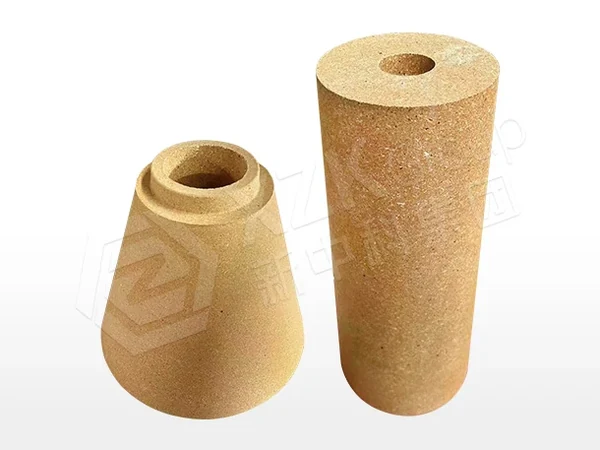
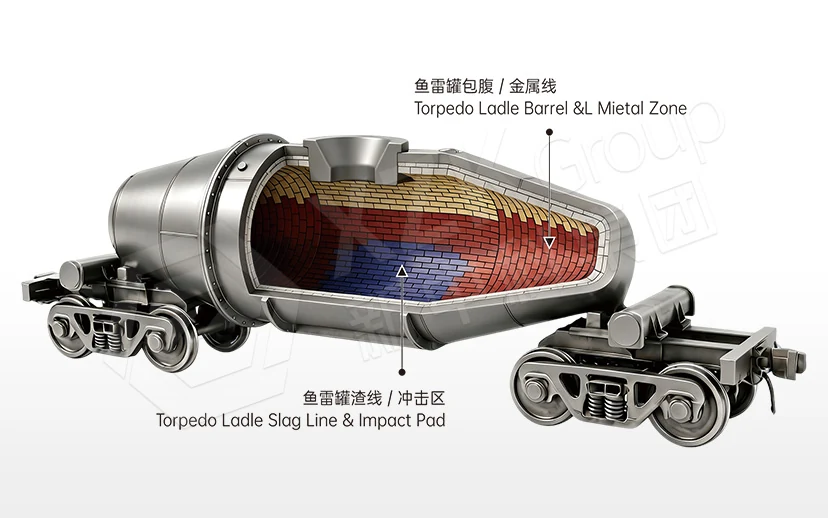
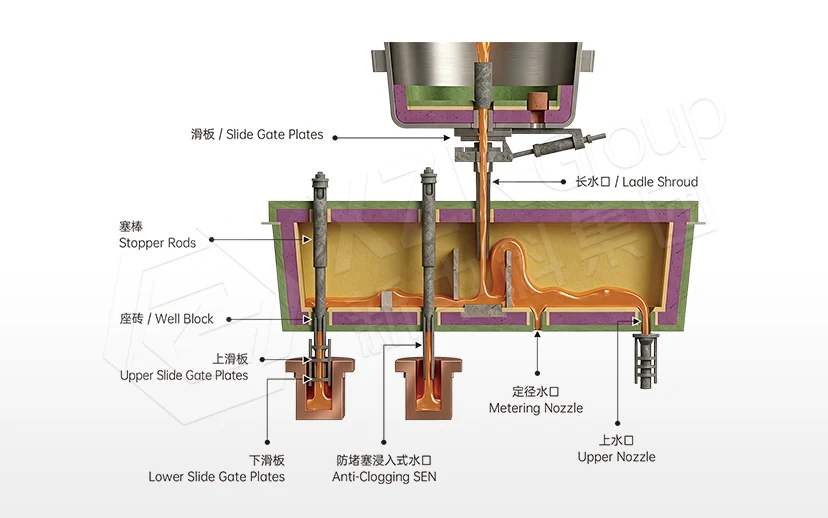
Altos Hornos de México (AHMSA) — 150 t Torpedo Car Full Refractory Package
150 t torpedo car — complete refractory supply
Primary Wear & Corrosion Factors: Molten iron circulation scour, alkali and zinc vapour attack, thermal-mechanical stress in the hearth, burden abrasion in the stack
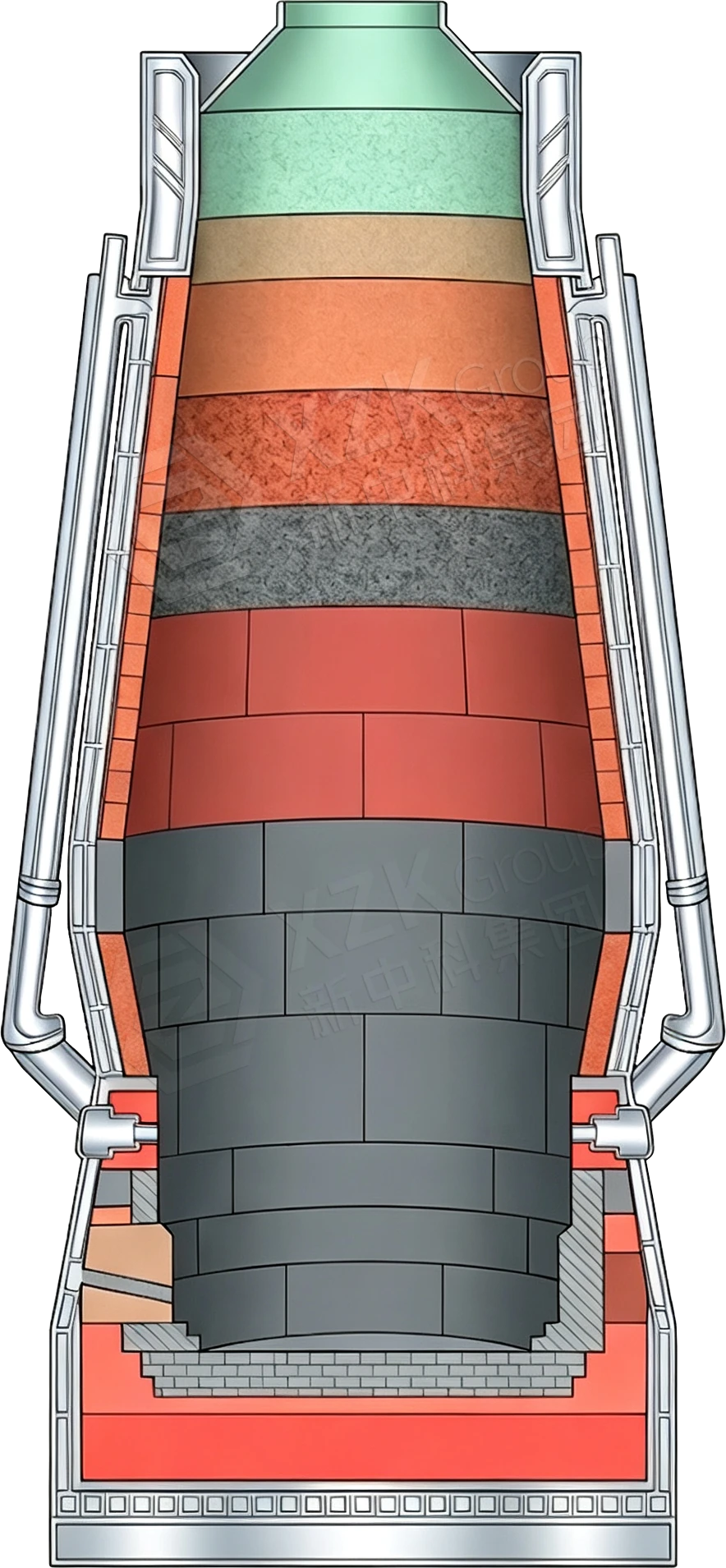
XZK Group provides integrated refractory packages engineered for zoned thermal and chemical stress. Every brick shape, mortar joint, and castable density is calibrated to ensure balanced refractory erosion and synchronized campaign shutdown schedules.
Zoned lining design targeting synchronized campaign wear across all operational furnace zones. Click a hotspot above to highlight a row here.
| # | Furnace Lining Zone | XZK Recommended Refractory Grade | Key Physical & Chemical Properties | Operational Mechanism & Benefits | 操作 |
|---|---|---|---|---|---|
| 1 | Hearth & Bottom | Microporous Carbon Brick & XZK-CG301C High-Conductivity Ramming Mass | C+SiC ≥91%, BD ≥1.90 g/cm³, Thermal Cond ≥12 W/(m·K) | Extremely high thermal conductivity forms stable protective iron skull to stop hearth burn-through. | Quote |
| 2 | Tuyere & Belly | Si₃N₄-Bonded SiC Brick (XZK-NSiC72) & Sialon Corundum (XZK-SACOR85) | SiC ≥72%, Si₃N₄ ≥20%, CCS ≥160 MPa, RUL >1700°C | Immune to alkali vapor attack, exceptional abrasion resistance against descending burden. | Quote |
| 3 | Bosh & Lower Stack | Sialon-Bonded Corundum Brick (XZK-SACOR80) | Al₂O₃ ≥80%, N ≥5.0%, CCS ≥110 MPa | Withstands high thermal cycling and aggressive chemical erosion. | Quote |
| 4 | Cooling Staves Gap | Water-Free Injection Grouting Mix (XZK-YRL-LB/LD) | Al₂O₃ 55%, Refractoriness 1760°C, Fluidity 170~185% | High thermal conductivity filler ensures efficient heat transfer from lining to cooling plates. | Quote |
| 5 | Taphole | Eco-Friendly Waterless Taphole Clay (XZK-TC-PN Series) | Al₂O₃ ≥45%, SiC+C ≥25%, BD ≥2.00 g/cm³, PLC 0~+2.0% | Easy drilling, stable smooth iron tapping stream, protects hearth lining from iron-wash. | Quote |
A blast furnace campaign is won or lost in the hearth. Everything above it — stack, bosh, belly — can be repaired, gunned, or partially renewed while the furnace stays in service. The hearth cannot. Once hearth temperatures rise and the lining is compromised, the furnace is coming out, and the cost is measured in millions rather than thousands.
The hearth survives on one principle: keep the 1150 °C isotherm — the temperature at which molten iron solidifies — inside the refractory. Do that and liquid iron never reaches the interior of the lining. Fail and penetration begins, followed by the brittle-layer formation that accelerates erosion.
Adding refractory thickness without adding conductivity is counterproductive. It moves the hot face further from the cooling system, which can raise the temperature at the isotherm rather than lower it. Where hearth temperatures are climbing, the correct response is usually higher conductivity in the carbon build-up and a verified cooling circuit — not simply more brick.
Two interventions extend campaigns materially. Water-free injection mix fills voids behind the shell and cooling elements, restoring thermal contact and sealing gas paths without introducing water into a hot lining. Shell grouting with carbon-based injection brings local shell temperatures back into range. Both are carried out during operation.
Furnace volume and drawing, cooling configuration, campaign history, hearth temperature trend, and the alkali and zinc load if known. We will return a full zonal build-up with a material schedule, thermal rationale and installation guidance.
XZK delivers precise zonal lining packages for Blast Furnace Refractory Lining Solution. Every grade in the matrix above is calibrated against three engineering levers: heat-flow management, chemical resistance, and mechanical anchoring. By tuning these three levers, we extend campaign length while keeping total refractory consumption per ton of steel competitive.
Our chief engineer Professor Shi Gan oversees every lining proposal — heat balance calculation, brick sequence optimization, and pre-assembly tolerance verification are all performed in-house before any shipment leaves Xinmi. The result: lining campaigns that match or beat OEM schedules with measurable per-ton savings.
Verified deliveries to leading steel groups across Asia, Europe and the Americas.
150 t torpedo car — complete refractory supply
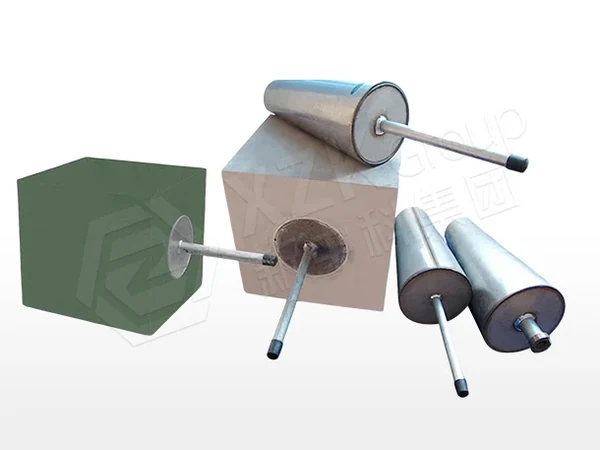
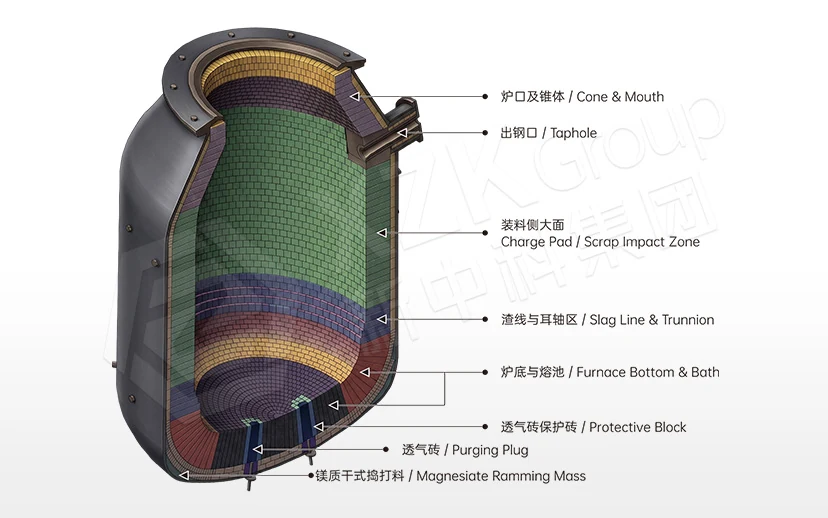
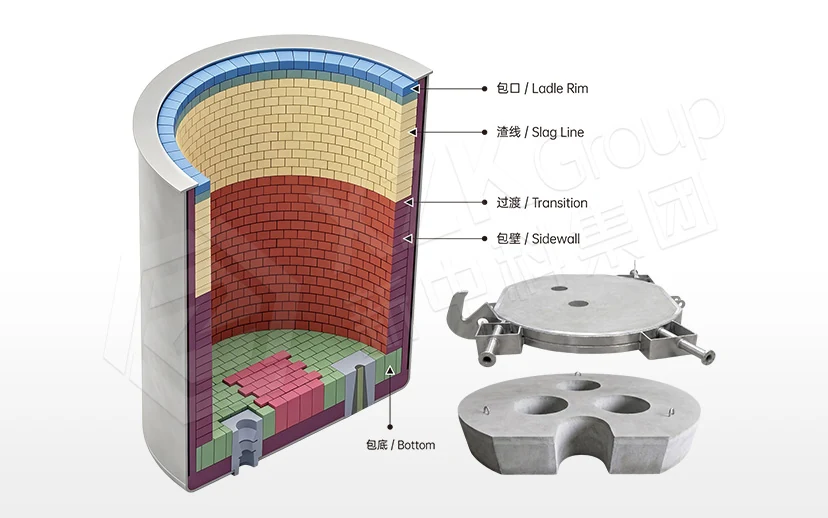
80–120 t EAF ladles — working lining, purging plug & well block
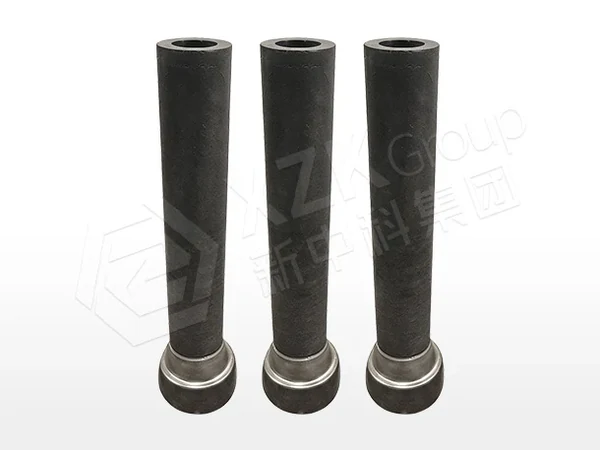
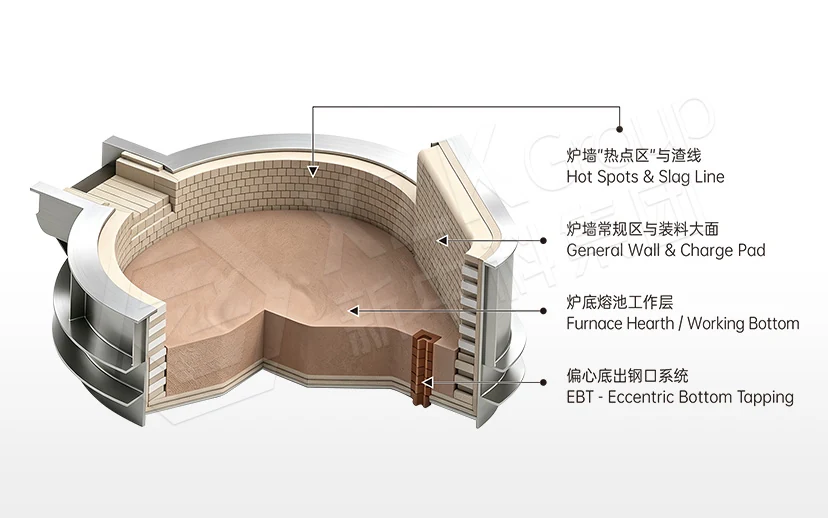
EAF slag line & ladle slide gate system
Click to expand answers from our senior metallurgical engineers.
The industry-proven answer is a composite system: microporous carbon brick against the hot face plus a high-purity ceramic cup (corundum-mullite based) above it. The ceramic cup holds the 1150°C iron-solidification isotherm inside the lining rather than inside the carbon — preventing the deep penetration and "elephant-foot" erosion that ends campaigns. XZK pairs this with high-conductivity carbon ramming mass (XZK-CG301C, thermal conductivity 10–12 W/m·K) to keep heat flowing outward toward the cooling staves.
High-conductivity Si₃N₄-bonded SiC bricks (XZK-NSiC72 / SASiC) or SiALON-bonded corundum bricks (XZK-SACOR85). These zones carry the furnace's highest heat flux; high thermal conductivity lets the cooling staves form a stable protective skull, while nitride/SiALON bonding resists alkali vapor and CO disintegration.
With correct zonal design, quality installation and disciplined operation, 15+ years of campaign life is achievable. The hearth ceramic-cup concept and high-conductivity bosh linings are the two biggest contributors.
Yes. Send your furnace profile drawing — we return a complete zonal material schedule with masonry drawings, heat-up curve and quotation within 48 hours. EPC turnkey delivery is available.
Every batch of raw materials is chemically assayed. Finished refractory shapes undergo density, ultrasonic non-destructive testing, and pre-assembly gap verification prior to global packaging.