Hot Blast Stove Refractory Checker Bricks

1300 °C – 1450 °C (dome and upper checker, cycling with changeover) 25+ Years Campaign Life with Maximum Thermal Heat Recovery

Primary Wear & Corrosion Factors: Compressive creep under sustained load, thermal cycling on changeover, alkali and dust deposition in checker channels

XZK Group provides integrated refractory packages engineered for zoned thermal and chemical stress. Every brick shape, mortar joint, and castable density is calibrated to ensure balanced refractory erosion and synchronized campaign shutdown schedules.

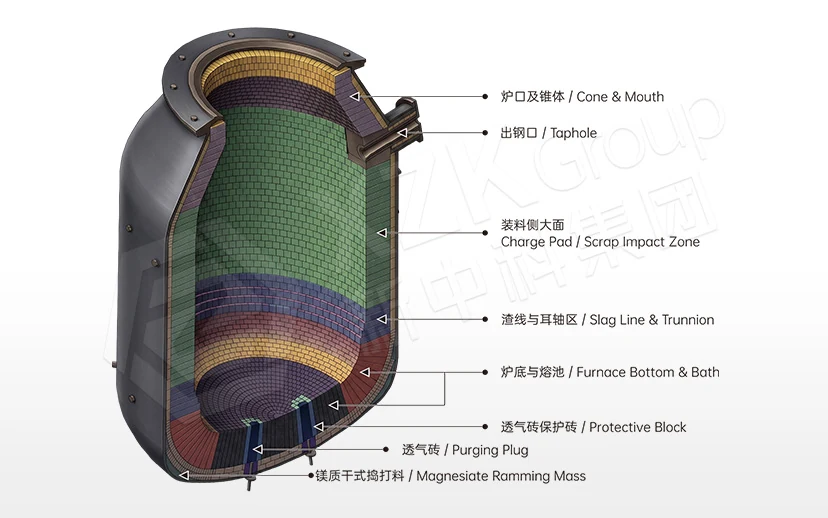
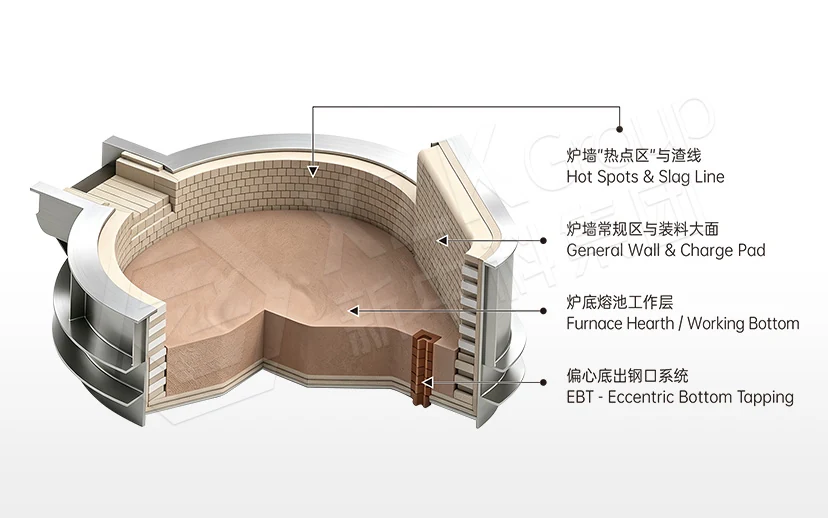
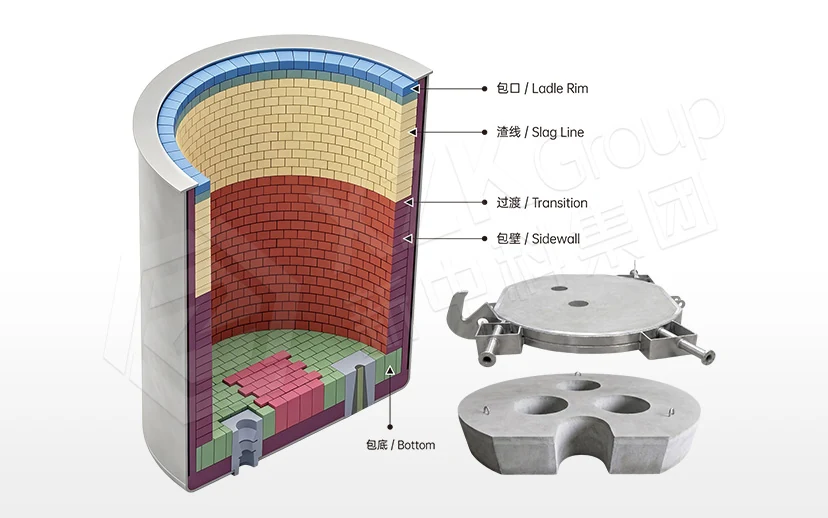
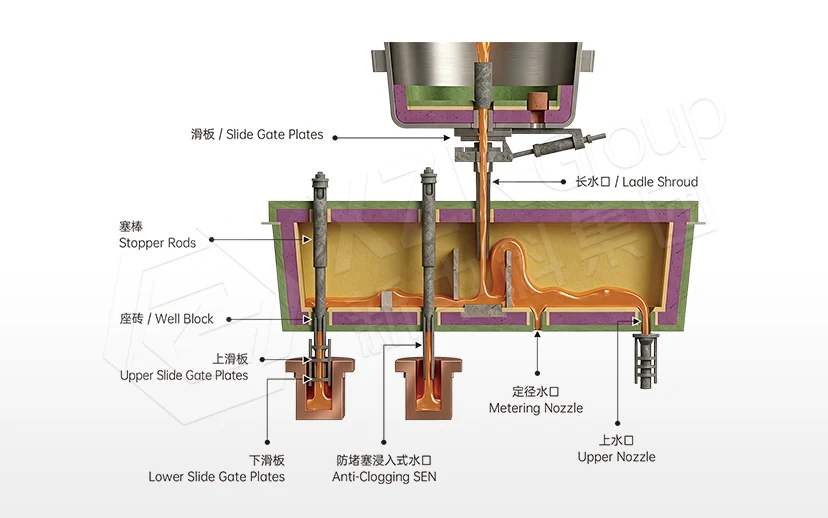
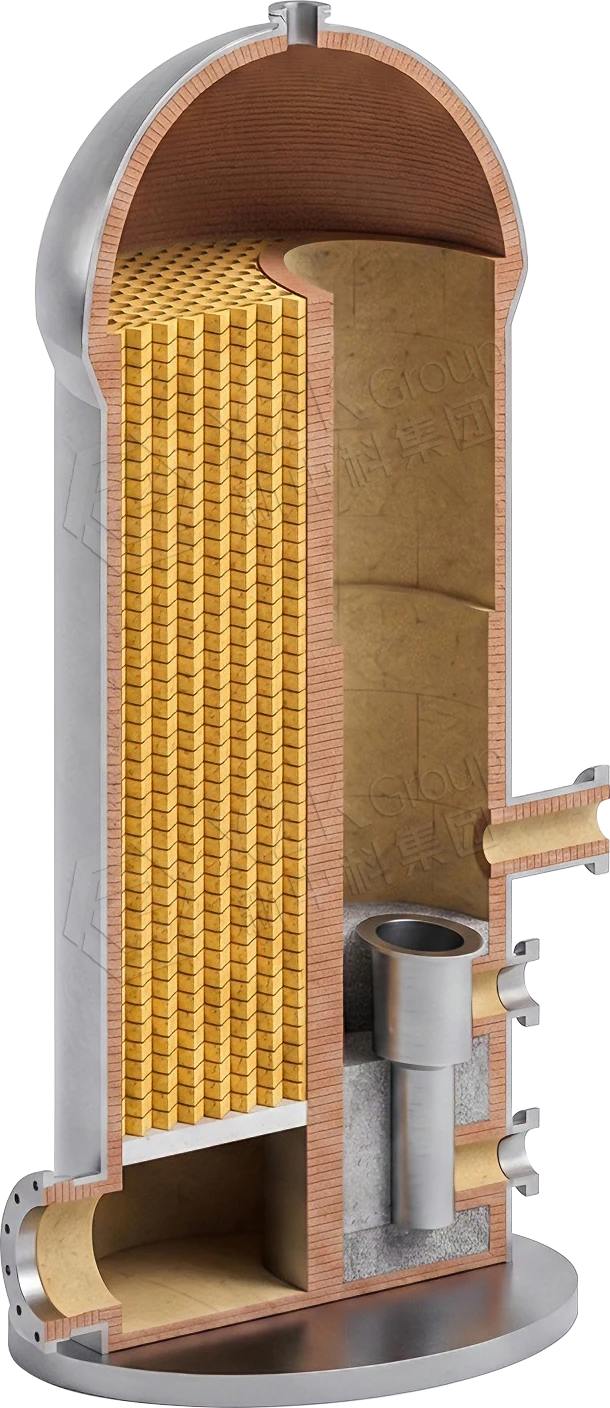
Hot Blast Stove Refractory Checker Bricks 3D Cutaway
Tap any numbered zone to highlight the corresponding refractory grade below.
<> <> <> <>

Hot Blast Stove Refractory Checker Bricks: Refractory Bill of Materials

Zoned lining design targeting synchronized campaign wear across all operational furnace zones. Click a hotspot above to highlight a row here.

# Furnace Lining Zone XZK Recommended Refractory Grade Key Physical & Chemical Properties Operational Mechanism & Benefits 操作
1 High-Temp Checker Chamber Low-Creep Andalusite Checker Brick (XZK-DR80) Al₂O₃ ≥80%, Creep Rate ≤0.2% (1400°C×50h), RUL ≥1580°C Near-zero high temperature creep ensures checker holes remain unblocked for decades. Quote
2 Middle-Temp Checker Low-Creep High Alumina Brick (XZK-RL65) Al₂O₃ ≥65%, BD ≥2.10 g/cm³, CCS ≥65 MPa, RUL ≥1500°C Excellent structural load bearing and resistance to combustion gas thermal shock. Quote
3 Low-Temp Bottom Checker Dense Low-Creep Fireclay Brick (XZK-RN42) Al₂O₃ ≥42%, BD ≥2.20 g/cm³, CCS ≥45 MPa High thermal heat capacity and volume stability at economical cost. Quote
4 Stove Dome & Burner High-Purity Silica & Mullite Bricks SiO₂ ≥96%, High refractoriness under load Zero spalling under high burner flame radiant heat. Quote

Stoves Fail by Deformation, Not Corrosion

Hot blast stoves are taken out of service because they have changed shape, not because the brick has dissolved. The checkerwork carries the weight of the column above it at high temperature for years. If the brick creeps, channels deform, airflow is restricted, heat exchange falls, and the stove has to come down — usually with most of its lining still chemically intact.

Every specification decision therefore starts with creep rate, then works outward to thermal shock, refractoriness and insulation.

Start From the Dome Temperature

The peak dome and upper checker temperature sets the top grade:

  • Above 1400 °C — low-creep andalusite (XZK-DR80, creep ≤0.2% at 1400 °C × 50 h, RUL ≥1580 °C).
  • 1300–1400 °C — low-creep sillimanite or high-alumina (RUL ≥1500 °C).
  • Below 1300 °C — low-creep fireclay or standard high-alumina checkers.

Grade the Shaft Downward

There is no reason to run the most expensive grade through the whole checker shaft. Temperature falls with depth, so upper courses take the premium creep-resistant material, mid courses a mid-grade sillimanite or high-alumina, and lower courses an economical fireclay checker. Applied across a full stove, this grading typically removes 15–25% from package cost without shortening the campaign.

Do Not Forget Cycling or Insulation

Stoves cycle on every changeover, and the upper courses see the largest amplitude. Confirm thermal shock resistance alongside creep — a brick with excellent creep but poor shock tolerance will spall in the top courses. Behind the working lining, density-graded insulation lowers shell temperature, protects the shell steel, and stabilises the thermal gradient; lightweight silica is often specified in the high-temperature insulation zones for its volume stability.

What to Send Us

Stove type (internal or external combustion, top-fired), target blast temperature, cycle pattern, existing checker geometry or drawing, and the campaign you are targeting. We will return a graded material schedule with creep data and a course-by-course layout.
The XZK Solution — How We Engineer Campaign Life

XZK delivers precise zonal lining packages for Hot Blast Stove Refractory Checker Bricks. Every grade in the matrix above is calibrated against three engineering levers: heat-flow management, chemical resistance, and mechanical anchoring. By tuning these three levers, we extend campaign length while keeping total refractory consumption per ton of steel competitive.

Our chief engineer Professor Shi Gan oversees every lining proposal — heat balance calculation, brick sequence optimization, and pre-assembly tolerance verification are all performed in-house before any shipment leaves Xinmi. The result: lining campaigns that match or beat OEM schedules with measurable per-ton savings.

  • Heat-flow modeling: skull/slag-layer thickness predicted for each zone
  • Chemical compatibility: brick-slag-metal reaction tests against your specific slag chemistry
  • Mechanical fit: ≤ 1 mm joint tolerance verified at CNC pressing stage
  • Pre-assembly: critical shapes pre-stacked in Xinmi for on-site fit verification
15+ Years BF campaign
150K+ MT Torpedo throughput
10K+ Heats BOF campaign
120+ Heats Ladle lining

Selected Project References

Verified deliveries to leading steel groups across Asia, Europe and the Americas.

Send Your Hot Blast Stove Refractory Checker Bricks Drawings for a 48h Custom Lining Proposal

Our chief technical experts calculate exact brick count, radial cuts, mortar joint volumes, and castable expansion gaps. We provide comprehensive lining schematics and refractory consumption guarantees.

FAQs — Hot Blast Stove Refractory Checker Bricks Refractories

Click to expand answers from our senior metallurgical engineers.

What is the most critical property for hot blast stove checkers? +

The dominant failure mode for stove checkers is compressive creep at service temperature — once checker holes deform they block airflow and force stove shutdown. Low-creep andalusite bricks (XZK-DR80, creep rate ≤0.2% @ 1400°C × 50h) and low-creep high-alumina bricks (XZK-RL65) are engineered specifically to keep checker chambers open for the full 25-year campaign.

How do XZK checkers help with energy saving? +

Beyond keeping the checker holes open, our checker bricks maximize thermal mass storage capacity and have volume stability under thermal cycling — this allows higher blast temperatures (1200°C+) and faster stove cycle rates, directly cutting coke consumption per ton of iron.

Can XZK supply pre-assembled checker modules? +

Yes — XZK provides pre-assembled checker modules with prefabricated ceramic spacers, which dramatically reduces on-site installation labor and eliminates human error in checker spacing. We can deliver as full-size module cassettes or as loose bricks with detailed layout drawings.

Strict ISO 9001 Process Control Across All 6 Workshops

Every batch of raw materials is chemically assayed. Finished refractory shapes undergo density, ultrasonic non-destructive testing, and pre-assembly gap verification prior to global packaging.

  • Raw material ICP chemical assay on every incoming batch
  • Density, porosity and cold crushing (CCS) tests per ASTM / ISO
  • Ultrasonic non-destructive testing of finished shapes
  • Pre-assembly gap verification before seaworthy packaging
100,000+ Metric Tons Annual Capacity
60+ Countries Export Footprint
6 Fully-Equipped Workshops
100% ISO 9001:2015 Certified
Request Quote