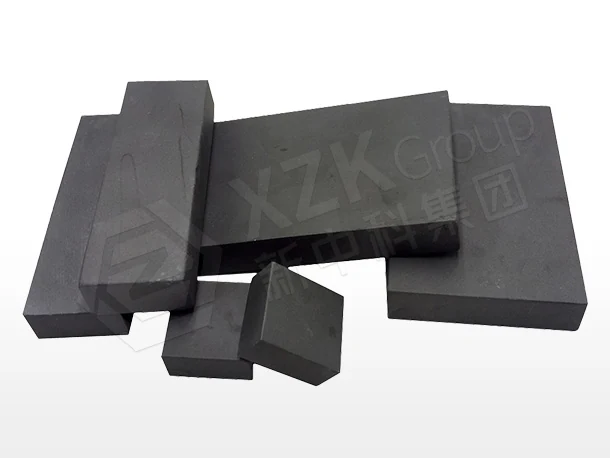
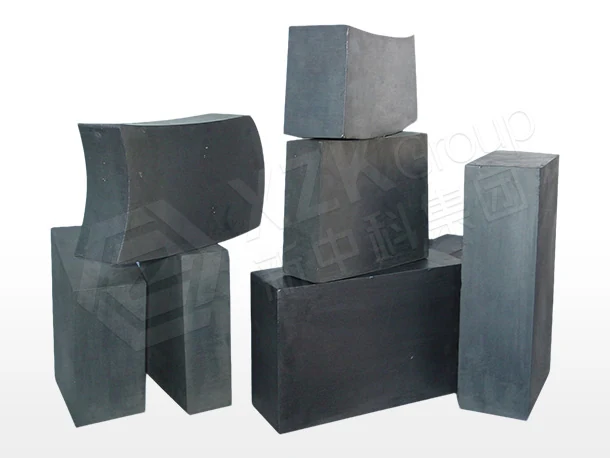
Microporous Carbon Brick for Blast Furnace Hearth & Bottom
Fixed C ≥82% · Ash ≤12% · Average pore diameter ≤1 μm · BD ≥1.60 g/cm³ · Thermal conductivity ≥12 W/(m·K) — blocks iron penetration by pore-size control.
Specifications of XZK Microporous Carbon Brick
Manufactured strictly in accordance with ASTM, ISO, and YB/T metallurgical refractory standards.
| Property | Typical Value |
|---|---|
| Fixed carbon (%) ≥ | 82 |
| Ash (%) ≤ | 12 |
| Bulk density (g/cm³) ≥ | 1.60 |
| Apparent porosity (%) ≤ | 18 |
| Cold crushing strength (MPa) ≥ | 35 |
| Thermal conductivity, room temperature (W/m·K) ≥ | 12 |
| Average pore diameter (μm) ≤ | 1.0 |
| Pore volume below 1 μm (%) ≥ | 75 |
Values are typical production averages, not guaranteed minima. A batch-specific Certificate of Analysis is issued for every shipment; third-party inspection (SGS / BV / TÜV) can be arranged on request.
| Property Reported Above | ASTM | ISO | GB/T |
|---|---|---|---|
| Chemical composition — Al₂O₃, SiO₂, Fe₂O₃, TiO₂, alkali oxides | ASTM C573 | ISO 12677 | GB/T 6900 |
| Carbon / SiC content (carbon-bearing grades) | ASTM C571 | — | GB/T 17732 |
| Apparent porosity and bulk density | ASTM C20 | ISO 5017 | GB/T 2997 |
| Cold crushing strength | ASTM C133 | ISO 10059-1 | GB/T 5072 |
| Thermal conductivity | ASTM C201 | ISO 8894-1 | GB/T 5990 |
Every value in the tables above is determined by the method stated in this reference table, and the method is identified on the batch Certificate of Analysis. Where a property is not covered by a directly corresponding ISO method, the ASTM or GB/T method is applied as the reference method and stated accordingly. Third-party verification (SGS / BV / TÜV) can be arranged on request.
About XZK Microporous Carbon Brick
Microporous carbon brick protects a blast furnace hearth by controlling something that total porosity figures do not capture: pore size. Molten iron cannot enter a pore below a critical throat diameter. Hold the pores small enough and iron penetration simply stops, regardless of how much total porosity the material contains.
Why Pore Size, Not Porosity Percentage
Two carbon blocks can both measure 18% apparent porosity and behave completely differently. If one has large, connected pore throats, molten iron wicks in; if the other has the same void volume distributed as sub-micron pores, iron cannot enter at all. This is why "low porosity carbon block" is an incomplete specification and "microporous carbon" is a meaningful one.
XZK microporous grades hold average pore diameter at or below 1 μm, with the majority of pore volume below that threshold. We supply pore size distribution data with the material, because it is the only way to verify the claim — total porosity alone proves nothing.
What Penetration Actually Costs You
When iron penetrates carbon, it forms a brittle, cracked layer with different thermal and mechanical properties from the parent material. That layer then drives further cracking and erosion — a self-reinforcing loop that is the usual mechanism behind hearth wall thinning and, in the worst case, breakout risk. Limiting penetration at the pore level is the cheapest place to break that loop.
Conductivity Is the Other Half
Pore control protects the material; conductivity keeps it cool enough to survive. At ≥12 W/(m·K), the hearth conducts heat into the cooling system and holds the 1150 °C isotherm — the temperature at which iron solidifies — inside the lining. That single fact governs hearth life more than any other: if the isotherm sits inside the refractory, liquid iron cannot reach the carbon’s interior.
Always Specified With a Ceramic Cup
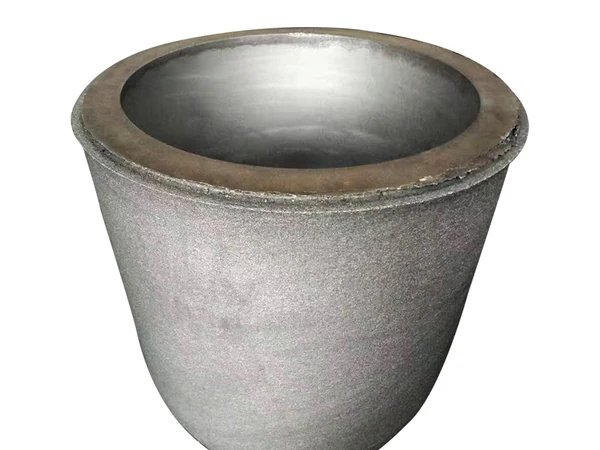
The two materials do different jobs. The ceramic cup is a high-purity corundum barrier that protects the carbon during start-up and against early alkali and zinc attack; the carbon behind it provides the thermal pathway to the cooling system. Specifying either alone leaves one of those jobs undone, which is why modern hearth designs pair them.
Supply and Installation
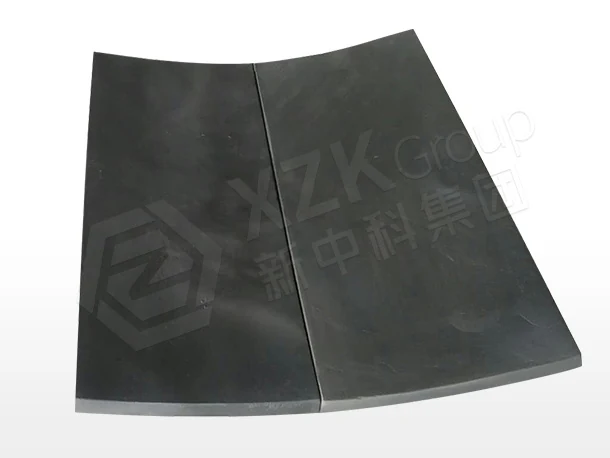
Hearth packages are quoted as complete sets against the furnace drawing. Blocks are individually machined, numbered to the installation sequence, and dry trial-fitted before shipment, with controlled joint gaps. Lead time is typically 35–60 days. Send your furnace drawing, cooling configuration and campaign history for a complete zonal hearth proposal.
Where This Grade Sits in the Lining System
Silicon carbide and carbon grades are selected for what they do with heat rather than for what they resist. Thermal conductivity decides whether the cooling system ever sees the load, and the bonding system decides how long the material survives alkali attack and oxidation once it does.
XZK supplies microporous carbon brick as one zone of a zoned package rather than as a standalone item: the grades normally zoned alongside it — among them ceramic cup — are documented on the silicon carbide and carbon refractories page, and the vessel-level architecture — where each zone starts and ends, and which mechanism actually limits the campaign — is set out on the blast furnace page.
For a complete vessel programme built on this class of material, including the wear survey that set the zoning, see the MMK Magnitogorsk No.10 BF and 375 t ladle programme project reference.
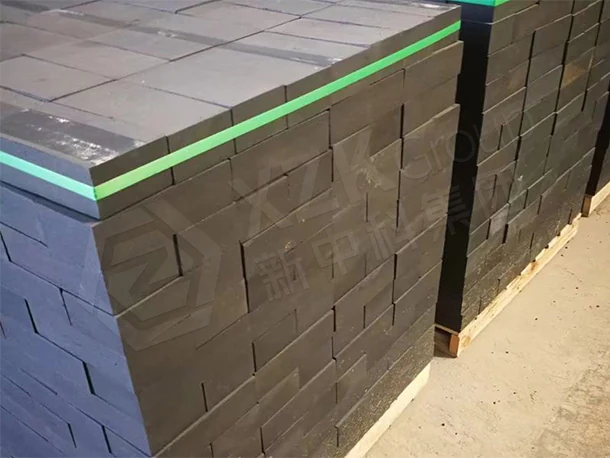
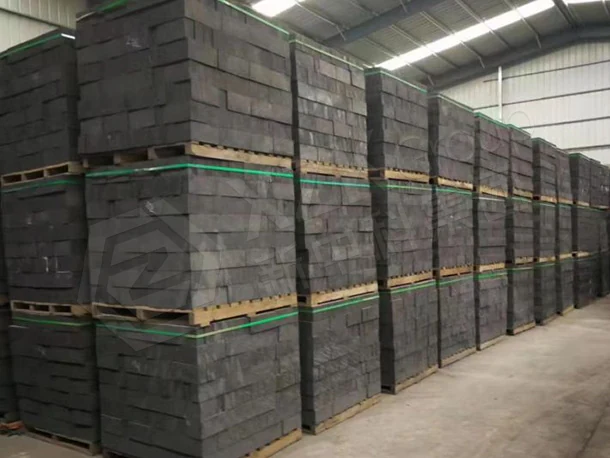
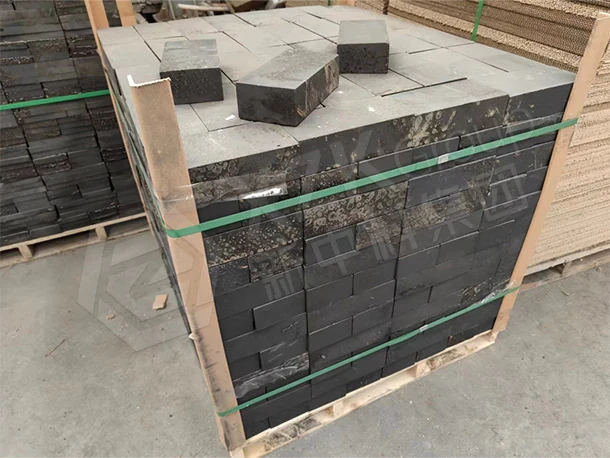
Microporous Carbon Brick — Production & Application Scenarios
Premium raw materials, CNC pressing, high-temp firing, and on-site installation.
Advantages of Choosing XZK Microporous Carbon Brick
Blocks Iron Penetration by Pore Size
Molten iron cannot enter pores below a critical throat diameter. By holding average pore diameter at or below 1 μm with most pore volume below that threshold, the brick physically denies iron the pathway it needs.
High Thermal Conductivity
At ≥12 W/(m·K), the hearth moves heat into the cooling system and keeps the 1150 °C isotherm — the iron solidification front — inside the lining, where it belongs.
Reduces Brittle-Layer Formation
Iron penetration creates a brittle, cracked layer with different thermal properties, which then drives further erosion. Limiting penetration limits that feedback loop.
Supplied Machined and Numbered
Hearth blocks are individually machined to the furnace drawing and numbered so that installation follows a defined sequence with controlled joint gaps.
Specific Applications of Microporous Carbon Brick
Proven performance across diverse heavy industrial thermal equipment.
Blast Furnace Hearth
The primary hearth working lining, in front of or combined with a ceramic cup barrier.
Blast Furnace Bottom
Bottom carbon courses beneath the ceramic pad, conducting heat downward into the under-hearth cooling.
Hearth Sidewall
Lower sidewall courses in the metal zone, where iron penetration and thermal load are highest.
400+ Furnaces Trust XZK Refractory Solutions
Over 75% of our international steel and kiln clients continue multi-year long-term procurement partnerships.
Hearth temperatures stabilised after the reline and have stayed there. The isotherm is where the design said it should be.
They machined and numbered every block, so the installation sequence was unambiguous and the joint gaps were consistent.
Pore size distribution data was supplied with the material, which is the only way to verify a microporous claim.
Combined with the ceramic cup, the hearth package has performed to design for over two years.
Frequently Asked Engineering Questions
Click any question to expand; only one answer is shown at a time.
What makes a carbon brick "microporous"?
Not low porosity as such — controlled pore size. A conventional carbon block may have similar total porosity but much larger pore throats, and molten iron can enter those. Microporous grades hold the average pore diameter at or below about 1 μm, below the threshold at which iron penetration occurs.
How do I verify a microporous claim?
Ask for pore size distribution data, specifically average pore diameter and the proportion of pore volume below 1 μm. Total porosity alone tells you nothing about penetration resistance. We supply this data with the material.
Is high thermal conductivity or low porosity more important?
Both, but conductivity usually governs hearth survival. The hearth survives by keeping the 1150 °C isotherm inside the lining; if heat cannot reach the cooling system, the isotherm moves outward and erosion accelerates. Low pore size protects the material that is doing that job.
Does it need a ceramic cup?
Usually yes. The ceramic cup protects the carbon during start-up and against early alkali and zinc attack, while the carbon behind it provides the thermal pathway. The two materials do different jobs and are normally specified together.
What is the MOQ and lead time?
Hearth packages are quoted as a complete set against the furnace drawing. Lead time is typically 35–60 days because blocks are individually machined, numbered and dry trial-fitted before shipment.
What test data is supplied?
Fixed carbon and ash per GB/T 2001, bulk density and apparent porosity per ASTM C830, cold crushing strength per ASTM C133, thermal conductivity, and pore size distribution data. Batch COA ships with every lot.
How are the blocks packed?
Palletised on ISPM-15 fumigated pallets with PE wrap and moisture-barrier liner, with machined faces individually protected and each block numbered to the installation sequence.
Can you design the full hearth build-up?
Yes. Send the furnace drawing, cooling configuration and campaign history and we will propose the complete zonal build-up: ceramic cup, microporous carbon, high-conductivity ramming mass and the stack, bosh and belly grades.
Related Refractories & Lining Materials
Explore complementary refractory brick grades and monolithic materials for your furnace relining.
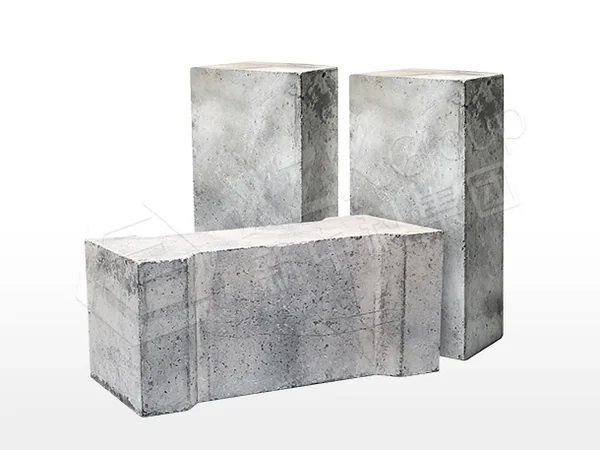
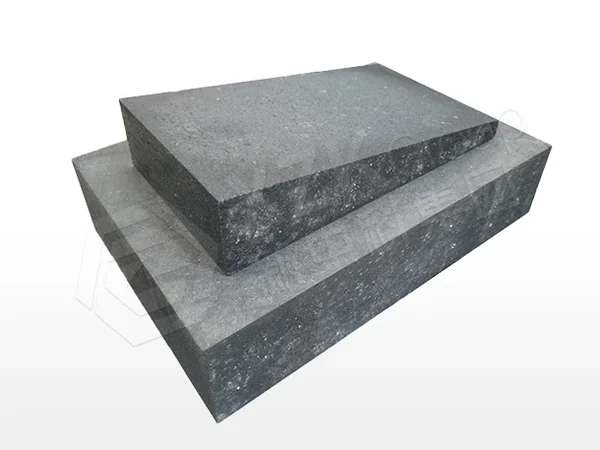
Get Your Microporous Carbon Brick Quote within 12 Hours
Please specify your refractory requirements by referring to the following aspects:
- ✓ Target Application: Furnace type, lining position (slag line, hearth, roof)
- ✓ Technical Specs: Operating temperature, slag chemistry, chemistry requirements
- ✓ Quantity & Dimensions: Tonnage requirement, standard or custom CAD drawing
- ✓ Delivery Terms: FOB Qingdao/Tianjin, CIF destination port
Why Steel Plants Choose XZK Refractories
Zonal Engineering, Not Just Bricks
Every proposal is a zone-by-zone material schedule matched to your furnace profile and operating practice — so all zones reach end-of-life together.
Source Factory Consistency
Fully automatic CNC batching and zero-defect quality control keep batch-to-batch variation at laboratory level.
Proven Global References
Supplied to Baosteel, Shougang, Hyundai Steel, JSW, Severstal, MMK and 400+ furnace projects across 60+ countries.
Full-Lifecycle Service
Lining design, masonry supervision, heat-up curves and failure analysis — plus EPC turnkey delivery for new builds and relines.
Send Us Your Furnace Drawing
Our engineers will return a zonal lining proposal with material schedule and quotation within 48 hours — even for non-standard shapes.
- Free material feasibility review
- Zonal architecture & installation drawings
- Heat-up curve & masonry guidance
Strict ISO 9001 Process Control Across All 6 Workshops
Every batch of raw materials is chemically assayed. Finished refractory shapes undergo density, ultrasonic non-destructive testing, and pre-assembly gap verification prior to global packaging.
- Raw material ICP chemical assay on every incoming batch
- Density, porosity and cold crushing (CCS) tests per ASTM / ISO
- Ultrasonic non-destructive testing of finished shapes
- Pre-assembly gap verification before seaworthy packaging