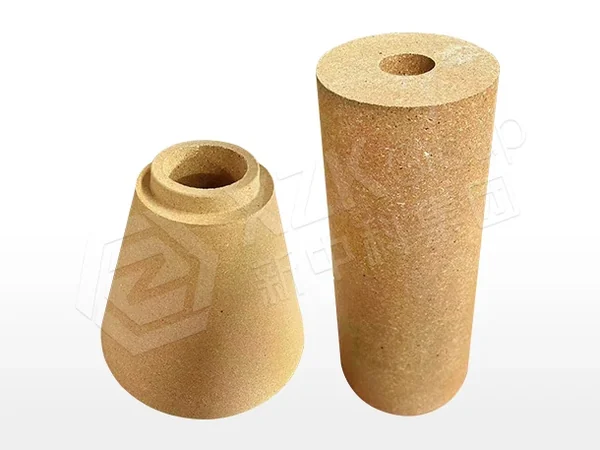
Corundum & High-Alumina Series · Refractory Series
Corundum & High-Alumina Refractory Bricks for 1700°C+ Steel Furnace Zones
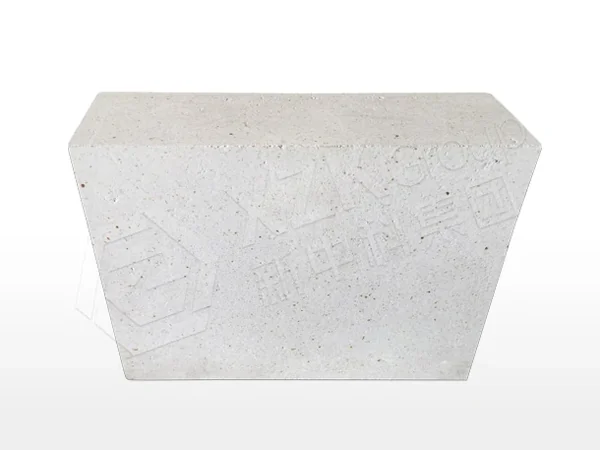
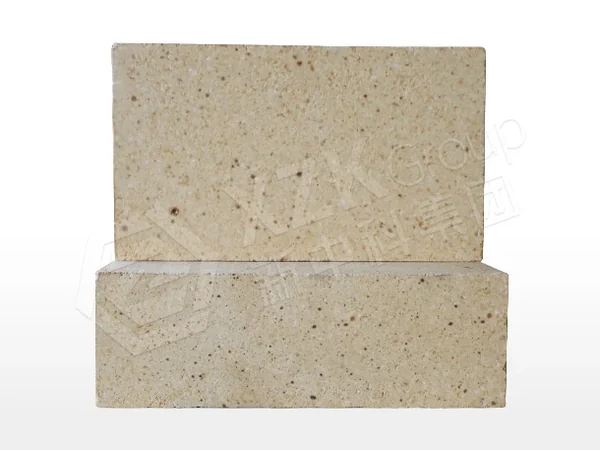
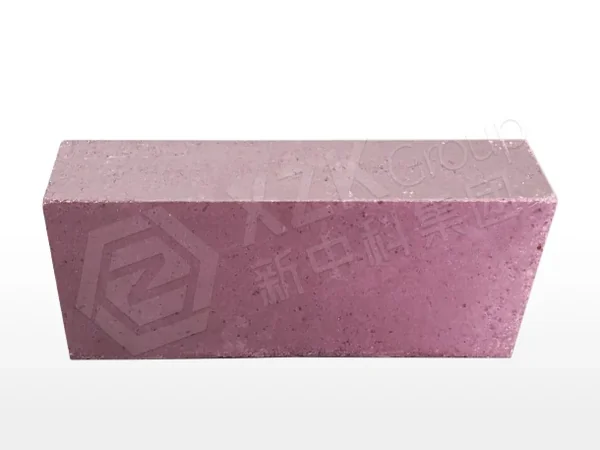
High-purity corundum, corundum-mullite, SiALON-bonded and chrome-corundum bricks, fused AZS and high-alumina series for 1700°C+ service. Exceptional refractoriness, slag resistance and creep stability for BF bosh & belly, ladle sidewalls, reheating furnaces and other extreme-duty zones.
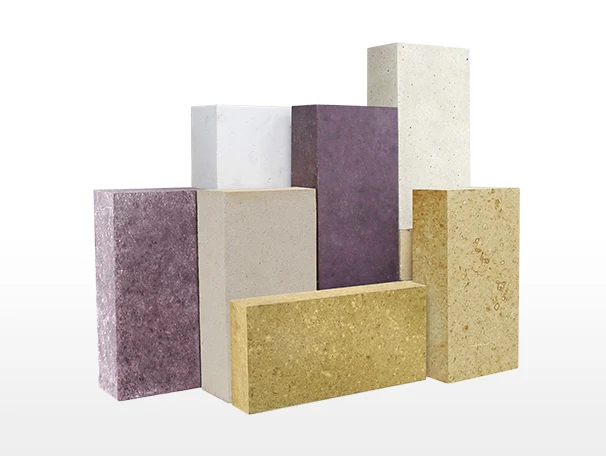
- Al₂O₃ from 48% to 99% across high-alumina, mullite, corundum-mullite and pure corundum grades
- Refractoriness under load above 1700 °C with cold crushing strength to 100+ MPa
- SiALON-bonded and chrome-corundum variants for alkali and slag attack
- Low apparent porosity (≤15–16%) to limit slag penetration depth
- Corundum-spinel and corundum-mullite options balancing creep and thermal shock
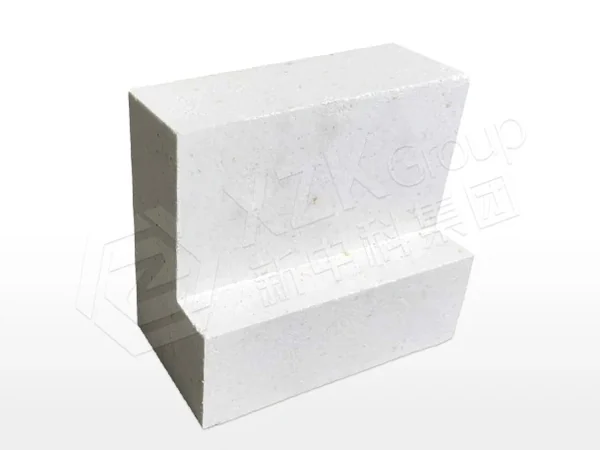
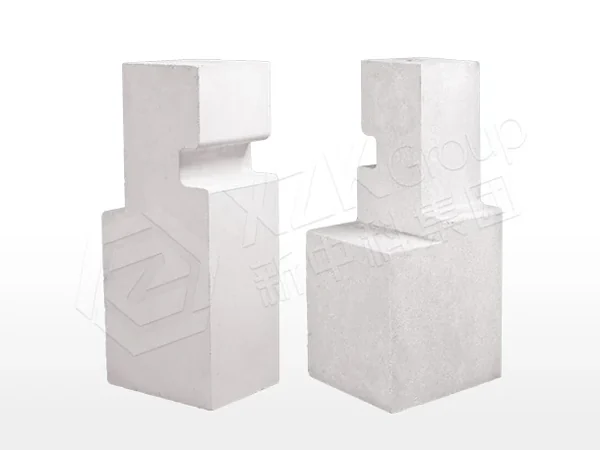
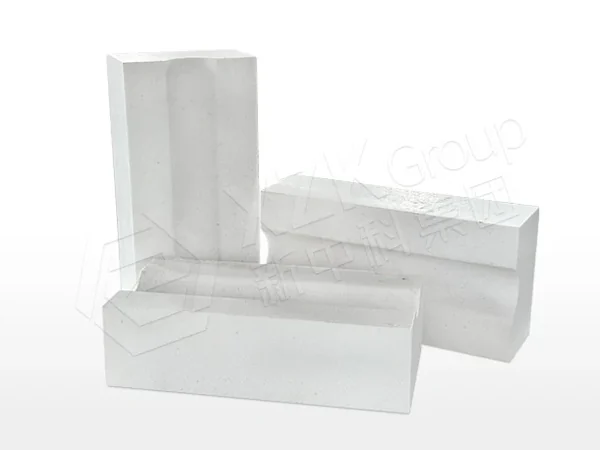
- Custom key shapes, large blocks and pre-assembled precast shapes to drawing
Corundum & High-Alumina Series Product List
Full TDS datasheets available on each product detail page. Click "Get Free Quote" to request factory pricing within 12 hours.
Selection Guide
Free Consultation with Our Engineer
How to Select the Right Corundum & High-Alumina Series Refractory Formulation for Your Furnace
Selecting Alumina-Based Refractories by Temperature, Slag and Load
Alumina-based refractories span 48% to 99% Al₂O₃, and the correct grade is determined by three variables: peak service temperature, slag chemistry, and whether the zone is mechanically loaded or thermally cycled. Moving up the alumina ladder is not automatically better — above roughly 90% Al₂O₃, thermal shock resistance falls and the brick becomes vulnerable to spalling in cycled zones.
Step 1 — Establish the Service Temperature
- Up to 1450 °C — high-alumina and fireclay grades are sufficient and most economical.
- 1450–1600 °C — mullite and corundum-mullite grades, where creep resistance and thermal shock both matter.
- Above 1600 °C — corundum, chrome-corundum or SiALON-bonded corundum, with refractoriness under load above 1700 °C.
Step 2 — Match the Slag Chemistry
- Acidic and neutral slags — higher alumina performs well; corundum resists penetration and dissolution.
- Strongly basic slags (BOF, ladle, high CaO/SiO₂) — plain corundum is attacked; use spinel-bearing, magnesia-carbon or chrome-corundum grades instead.
- Alkali vapour (blast furnace stack and belly, cement kilns) — SiALON-bonded materials resist alkali attack far better than oxide-bonded alumina.
Step 3 — Decide Between Creep and Thermal Shock
These two properties pull in opposite directions. Dense, high-purity corundum has excellent creep resistance but limited thermal shock tolerance. Mullite-bearing grades sacrifice some refractoriness for a lower thermal expansion coefficient and better cycling behaviour. If the zone is continuously loaded and hot, choose for creep; if it cycles, choose for thermal shock.
Step 4 — Confirm the Physical Envelope
Check bulk density, apparent porosity and cold crushing strength together rather than individually. Low porosity limits slag ingress; adequate CCS handles mechanical load and handling; and bulk density correlates with both. Where the brick will be diamond ground or pre-assembled, confirm dimensional tolerance on seating faces — we hold ±1.0 mm and dry trial-fit critical assemblies before shipment.
Procurement FAQ — Corundum & High-Alumina Series
MOQ, lead time, packaging, shipment, payment — buyer-side concerns answered for this specific series.
What is the MOQ for non-standard corundum shapes?
20 metric tons for custom shapes requiring new tooling; 10 metric tons for standard catalogue shapes. Precast blocks are quoted per drawing and per piece.
How long does a custom shape order take?
20–35 days from drawing approval, including tooling manufacture, pressing, firing, diamond grinding and dry trial-fitting. Standard shapes ship in 7–14 days.
How are fragile high-purity shapes protected in transit?
Palletised with edge protectors, interleaved cushioning and moisture-barrier wrapping on ISPM-15 heat-treated pallets. Critical machined faces are individually protected; we can also crate high-value precast blocks.
Can you match an existing grade from another supplier?
Usually yes. Send the current datasheet or a sample and we will reverse-match chemistry, bulk density, porosity, CCS and RUL, then quote an equivalent XZK grade with test data. Where a property cannot be matched we tell you which one and what it means in service.
What payment and shipping terms apply?
T/T with deposit or L/C at sight; FOB Qingdao or Tianjin, CIF worldwide, or door-to-door. Framework terms available for repeat volumes.
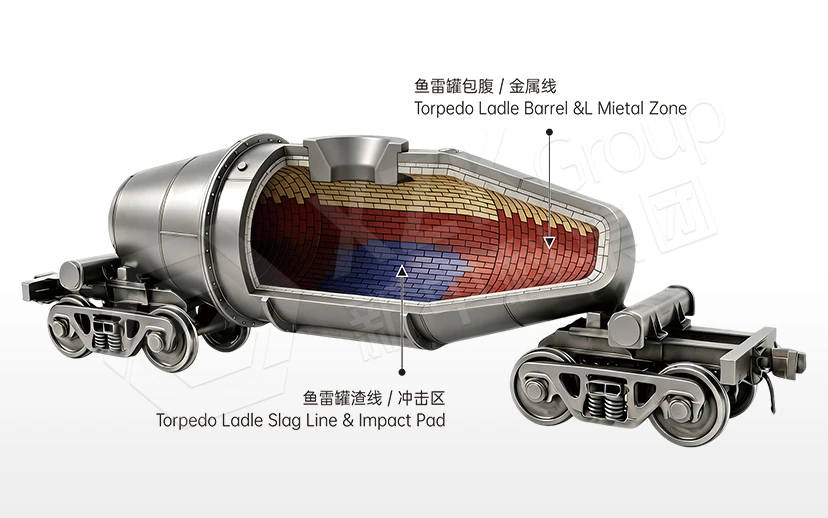
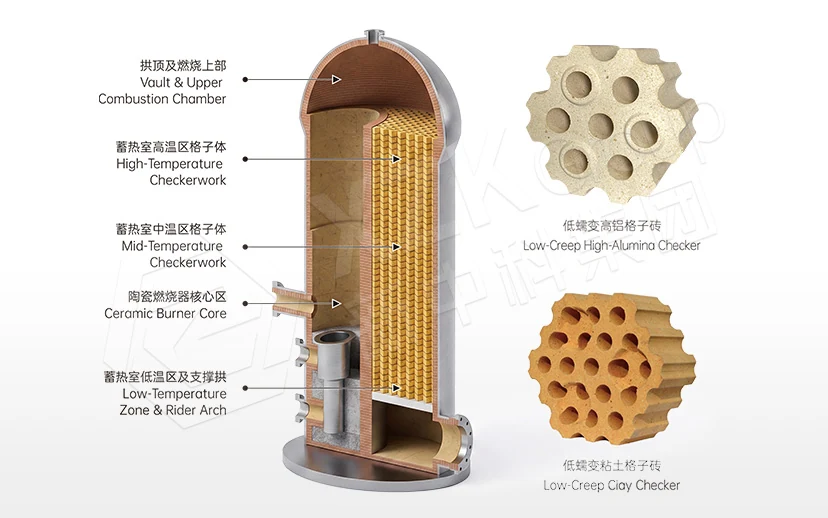
Where Corundum & High-Alumina Series Products Are Installed
Explore the furnace systems these refractories are engineered for — from blast furnace hearths to continuous casting flow control.
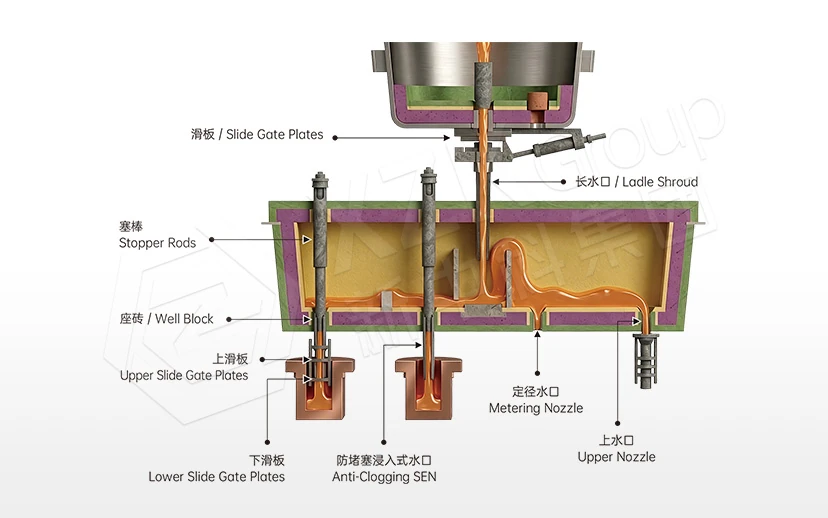
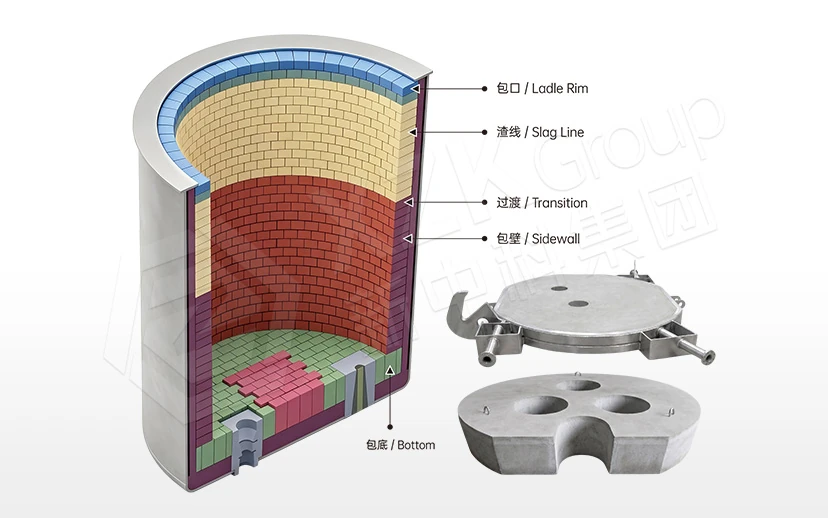
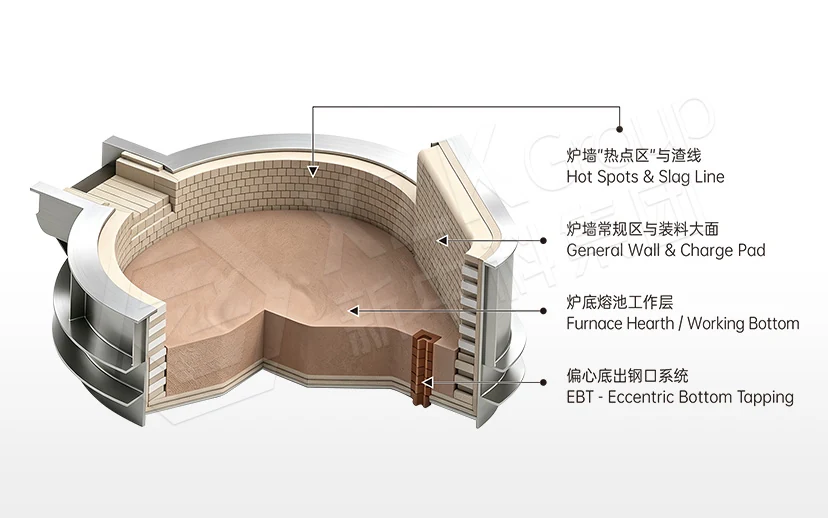
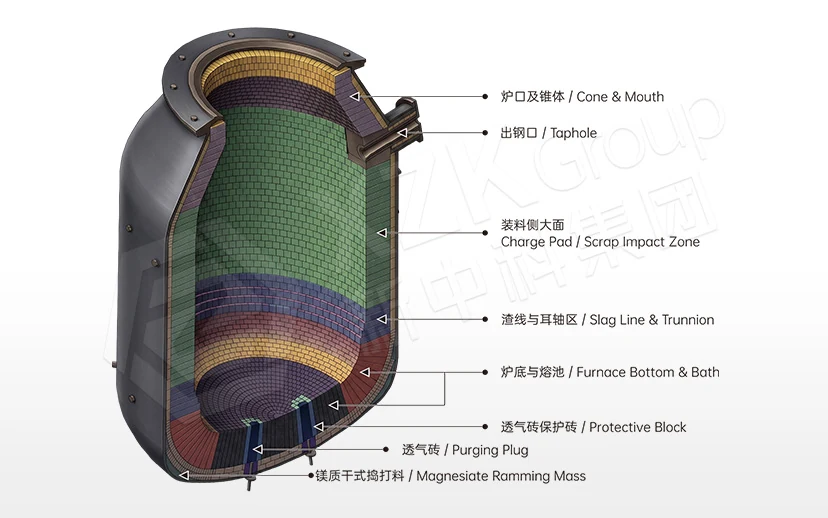
FAQs — Corundum & High-Alumina Series
What is the practical difference between high-alumina, mullite and corundum brick?
High-alumina brick (48–75% Al₂O₃) relies on a mullite-plus-corundum bond and suits general-duty zones. Mullite brick converts more of the matrix to mullite, improving thermal shock and creep behaviour. Corundum brick (≥90% Al₂O₃) maximises refractoriness and corrosion resistance but is more brittle, so it is used where chemical attack — not thermal cycling — controls.
When should I use corundum-mullite instead of pure corundum?
Where the zone sees frequent temperature swings or sustained compressive load: blast furnace belly, hot blast stove domes and ceramic kiln hot faces. Corundum-mullite trades a small amount of refractoriness for substantially better thermal shock resistance and creep stability.
What is SiALON bonding and when is it worth the cost?
SiALON bonding replaces part of the oxide bond with a silicon-aluminium-oxynitride phase, sharply improving thermal conductivity, alkali resistance and erosion resistance. It is worth specifying in blast furnace bosh and belly zones where alkali vapour attack and high heat load coincide.
How does alumina content relate to slag resistance?
Broadly, higher alumina improves resistance to acidic and neutral slags and raises refractoriness under load, but very high purity corundum can be vulnerable to thermal spalling and to strongly basic slags. For basic BOF and ladle slags, magnesia-carbon or spinel-bearing grades usually outperform plain corundum.
Can you supply large key shapes and precast blocks?
Yes. Over 60% of our output is made to customer drawings, including large key shapes, arch and wedge bricks, burner surrounds and precast corundum-mullite blocks. Critical seating faces are diamond ground and dry trial-fitted before shipment.
Which standard test data do you supply?
Bulk density and apparent porosity per ASTM C830 / ISO 5017, cold crushing strength per ASTM C133, refractoriness under load per ISO 1893, and hot modulus of rupture per ASTM C583 where applicable. Chemical analysis follows GB/T and ISO methods. A batch COA accompanies every shipment.
Why Steel Plants Choose XZK Refractories
Zonal Engineering, Not Just Bricks
Every proposal is a zone-by-zone material schedule matched to your furnace profile and operating practice — so all zones reach end-of-life together.
Source Factory Consistency
Fully automatic CNC batching and zero-defect quality control keep batch-to-batch variation at laboratory level.
Proven Global References
Supplied to Baosteel, Shougang, Hyundai Steel, JSW, Severstal, MMK and 400+ furnace projects across 60+ countries.
Full-Lifecycle Service
Lining design, masonry supervision, heat-up curves and failure analysis — plus EPC turnkey delivery for new builds and relines.
Send Us Your Furnace Drawing
Our engineers will return a zonal lining proposal with material schedule and quotation within 48 hours — even for non-standard shapes.
- Free material feasibility review
- Zonal architecture & installation drawings
- Heat-up curve & masonry guidance
Quality & Traceability
Strict ISO 9001 Process Control Across All 6 Workshops
Every batch of raw materials is chemically assayed. Finished refractory shapes undergo density, ultrasonic non-destructive testing, and pre-assembly gap verification prior to global packaging.
- Raw material ICP chemical assay on every incoming batch
- Density, porosity and cold crushing (CCS) tests per ASTM / ISO
- Ultrasonic non-destructive testing of finished shapes
- Pre-assembly gap verification before seaworthy packaging
100,000+
Metric Tons Annual Capacity
60+
Countries Export Footprint
6
Fully-Equipped Workshops
100%
ISO 9001:2015 Certified