Mexico · Monclova
Altos Hornos de México (AHMSA) — 150 t Torpedo Car Full Refractory Package
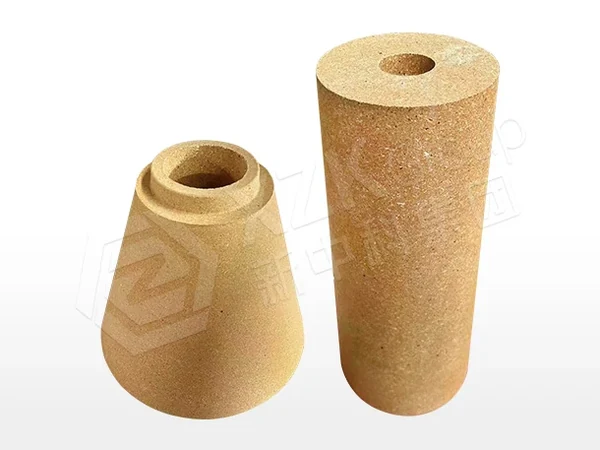
150 t torpedo car — complete refractory supply
Read Case Study →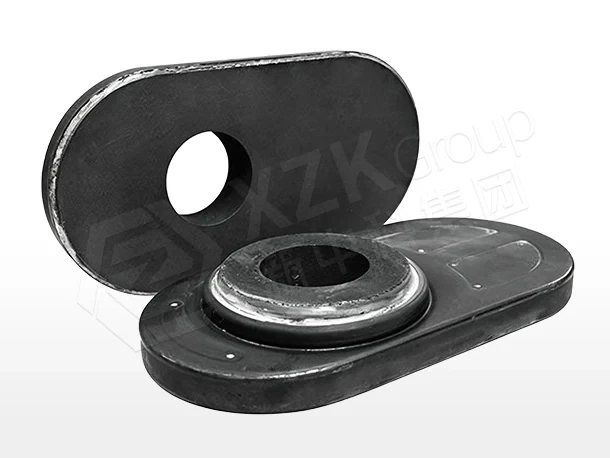
XZK supplies BOF working linings plus preheat-free ladle shrouds and SENs to Azovstal for 2-strand slab casting.
Azovstal's requirement covered two refractories disciplines at once: the 350 t BOF working lining and the flow-control consumables on a two-strand slab caster. The two are usually bought separately and optimised separately; the plant's gain came from treating the caster consumables as a sequence-length problem rather than a unit-price problem.
A two-strand slab caster on a BOF route runs sequences measured in heats, and every mid-sequence intervention — a shroud change, a stopper adjustment, a nozzle replacement — costs casting time and, more expensively, disturbs the steady state that steel quality depends on. Caster refractory performance at Azovstal therefore shows up in two places: consumable consumption per ton, and the number of times a sequence was interrupted.
Two issues came out of the operating review. On the caster, the preheat requirement on shrouds and submerged entry nozzles was a scheduling step that cost time at every start and, when rushed, introduced thermal shock risk on components that had not been brought up uniformly. On the converter, wear followed the familiar combined-blowing pattern, with the slag line and metal zone forcing the campaign while the bottom purging assembly ran a shorter cycle than the vessel.
Flow-control consumables were supplied against the casting programme with batch traceability, so a component that behaved unexpectedly could be traced to a batch and a production date. Certificates of Analysis accompanied the converter material in the same format, and dimensional reports were issued on the slide gate plates. Consumables were packed by casting position, not by product code, so the caster crew took the right component without re-sorting.
The first preheat-free start was supervised: component handling, seating, and the first-heat argon practice verified, since preheat-free components change one step but not the discipline around it — the argon flow that protects a shroud from air ingress matters more, not less, when there is no preheat to recover from. Converter purging assemblies were set with the seat verified and the first heats run to the designed profile.
Removing the preheat step shortened caster turnaround and, more importantly, removed a variable: start-up thermal condition stopped depending on how carefully a preheat had been run. Flow-control consumables matched to steel grade reduced mid-sequence interventions, which is the metric the plant cared about. On the converter, aligning the purging assembly life with the campaign removed a forcing position that had previously ended campaigns early.
Caster performance was tracked on three numbers rather than one: consumable consumption per ton of cast steel, the count of mid-sequence interventions per sequence, and the sequence length achieved by steel grade. The third is the one that matters commercially and the one most often missing, because a plant that only tracks consumption will buy the cheapest nozzle that forces an intervention at heat six and never see the cost. Converter performance was tracked as residual thickness by zone at each maintenance window, against the zonal prediction issued with the proposal, so that a deviation could be attributed to a specific mechanism rather than to "the lining". Both sets of numbers were reviewed at scheduled intervals with the plant's engineers, which is what turns a supply relationship into an engineering one.
Caster refractory should be specified against sequence length, not unit price. A nozzle that costs more and lasts a full sequence is cheaper than one that costs less and forces an intervention at heat six, because the intervention costs casting time, temperature and quality. The same logic applies to the converter: a purging assembly bought as a matched set outlasts one bought as a plug.
The full flow-control system view is on the tundish and flow control page, and the converter side on the BOF converter page.
150 t torpedo car — complete refractory supply
Read Case Study →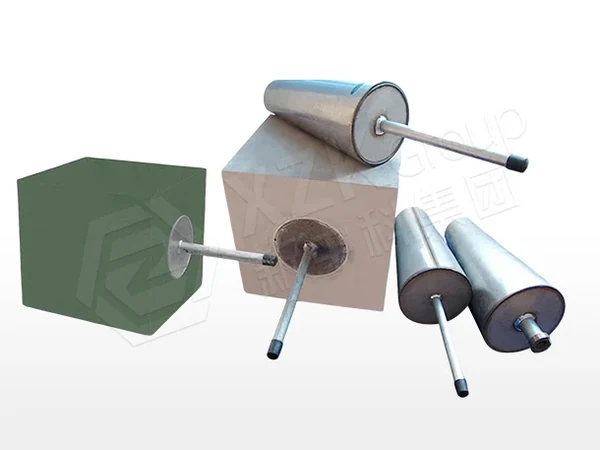
80–120 t EAF ladles — working lining, purging plug & well block
Read Case Study →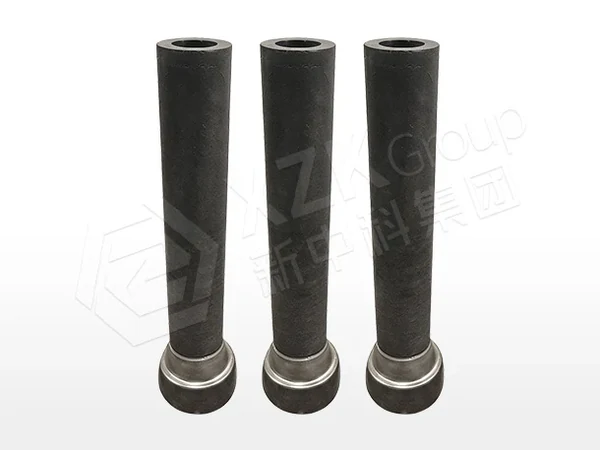
EAF slag line & ladle slide gate system
Read Case Study →Every batch of raw materials is chemically assayed. Finished refractory shapes undergo density, ultrasonic non-destructive testing, and pre-assembly gap verification prior to global packaging.