Mexico · Monclova
Altos Hornos de México (AHMSA) — 150 t Torpedo Car Full Refractory Package
150 t torpedo car — complete refractory supply
Read Case Study →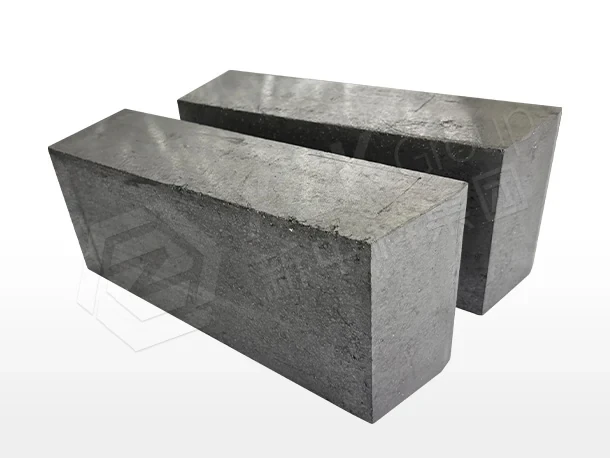
XZK supplied a zonal MgO-C lining package for a 300 t BOF and the full working lining for 320 t torpedo cars at Hyundai Steel Dangjin Works.
Hyundai Steel's Dangjin Works runs one of the most demanding integrated steelmaking routes in East Asia: large converters on a tight tap-to-tap cycle, a hot metal transport fleet sized to keep the converters fed without buffering, and a product mix that includes grades with tight residual limits. When the refractory team approached XZK, they had already done the hard part — they knew exactly where the vessel was failing and, more importantly, where it was not.
Dangjin operates 300 t basic oxygen converters on a campaign structure with intermediate gunning maintenance, supported by a fleet of 320 t torpedo cars. Production planning is intolerant of unscheduled converter downtime, because the hot metal balance has little slack: a converter taken out early forces either a torpedo queue or a rate reduction upstream. Refractory performance at this plant is therefore measured less in campaign life than in campaign predictability — the ability to plan the reline date and hit it.
The BOF was coming down on a groove at the slag-line-to-barrel boundary. Not slag-line wear, not barrel wear — a localised step at the transition between the two zones. The plant's own measurement data showed residual thickness elsewhere in the vessel still above the reline trigger when the groove reached its limit. That is a signature, not a coincidence: a groove at a material boundary is a property discontinuity problem. Two adjacent grades with different thermal expansion, different elastic modulus and different slag behaviour create a mechanical and chemical step at the joint. Steel and slag flow over the step differently, the step concentrates erosion, and the groove becomes self-reinforcing until it is the controlling wear point of the whole vessel. Replacing the slag-line brick with a better slag-line brick would have changed nothing, because the slag-line brick was not the problem.
XZK's proposal treated the vessel as a set of zones with named failure mechanisms, each graded to its own dominant mechanism, with the boundary between zones engineered rather than left to happen:
Every batch shipped with a Certificate of Analysis covering chemistry, bulk density, apparent porosity and cold crushing strength, with hot modulus of rupture and oxidation testing on the grades where those properties govern. Shapes were pressed on CNC hydraulic presses to tight dimensional tolerance, and the consignment was palletised and labelled by vessel zone so that installation followed the design sequence without re-sorting on site. Mortar was specified with the brick rather than sourced separately, because the joint is where penetration starts.
XZK supervised the first boundary-course installation: joint thickness verified, the MAC transition laid exactly to the course drawing, and the torpedo throat and mouth castables placed with the water addition metered rather than judged by eye. Heat-up followed the supplier curves for the castable components rather than the production schedule, on the principle that moisture driven out as steam pressure during a rushed heat-up opens paths that become penetration paths later.
With the transition courses in place, the wear profile through the slag-line-to-barrel region became smooth rather than stepped, and the boundary stopped being the reason the vessel came down. Campaign length extended past 12,000 heats, and — the result the production planners valued more — the reline date became predictable enough to schedule against the order book instead of against the thickness survey. Torpedo car linings, supplied as a matched package with mortar and castables, showed an even wear profile across the fleet with the throat no longer the forcing position.
The general lesson is not "use MAC transition grades". It is that when a vessel fails at a boundary, the boundary is the specification error, and the fix is a graded transition rather than an upgrade on either side. Any plant with a stepped wear profile at a zone interface is looking at the same mechanism, whatever the vessel size.
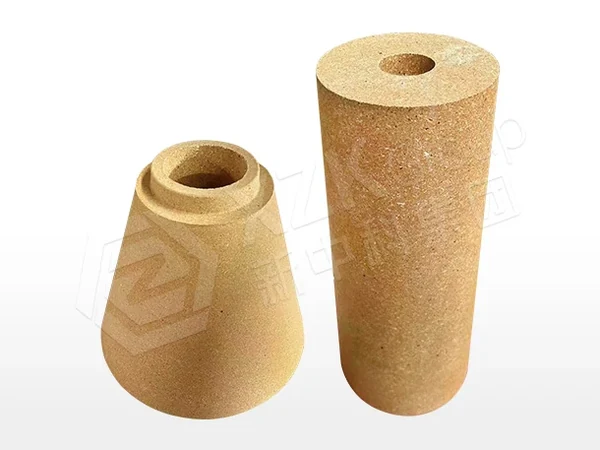
The converter grades are documented on the BOF magnesia carbon brick and alumina-magnesia-carbon brick pages, the transport side on the ASC brick page, and the two system views on the BOF converter and casthouse and torpedo pages.
150 t torpedo car — complete refractory supply
Read Case Study →
80–120 t EAF ladles — working lining, purging plug & well block
Read Case Study →
EAF slag line & ladle slide gate system
Read Case Study →Every batch of raw materials is chemically assayed. Finished refractory shapes undergo density, ultrasonic non-destructive testing, and pre-assembly gap verification prior to global packaging.