Mexico · Monclova
Altos Hornos de México (AHMSA) — 150 t Torpedo Car Full Refractory Package
150 t torpedo car — complete refractory supply
Read Case Study →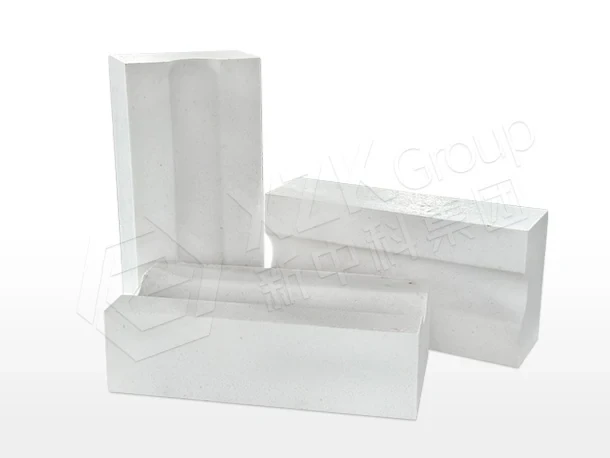
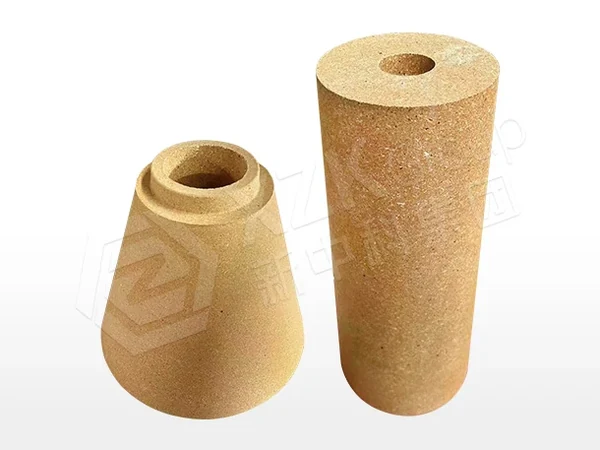
XZK supplies refractory materials to Saint-Gobain operations in France and Brazil, covering insulation layers and wear-face applications.
Saint-Gobain is not a steel plant, and that is what makes this case useful: it shows the same specification discipline applied to industrial kilns and furnaces outside metallurgy, across multiple sites in France and Brazil, under one documentation standard.
Saint-Gobain's manufacturing sites run high-temperature ceramic kilns and reheating furnaces with strict energy-reduction and shell-temperature thresholds. Multi-site operations add a requirement that single-site customers do not have: a specification qualified at one site must be reproducible at another, with documentation that a central technical team can compare across sites and across years.
The requirements were thermal rather than metallurgical. Kiln and furnace linings lose a large share of their energy through the walls and roof, and the specification had to deliver three things at once: reduced fuel consumption, shell temperature held within a stated limit to protect the steel structure, and lining life that did not regress in pursuit of the first two. Those three pull against each other in an obvious way — thinner or lighter insulation improves energy figures and worsens mechanical life — so the engineering question was where each zone sat on that trade-off.
Multi-site supply was sequenced against each site's shutdown calendar, and material was labelled by zone so installation followed the design. Certificates of Analysis accompanied every shipment in the fixed format. Where a site's furnace configuration differed, the zone map was revised for that site and the revision documented — so a difference between sites was a recorded engineering decision rather than an unexplained variation.
Installation followed the zone maps with the insulation-to-working-lining interface treated as a designed transition. Heat-up followed material curves, and shell temperature was measured from first firing so the insulation design could be confirmed against measurement rather than assumed — the only way an energy guarantee means anything.
Multi-site supply ran with consistent specification and documentation, which was the operational requirement. Shell temperature targets were met and lining life held, so the energy improvement was not bought with campaign length. The central technical team gained a comparable data set across sites, which is what makes subsequent optimisation possible.
Shell temperature at defined measurement points, fuel consumption normalised to production, and lining life by zone — measured at each site, in the same units, at the same intervals. The normalisation matters: fuel consumption per unit of production is comparable across sites, while absolute consumption is not. With that data in hand, the insulation design could be refined zone by zone at the sites where the measurement showed the largest gap between predicted and actual.
Outside metallurgy the same rule holds as inside it: insulation is a density ladder against local temperature, and the interface between insulation and working lining is a designed transition, not a boundary. Multi-site customers should insist on one documentation format across all sites — it is the prerequisite for comparing anything.
The insulation grades are documented on the mullite insulating brick and high-alumina insulating brick pages, with the wear-face materials on the high-alumina brick page.
150 t torpedo car — complete refractory supply
Read Case Study →
80–120 t EAF ladles — working lining, purging plug & well block
Read Case Study →
EAF slag line & ladle slide gate system
Read Case Study →Every batch of raw materials is chemically assayed. Finished refractory shapes undergo density, ultrasonic non-destructive testing, and pre-assembly gap verification prior to global packaging.