Mexico · Monclova
Altos Hornos de México (AHMSA) — 150 t Torpedo Car Full Refractory Package
150 t torpedo car — complete refractory supply
Read Case Study →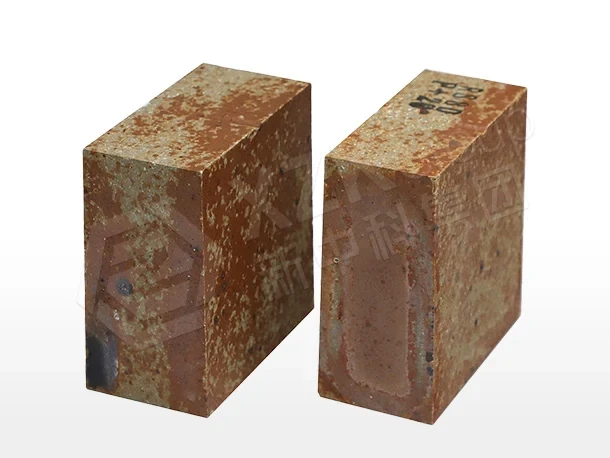
XZK supplies ASC working linings, mortar and throat castables for Severstal 600 t torpedo cars, targeting an even wear profile across the fleet.
A torpedo car fleet is a refractory problem in three dimensions at once: every car is a vessel with its own wear profile, the fleet is a system that must stay balanced, and the cars are the buffer between ironmaking and steelmaking — which means a car out of service is a production problem, not a refractory problem. XZK supplies ASC working linings, mortar and throat castables for Severstal's 600 t torpedo cars under a rolling programme built around that reality.
Cherepovets runs 600 t torpedo cars on a route with significant hot metal transfer distances and desulfurisation practice in the transfer chain. Car availability is planned against the converter schedule, and the maintenance window for a car reline is fixed by the fleet balance rather than by refractory condition. A lining that reaches its limit two weeks early, or two weeks late, is in both cases a planning problem.
The fleet's forcing wear position was the slag line, with notching concentrated at the slag-metal interface and accelerated by the reagent practice in the transfer chain. The second issue was fleet-level rather than car-level: wear profiles varied between cars by more than the difference between material batches could explain, which pointed at practice variation — filling level, trip duration, desulfurisation exposure — rather than at material inconsistency. A refractory supply that ignored the second point would have fixed one car at a time.
ASC (alumina-silicon carbide-carbon) was specified over high-alumina because the duty is genuinely three-fold rather than single:
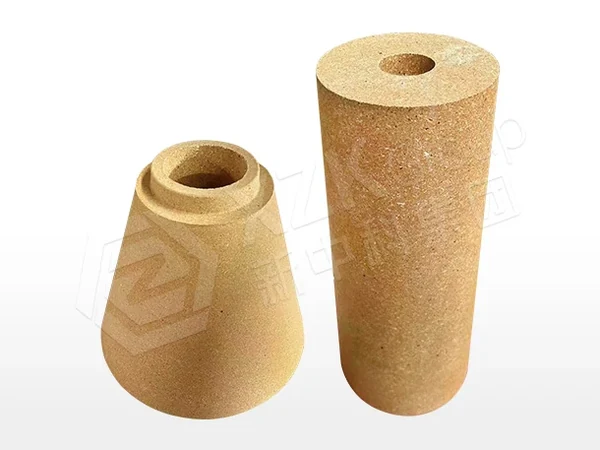
A high-alumina brick addresses the first of the three and leaves the other two to the mortar and to luck. Within the ASC specification, the car was zoned rather than lined uniformly: impact pad, barrel, slag line and throat each graded to its own dominant mechanism, with the throat and mouth — the positions that always fail first — engineered as dedicated shapes with a matching castable rather than cut from standard brick on site.
Material was palletised and labelled by car and by zone, so installation followed the maintenance sequence without re-sorting. Every batch shipped with a Certificate of Analysis covering chemistry, bulk density, apparent porosity and crushing strength. Mortar was supplied matched to the brick chemistry, because a joint with a different melting behaviour is a penetration seam through an otherwise sound lining. Delivery was scheduled against the fleet maintenance plan rather than against an order quantity, which is what makes a rolling programme different from a purchase order.
Installation followed the zone schedule with joint thickness verified and the throat castable placed at metered water addition. Heat-up followed the supplier curves. XZK's installation support also covered the practice side: filling level and trip-duration records were compared against the wear data car by car, because the fleet-level spread pointed at practice before material.
Slag-line notching was substantially reduced and the wear profile across the fleet became markedly more even. The more valuable outcome was planning: with the spread between cars reduced, the fleet maintenance schedule stopped containing contingency for unpredictable early failures, and cars came in on plan. Consumption per ton of hot metal, measured across the programme rather than per car, became a number the plant could budget.
Two points generalise. First, if wear varies between nominally identical vessels by more than batch variation can explain, the variation is in practice, not in material — and a supplier who only ships brick will never find it. Second, on hot metal transport the throat and mouth are the forcing positions on almost every fleet; engineering them as shapes rather than cutting them on site is one of the cheapest campaign extensions available.
The material is documented on the ASC brick page, the casthouse side on the casthouse ASC castable page, the system view on the casthouse and torpedo page, and a full single-source transport package in the AHMSA Mexico torpedo case study.
150 t torpedo car — complete refractory supply
Read Case Study →
80–120 t EAF ladles — working lining, purging plug & well block
Read Case Study →
EAF slag line & ladle slide gate system
Read Case Study →Every batch of raw materials is chemically assayed. Finished refractory shapes undergo density, ultrasonic non-destructive testing, and pre-assembly gap verification prior to global packaging.