Torpedo car refractory specification begins with one question that too many enquiries skip: which failure mechanism is actually ending your linings? The two candidate body families — alumina-silicon carbide-carbon (ASC) and high-alumina — answer different mechanisms, and choosing between them on price or habit rather than mechanism is the most common specification error in hot metal transport. This guide sets out the decision the way a fleet engineer would make it.
What a Torpedo Lining Must Survive
Three attacks operate simultaneously inside a torpedo car. Slag and reagent attack: desulfurisation and de-siliconisation reagents, plus the carryover slag from the hot metal, chemically corrode the lining — most aggressively at the slag line and wherever reagent injection concentrates. Thermal cycling: every trip loads the lining at tap temperature and unloads it to preheat-level temperatures, tens of times per week; the expansion-contraction cycles spall any body without compliance. Erosion and infiltration: moving hot metal erodes the impact pad and barrel low courses, while iron and slag infiltrate pores and degrade the microstructure from inside.
What Each Body Family Does
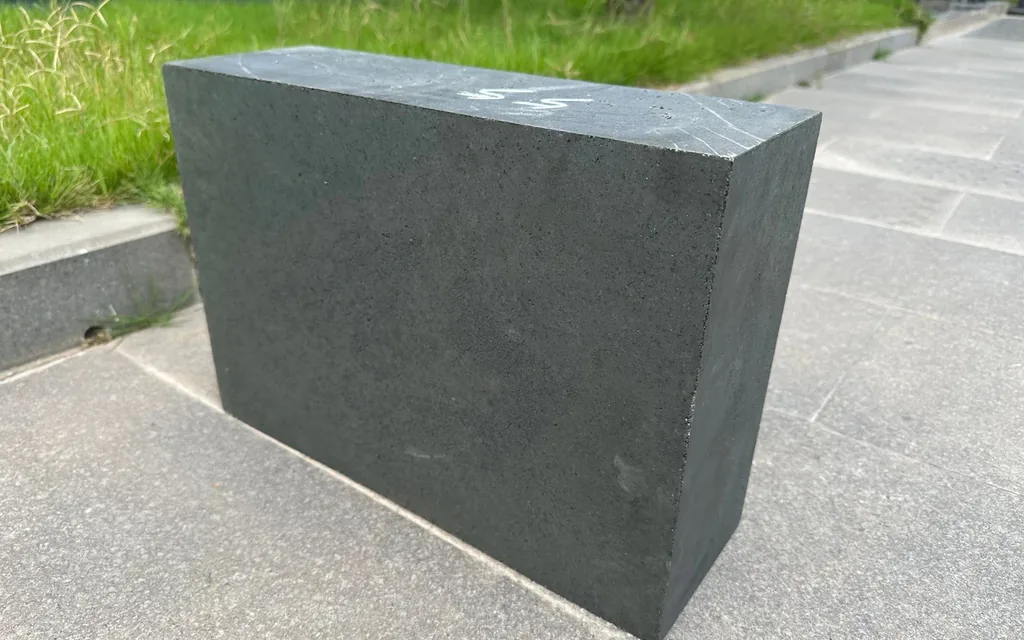
- ASC brick — the alumina backbone resists erosion and chemical attack; silicon carbide adds hardness, reagent resistance and the thermal conductivity that softens thermal gradients; the carbon phase blocks infiltration and absorbs cycling. ASC answers all three mechanisms, which is why it is the default working lining for modern torpedo fleets.
- High-alumina brick — resists erosion and moderate chemical attack and costs less per ton. What it lacks is the carbide and carbon phases: against aggressive reagent practice its chemistry dissolves faster, and without high conductivity or non-wetting behaviour it infiltrates and spalls sooner under cycling. High-alumina remains defensible on gentle routes — short transport distances, mild reagent practice, older fleets with modest campaign targets.
The Decision Inputs
Four operating variables decide the choice in practice. Reagent severity: deep desulfurisation in the car pushes decisively toward ASC. Transport distance and cycle frequency: long routes multiply thermal cycles and favour ASC's compliance and conductivity. Hot metal silicon content: high-silicon iron produces more aggressive slag chemistry. Campaign target: fleets managed for maximum tonnes per lining campaign recover ASC's premium through fewer relines; fleets running short campaigns on spare cars may not. Note the pattern: the harder the duty, the clearer the ASC case — the controversy exists only where duty is mild enough for the difference to be small.
Zone the Car Either Way
Whichever family wins the envelope, the lining should be zoned within it. The impact pad takes mechanical shock and needs the densest, strongest grade. The slag line takes chemical attack and needs the highest carbide and carbon fractions. The barrel balances both. The throat and mouth fail mechanically — cleaning tools, not chemistry — and deserve dedicated wear shapes plus a mouth castable formulated for the plant's cleaning practice. A uniform lining on a zoned duty is the second most common specification error: it guarantees that the harshest zone dictates the reline while the rest is discarded with life in it.
Total Cost per Ton: How to Run the Comparison
Because ASC carries a higher unit price than high-alumina, the comparison should be run in the unit the plant actually pays in: refractory cost per ton of hot metal transported, not price per ton of brick. The calculation needs four numbers per option: lining mass, lining life in trips or tonnes transported, the mortar and castable share (typically 10–15% of package value — do not omit it), and the installation labour per reline. ASC's longer life divides the same fleet tonnage across fewer relines, which saves installation labour and outage windows as well as brick; on long routes the difference routinely exceeds the unit price premium. The comparison also carries a risk adjustment: high-alumina on aggressive duty wears unevenly, and uneven wear means emergency pull-outs — the unplanned outage that costs far more than any refractory line item. Run honestly, the calculation makes the decision for most fleets; where it genuinely does not, the duty is mild, and high-alumina is a legitimate answer rather than a compromise. The plants that get this wrong are almost always comparing invoices instead of running the arithmetic — and the arithmetic is four numbers long.
Signs It Is Time to Re-Specify, Whatever You Run Today
Family choice is not a one-time decision, and the wear data will tell you when the answer has changed. Three signals justify re-specification regardless of which body the fleet runs. First, a changing reagent practice: deeper desulfurisation targets, new reagent injection points, or longer treatment times shift the chemistry duty decisively — a fleet comfortable on high-alumina can find itself out of family within a quarter of a process change. Second, a wear profile that concentrates: when one zone's residual thickness falls below 60% of the fleet average, the lining is being relined on that zone's schedule, and either the grade there or the family envelope needs revisiting. Third, cycling intensity: fleet reassignments that lengthen routes or raise trip frequency multiply thermal cycles, which is the mechanism that punishes bodies without compliance. Any one of the three deserves a fresh zonal review; all three arrive together whenever a plant changes its hot metal pretreatment strategy, which is exactly when the torpedo specification should be reopened rather than renewed on habit.
Verification and Supply Model
Specifying the family is half the job; the other half is trusting what arrives. Insist on batch Certificates of Analysis covering chemistry, density, porosity and strength; on machined shapes, insist on dimensional reports. And prefer a rolling supply programme over one-off purchases: torpedo fleets maintain continuously, so the refractory supply should track the fleet's rotation — every car relined from a recent documented batch, minimum inventory held, batch-to-batch consistency visible across the programme.
The chemistry is detailed on the ASC brick page, the fleet-level application in the 600 t torpedo fleet case study and the AHMSA 150 t complete package case study, with the system overview on the torpedo and casthouse page. Send us your reagent practice, route length and current lining life — we will tell you which family the duty calls for, and which grade per zone, free within 48 hours.