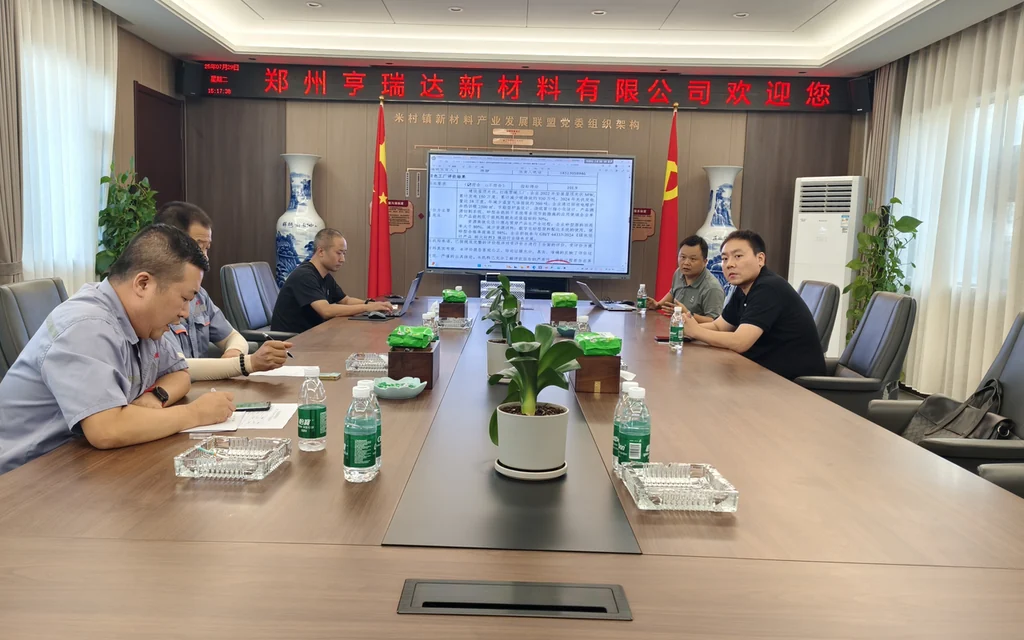
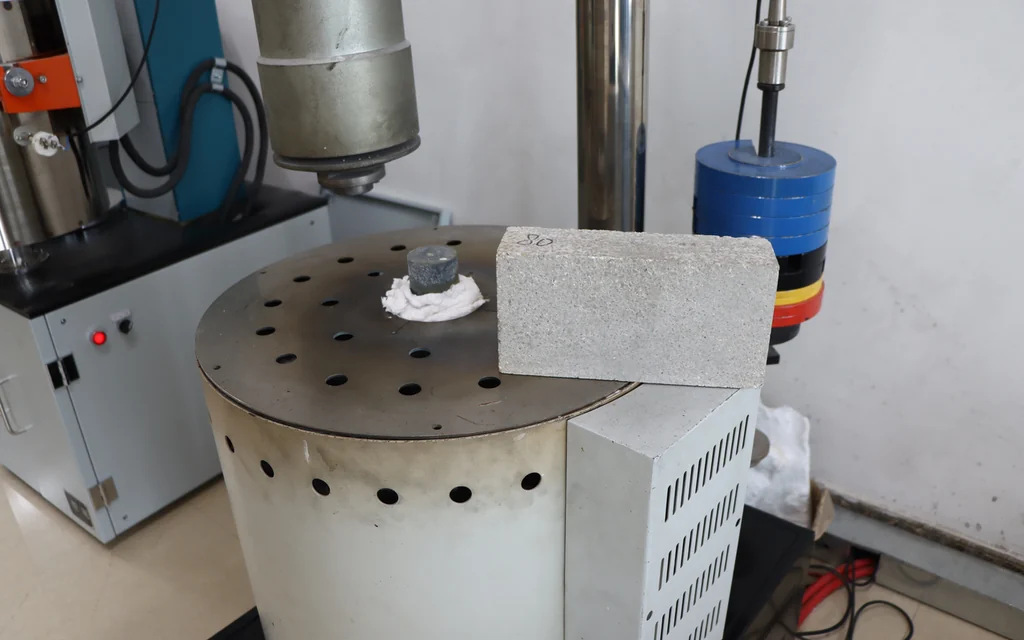
XZK Group has contributed to GB/T 44333-2024, the Chinese national standard covering green product assessment for refractory materials — the framework that defines when a refractory product may be evaluated and labelled as "green" across its production, use and end-of-life dimensions. Participation in the drafting completes a standards portfolio that spans chemical analysis methods, product-specific standards and now sustainability assessment.
Why This Standard Matters
Refractory products are increasingly assessed on more than service performance. Green product assessment frameworks consider resource and energy consumption in production, emissions during manufacture, recyclability and safe end-of-life handling — the factors that appear in customer sustainability reporting, in green public procurement criteria, and in the ESG questionnaires that now accompany major steel industry tenders. A national standard gives these questions a defined answer: not a supplier's self-declaration, but a documented assessment against published criteria, verifiable by third parties.
For buyers outside China, the practical relevance is direct. When a European or Asian steelmaker's supplier audit asks for evidence of environmental product credentials, an assessment against a national green product standard is an answer with structure — the same structure, in intent, as the EU's emerging frameworks for environmental product declarations. Suppliers who cannot produce that evidence will progressively find the questionnaire harder to pass.
What Drafting Involves
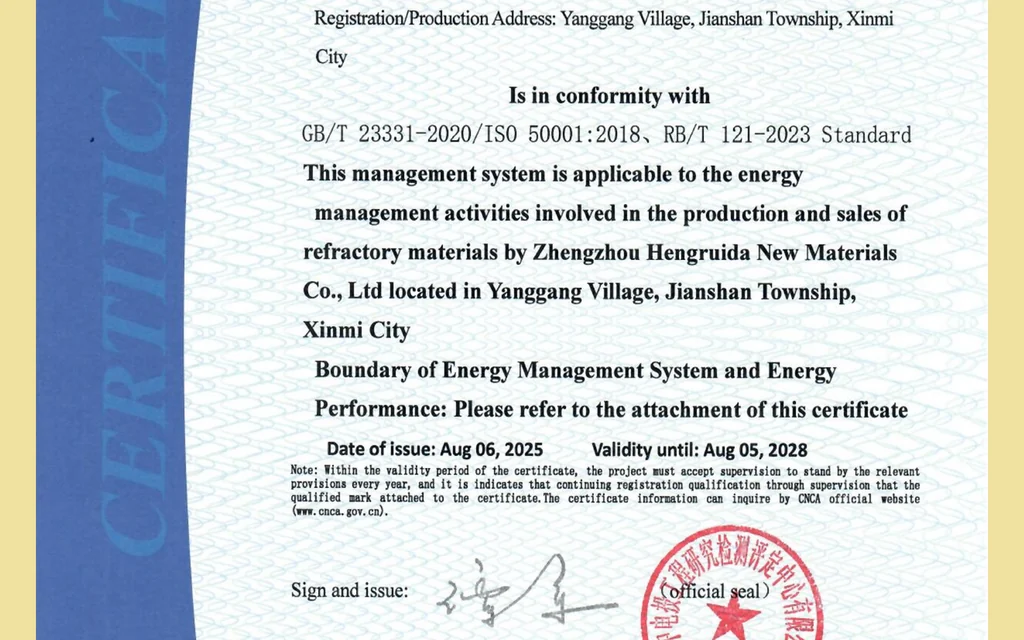
Writing an assessment standard is a negotiation about evidence: which indicators count, how they are measured, and what thresholds separate an ordinary product from a green one. Manufacturer participation in that negotiation is what keeps the standard anchored to what production can actually demonstrate — kiln energy data that exists, recycling routes that operate, chemistry that can be verified batch to batch. XZK's contribution drew on the measurement infrastructure already in place at the Xinmi base: the ISO 50001 energy management system supplies the consumption data, the ISO 14001 environmental system supplies emissions and waste-stream records, and the batch COA discipline supplies product chemistry. In other words, the green assessment standard sits on top of the management systems the plant already runs — which is precisely how it should work.
The Direction of Travel: From National Standards to EPDs
Green product assessment standards and environmental product declarations are converging on the same underlying demand: quantified, verified environmental data per product, not per company. A national assessment framework like GB/T 44333-2024 builds exactly the muscle that EPD programmes require — life-cycle thinking in product specification, measured production data rather than averages, and third-party verification. Buyers can expect the two systems to interoperate over the coming years, with assessment evidence from one feeding declarations in the other. Manufacturers who built measurement infrastructure early — energy baselines, emissions records, batch chemistry — will make that transition from documents they already hold. Those who did not will discover that sustainability documentation cannot be assembled retroactively from estimates. This is the practical reason XZK invests in both the management systems and the standards work: not certification for its own sake, but the data foundation that every forthcoming customer requirement will assume.
XZK's Wider Standards Work
- GB/T 4984-2023 — chemical analysis of zirconia-containing refractory materials.
- GB/T 44333-2024 — green product assessment for refractories.
- JC/T 2574-2020 — sillimanite bricks for glass furnaces.
- T/CSTM 00853-2024 — chrome-zirconia-corundum bricks for glass furnace regenerators.
The portfolio intentionally spans three kinds of document: test methods (how chemistry is measured, so buyers can compare suppliers on equal terms), product standards (what a given brick type must achieve), and now sustainability assessment (how environmental performance is evidenced). A manufacturer that writes test methods others will judge it by is, in effect, volunteering for the discipline it preaches.
Three Questions This Standard Answers in a Tender
In practical tender terms, GB/T 44333-2024 gives procurement teams structured answers to questions that previously produced essay-length non-answers. Question one: what is the evidence for this product's environmental performance? Answer: the assessment indicators, measured and verifiable, rather than a sustainability brochure. Question two: is the production site managed to recognised systems? Answer: the ISO management certificates, now extended to energy. Question three: will the evidence still be valid across the contract term? Answer: yes, because the assessment sits on surveillance-audited management systems rather than a one-time study. None of these answers is dramatic on its own; the value is that they arrive in a standard format, comparable across suppliers, checkable by the buyer's qualification team without a site visit. Tenders that reference assessment standards directly get better supplier behaviour — because the suppliers who invested in measurement can finally prove it, and the ones who did not must either invest or compete on price alone. That, more than any single certificate, is what a green product standard is for.
A Short Glossary for Qualification Teams
Because green assessment vocabulary is new to many refractory buyers, the terms worth knowing are few and specific. Assessment indicator: a measurable attribute — resource consumption, energy intensity, emissions — with a defined test or accounting method. Baseline: the reference value the indicator is compared against, drawn from measured production data. Green product grade: the result band the assessment assigns, which procurement frameworks can reference in tenders. Verification: the third-party check that the evidence behind the assessment is genuine and current — the step that separates a standard from a label. Buyers do not need to master the full text of the standard; they need to know that these four elements exist, and to ask for them in that order when a supplier claims green credentials. A supplier with a real assessment can produce the indicators, the baseline, the grade and the verification without hesitation. A supplier with a marketing claim can usually produce only the last one's vocabulary.
What It Means in Practice
For customers, standards participation is a reasonable proxy for technical seriousness — but it is not a substitute for product data. Every XZK shipment still carries batch Certificates of Analysis with the measured figures, third-party inspection by SGS, BV or TÜV remains available on request, and the green assessment documentation will join the supplier qualification package alongside the ISO 9001 / 14001 / 45001 / 50001 certificates. If your qualification process requires the GB/T 44333-2024 assessment evidence, contact the export team and we will provide it together with the management system certificates.