For carbon-critical steel grades, any carbon-bearing material in the ladle working lining is a specification risk. Carbon-free corundum-spinel castable removes that risk entirely. But it is not a universal upgrade — against aggressive refining slag, magnesia-carbon still outlives it — and knowing where the boundary sits between the two is the whole specification job. This article sets out how the material works, where it wins, where it loses, and the impurity number that matters more than headline alumina.
How Carbon-Free Corundum-Spinel Works
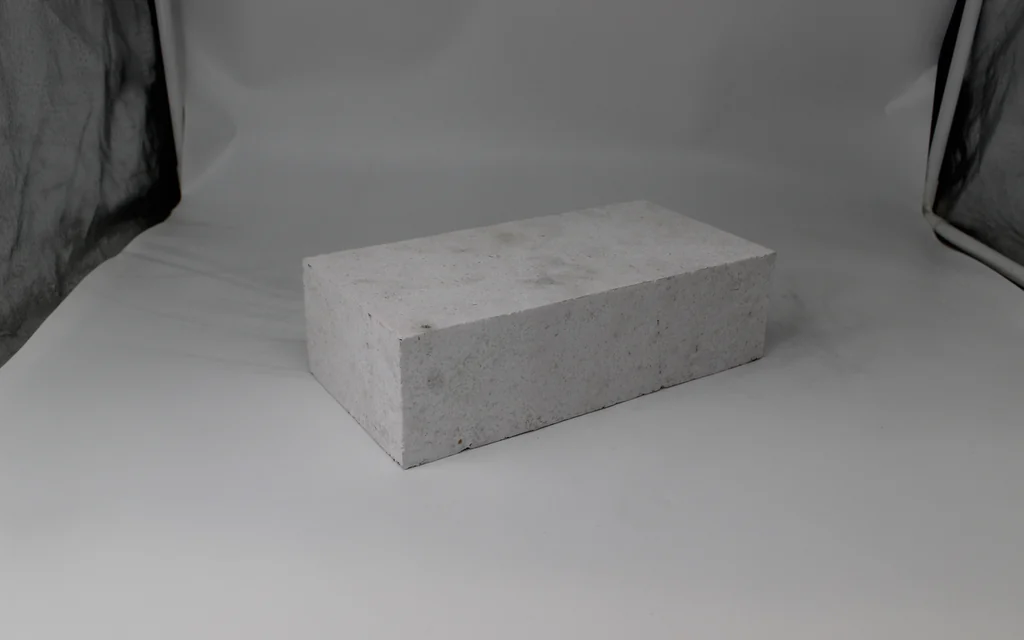
The working principle is a phase reaction rather than a recipe. Magnesia in the matrix reacts with alumina at service temperature to form magnesium aluminate spinel (MgAl₂O₄). That reaction carries a controlled, permanent expansion — typically in the range of 1.5–2% — which offsets exactly the firing shrinkage a castable would otherwise undergo. The practical result is a monolithic working face that stays tight against the shell instead of cracking away from it: the same joint-sealing principle that AMC brick applies through its spinel-forming additions, applied to a lining with no joints at all.
The absence of carbon does the rest. No graphite means no carbon pickup into the steel bath, no carbon-driven slag penetration route, and no antioxidant package to manage — the chemistry the steel sees is entirely a function of the refractory's oxide composition.
Where It Wins
- Carbon-critical grades — ultra-low-carbon, IF steel, and clean-steel routes where pickup from the lining is a reject risk. This is the founding use case and still the decisive one.
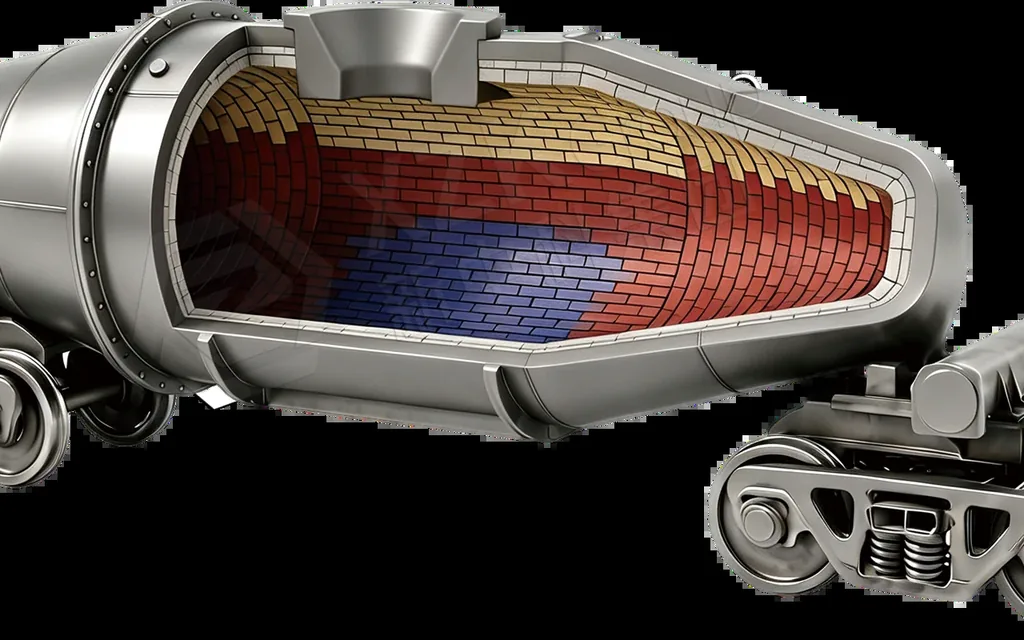
- Joint-free bottoms — cast in place, the lining has no brick joints, and the spinel expansion keeps the monolith tight against the safety lining. Joint penetration paths, the classic ladle bottom failure, simply do not exist.
- High hot-strength duty — the fired matrix reaches cold crushing strength to 100 MPa-class values with hot modulus of rupture to 28 MPa at 1500 °C, which is what carries the lining through tapping cycles without erosion softening.
- Ladle preheating discipline — the material tolerates the long, hot preheats that flameless regimes demand, where carbon-bearing linings can surface-oxidise before the first heat.
Where MgO-C Still Wins
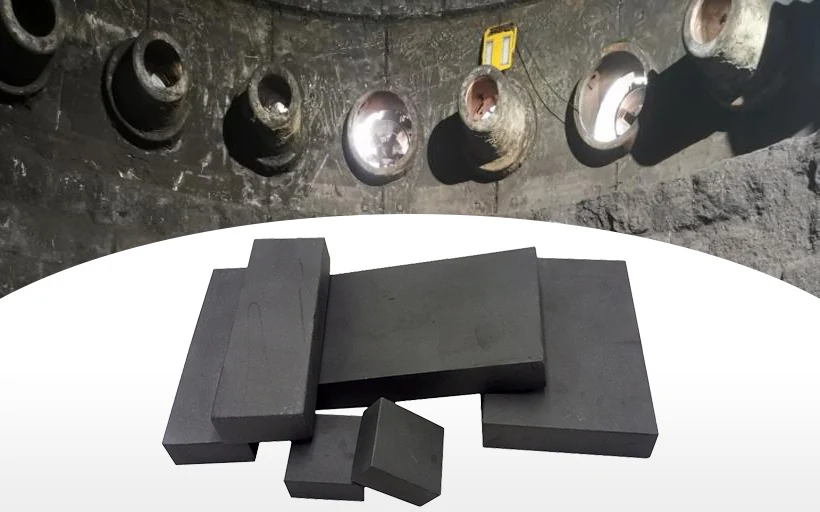
Against severe refining slag — high FeO, high basicity, long refining times — a well-specified magnesia-carbon slag line generally gives longer life, because graphite's non-wetting behaviour is the best defence against slag penetration that refractory science has. The usual design is therefore a boundary, not a conversion: MgO-C or AMC brick where slag attack dominates and carbon pickup is not a risk, carbon-free corundum-spinel castable where steel chemistry governs — typically the bottom and lower sidewall of ladles on clean-steel routes. Placing that boundary correctly for your grade mix, furnace route and slag chemistry is the decision we make together with the customer's steelmaking team.
The Silica Number
Watch SiO₂, not just Al₂O₃. Silica forms low-melting phases at steelmaking temperature and softens the hot face; two castables at identical alumina can differ by a full campaign in service behaviour depending on their SiO₂ content. XZK working grades hold SiO₂ to 0.5%, a figure that costs more in raw material selection than it does on the invoice and repays itself every heat. The same logic applies to Fe₂O₃, which drives similar low-melt problems and, at it happens, is equally controllable at the raw material stage.
The Cost Model: When Carbon-Free Pays
Corundum-spinel castable carries a higher unit price than the MgO-C or AMC brick it replaces on the bottom, so the business case has to be made honestly. It pays on clean-steel routes for three reasons that compound. First, carbon pickup risk has a real cost: a rejected or downgraded heat costs far more than the refractory premium, and one avoided incident can cover the difference for an entire campaign. Second, the joint-free bottom changes the maintenance pattern — no joint penetration means fewer unscheduled bottom interventions, and the ladle rotates on plan. Third, the spinel-tight monolith protects the safety lining, so the permanent lining lasts longer too. Against that, on a shop running ordinary commercial grades with no carbon ceiling, the premium buys less — which is exactly why the answer is a boundary drawing rather than a universal recommendation.
Three Questions We Ask Before Quoting
Because the boundary decision is the product, the quotation process starts with three questions. First: which grades in the mix are carbon-critical, and what is the actual carbon specification ceiling — not the target, the reject threshold? Second: what does the refining slag look like — basicity, FeO, refining time — at the positions the boundary would cross? Third: how does the ladle rotate, and where does it currently fail — bottom, joints, or slag line? The answers usually move the proposed boundary more than any catalogue comparison, and they take the customer's steelmaking team ten minutes to provide. Quoting carbon-free castable against MgO-C without them produces a price comparison, not a specification — and price comparisons on the wrong boundary are how plants end up paying for carbon-free material where MgO-C would have lasted longer, or the reverse.
Installation Notes That Decide the Result
Castable performance is decided as much by installation as by chemistry: water demand held to the specified percentage, vibration adequate without segregation, and a drying curve that removes mechanical water slowly enough to avoid spalling steam. We issue the mixing, placement and heat-up procedures with the material, and for first installations the supervision option is worth taking — the most common carbon-free castable failures we investigate trace back to a shortcut in one of those three steps rather than to the product. The drying stage deserves particular respect on ladle bottoms: the monolith is thick, mechanical water is held deep in the section, and the steam pressure at a too-rapid ramp acts exactly where the lining can least afford a spall.
The material detail is on our corundum-spinel castable page and the brick-side equivalent on the magnesia alumina spinel brick page; the system view is in the steel ladle & RH/VD system overview. If you are weighing carbon-free against MgO-C for a specific ladle, send the steel grade mix and slag analysis — we will draw the boundary grade by grade, free, within 48 hours.