When a steel ladle fails at the bottom, the failure almost always announces itself as a material problem — a purging plug that stopped blowing, a well block that wore early, steel where refractory should be. In our failure analysis experience, the majority of these events are dimensional before they are metallurgical: the plug chemistry was fine, and the seat was not. This article explains the purging plug and well block system, why fit governs life, and how a matched assembly changes the maintenance mathematics of the ladle bottom.
What the Assembly Actually Does
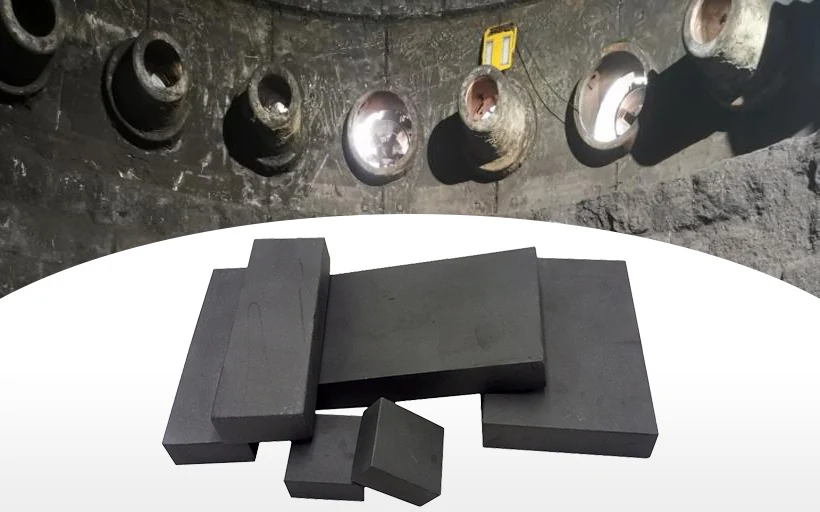
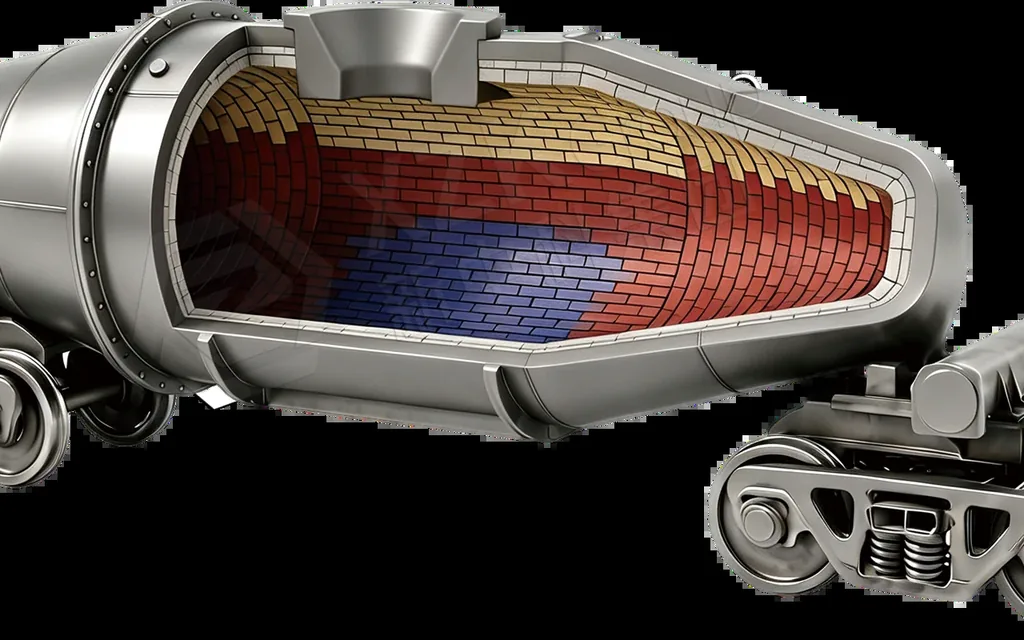
The purging plug is the ladle's ventilation system: argon blown through the plug stirs the bath for homogenisation and inclusion removal, and the plug must survive the full ladle campaign — thermal cycling on every heat, erosion from injected gas and circulating steel, and the mechanical stress of plug changes at the ladle stand. It sits in the well block, the refractory frame that holds it against the bath, which is backed by the seat — the machined interface to the ladle bottom structure. Three components, one function, and the load path runs through all three: which is why the industry's most reliable purging systems are supplied as matched assemblies rather than as a plug purchased separately from its furniture.
The Failure Mechanism Nobody Specs For
Steel penetration around a purging assembly begins with a gap, and gaps begin with geometry. A plug that is not fully seated — because the seat was worn, because a dimension was out of tolerance, because the installation compressed the wrong interface — leaves a continuous path for liquid steel at the ladle bottom, where ferrostatic pressure is highest and no operator can see what is happening. Once steel finds the path, the plug's fate is decided within a campaign: gas flow becomes erratic, stirring quality falls, and the plug change becomes an emergency rather than a plan. The metallurgy of the plug never got the chance to matter.
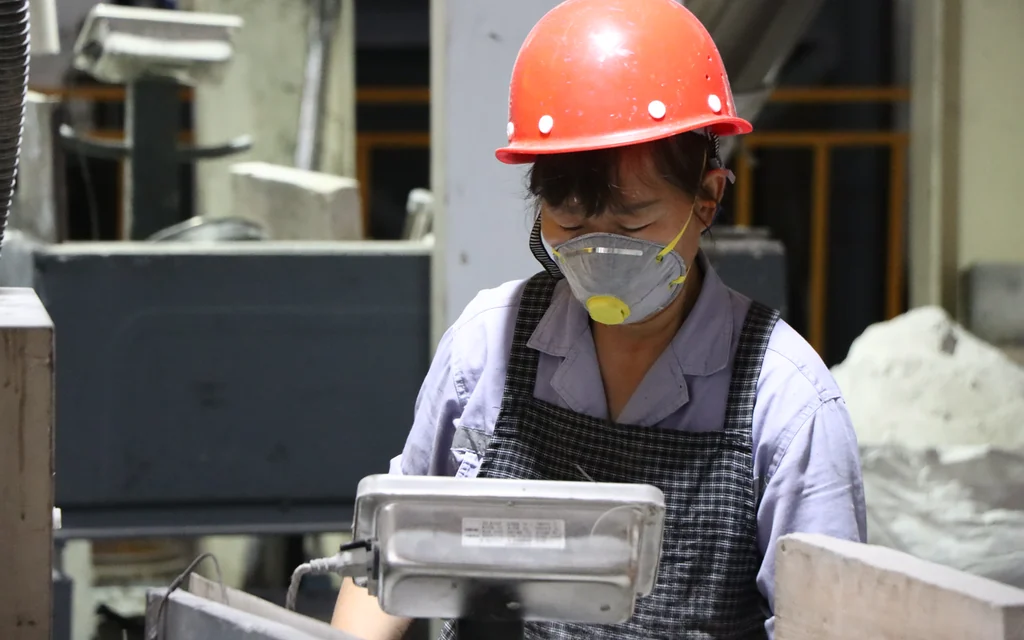
This is why dimensional verification outranks chemistry in our production plan for these items: every plug, well block and seat is inspected against the interface drawing, and critical assemblies are dry trial-fitted at the factory before shipment. The inspection report ships with the set, so the receiving check verifies what was verified at manufacture rather than re-deriving it.
Selecting the Plug Type
Within the plug itself, two designs dominate. Diffuser-type plugs distribute gas through many small passages — fine, homogeneous stirring for clean-steel practice, at the cost of sensitivity to clogging and to steel penetration into fine channels. Directional or slit-type plugs concentrate flow into defined passes — more robust against penetration, easier to inspect, and preferred where bath agitation demand is high or plug changes are infrequent. The choice follows the steel route: clean-steel ladles with tight inclusion specifications justify diffuser practice and its maintenance discipline; standard routes get more life from directional designs. Either way, the plug should be specified with its blowing pattern and flow-rate requirement stated, not just its material chemistry.
Installation and First Heat Discipline
Even a matched assembly can be compromised at installation, and the failure points are known: the seat surface must be clean and undamaged before setting; the joint mortar must be the specified grade and thickness, not "whatever is mixed"; and the first heats after a plug change should be run with the stirring profile the plug was designed for, not the practice the last plug tolerated. Installation supervision for a first-time matched assembly is a small cost against one avoided penetration event, and we provide the setting procedure with every set — including the torque or seating force where the mechanism requires it.
Flow Verification Before the Plug Ships
A plug that has never been blown is a promise, not a product. Every plug leaving our plant is flow-tested on a cold rig at the specified working pressure, and the test record states three numbers: the flow rate achieved at working pressure, the pressure required to open the assembly, and the back-pressure behaviour at reduced flow. Those three numbers matter for different reasons. Opening pressure predicts how the plug will behave on the first heat, when the bath is cold and the assembly is at its tightest. Flow rate at working pressure confirms the designed blowing pattern was actually built, rather than approximated. Back-pressure behaviour at low flow is what the operator feels during soft stirring at the end of argon treatment — the regime where erratic plugs make themselves known. A plug whose test curve is flat and repeatable is a plug whose behaviour in service can be predicted; a plug shipped with no curve cannot be commissioned with any confidence. Copies of the flow records ship with the set and should be filed with the ladle's maintenance log, because the comparison between a new plug's opening pressure and its predecessor's is one of the earliest available warnings that the seat interface is wearing.
Counting Plug Consumption Honestly
Most plants measure plug life in heats, and heats are the wrong denominator. Plug consumption should be expressed per ton of steel, because a plug that survives forty short heats may have handled less metal than one that survived twenty long ones, and the only way to compare two suppliers' plugs across two different shops is normalised consumption. The second correction is to count forced changes separately from planned ones: a plug changed on schedule at a maintenance window costs its purchase price and a crew hour, while a plug changed because it stopped blowing costs the same purchase price plus the disrupted heat, the possible temperature loss, and — in the worst case — the heat itself. Plants that separate those two figures almost always find that the majority of their plug cost sits in the forced-change column, which is where matched assemblies and dimensional discipline pay for themselves. If your plug consumption figure is currently a single number, splitting it into planned and forced changes is the most useful half-hour of analysis available on a ladle fleet, and it usually tells you which ladle to look at first.
What Matched Supply Changes
Supplying plug, well block and seat as one engineered set converts the ladle bottom from a collection of parts with independent lives into a system with a planned life: the plug and its furniture are changed together on schedule, the seat interface is machined to drawing every time, and the historical failure mode — the gap — is designed out rather than managed around. Plants converting to matched assemblies typically report the same sequence: first, erratic plug behaviour simply stops; then the bottom maintenance schedule stabilises; and finally the plug consumption figure becomes predictable enough to budget honestly.
The components are documented on the purging plug and well block pages, the system view on the steel ladle and RH/VD page, and the applied case in the EZDK Steel ladle bottom case study. If your plugs are failing early and nobody can say why, send us the failed plugs' photographs and the seat drawings — the answer is usually visible before the chemistry is even discussed.