Mexico · Monclova
Altos Hornos de México (AHMSA) — 150 t Torpedo Car Full Refractory Package
150 t torpedo car — complete refractory supply
Read Case Study →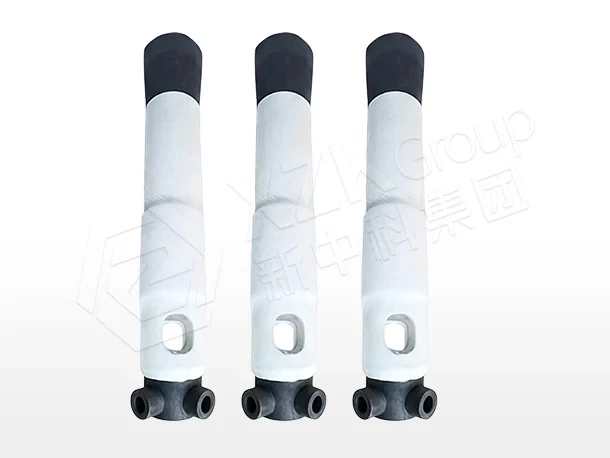
XZK supplies monobloc stopper rods, SENs, ladle shrouds and slide gate plates for Colakoglu Metalurji single-strand slab casting.
Colakoglu Metalurji's 180 t BOF feeding a single-strand slab caster is a configuration with no redundancy: one caster, no fallback strand, and a refractory intervention anywhere in the flow-control chain stops the whole route. That makes flow-control consumable specification a production decision rather than a purchasing one.
A single-strand caster on a BOF route runs long sequences and cannot absorb an interruption the way a multi-strand shop can — there is no second strand to hold the sequence while the first is serviced. Every mid-sequence intervention is therefore a direct loss of casting time, and the plant's product mix spans steel grades with quite different demands on the flow-control components.
The flow-control consumables were being selected by product type rather than by steel grade, which produced a familiar pattern: components that performed acceptably on the mild grades failed early on the more demanding ones, and the failures clustered at predictable points in the sequence. The mechanisms differ by grade and are frequently confused:
A nozzle specified without stating which of the three is expected to dominate is a nozzle specified by catalogue.
Consumables were packed by steel grade and casting position rather than by product code, so the correct component was on hand for the scheduled grade. Batch traceability was maintained throughout, so any component behaviour could be traced to a batch and a production date rather than argued about. Dimensional reports accompanied the plates.
Commissioning covered the practice that the components assume: argon flow rates and connection integrity at the shroud and stopper, seating of the plates with the mechanism checked against the dimensional report, and preheat-free starts run without the thermal shock that a rushed preheat used to introduce.
Flow-control consumables matched to steel grade reduced mid-sequence interventions measurably, and — the result the plant valued — the reduction was concentrated in the grade blocks that had previously caused the interruptions. Consumption per ton did not rise, because the components that lasted longer were the ones previously being replaced early rather than the ones already surviving a full sequence.
Interventions were logged by steel grade and by position in the sequence, not in aggregate. That logging is what identified the mechanism: failures clustering at a consistent point in the sequence pointed at accumulated clogging or bore erosion rather than at random quality variation, which is a completely different problem with a different fix. The measurement cost nothing beyond a line in the shift log and converted flow control from a consumables negotiation into an engineering cycle.
Specify flow control by steel grade, and log failures by grade and sequence position. Aggregate consumption figures hide the pattern that identifies the mechanism, and without the mechanism the only lever left is price — which is the wrong one.
The system view is on the tundish and flow control page, and a second flow-control programme is documented in the Azovstal flow control case study.
150 t torpedo car — complete refractory supply
Read Case Study →
80–120 t EAF ladles — working lining, purging plug & well block
Read Case Study →
EAF slag line & ladle slide gate system
Read Case Study →Every batch of raw materials is chemically assayed. Finished refractory shapes undergo density, ultrasonic non-destructive testing, and pre-assembly gap verification prior to global packaging.