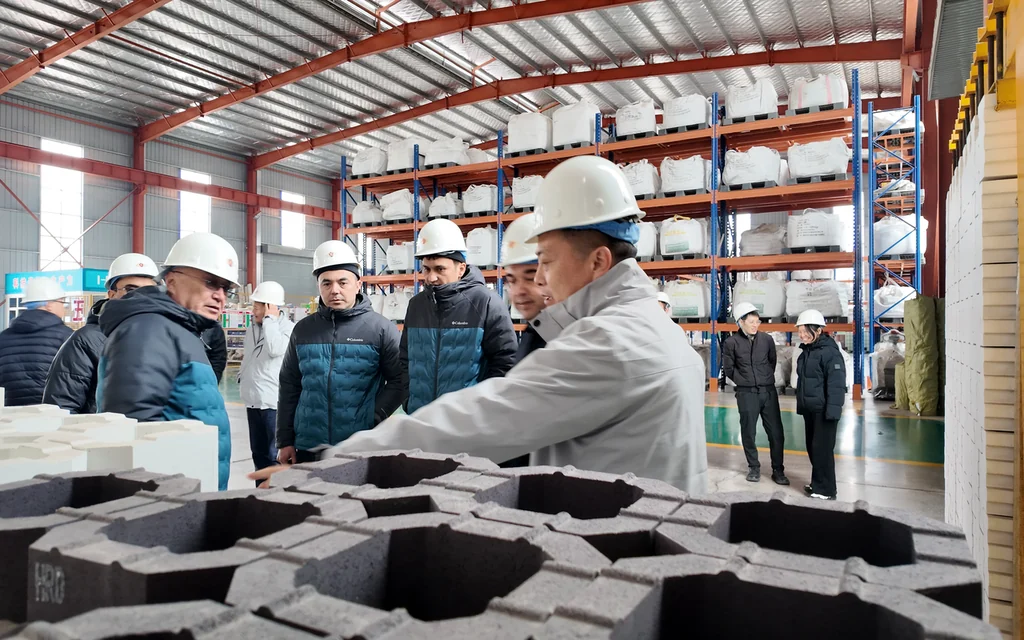
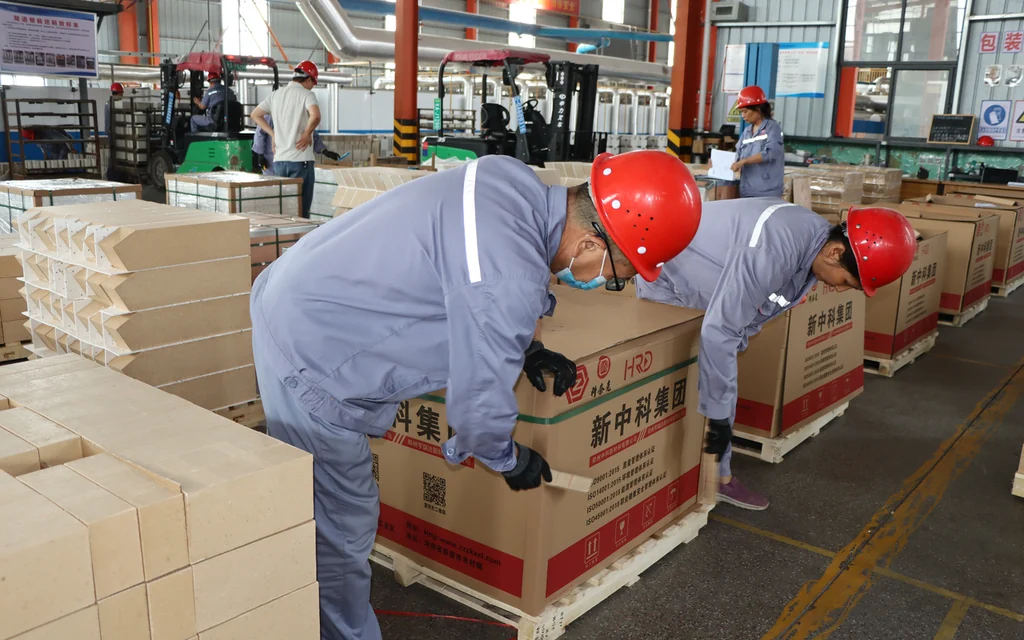
A 120 t ultra-high-power electric arc furnace in Indonesia has completed first heat on a full XZK lining package, covering the hot spots, slag line, hearth, roof delta and EBT taphole assembly — the complete refractory scope of an UHP shell, supplied as one engineered set rather than assembled from separate vendors.
Package Supplied
- Hot spots and slag line — magnesia-carbon XZK-MC-12AF2/F3 and 14AF2/F3, selected against the transformer power level and the plant's arc practice, where the dominant mechanisms are arc radiation and slag oxidation rather than impact.
- Hearth — magnesia dry ramming mass XZK-ERam-80, installed in compacted layers and sintered on first heat to form the working bottom.
- Roof delta — chrome-bearing high-alumina castable XZK-CastE85, cast around the electrode ports where radiation and alkali attack concentrate.
- EBT assembly — MgO-C taphole seating and sleeve blocks with ASC end blocks, plus waterless taphole clay, machined to the EBT mechanism so the opening sequence is repeatable.
- Gunning maintenance — magnesia gunning mix for slag-line and hot-spot repair between campaigns.
Why One Package for the Whole Shell
An UHP EAF is a system of interacting refractory duties: the roof delta's condition drives dust and radiation load on the slag line; the hearth sintering quality drives bottom wear; the EBT assembly's fit drives the tapping sequence that cycles the whole shell. Supplying each position from a different vendor leaves those interactions to the plant's maintenance planning to discover. Supplying one package means the grades were selected together — the slag line's antioxidant package accounts for the delta's expected campaign, the ramming mass matches the hearth design temperature, and the taphole clay's sintering behaviour matches the opening practice. On a furnace where every hour of downtime is measured in tonnes, coordinated engineering is the product.
Zonal Selection on an UHP Shell: The Reasoning
Because the grade choices on an UHF shell illustrate the method, they are worth spelling out. The hot spots see the highest radiation load and the most violent slag splashing, so they run the higher-carbon 14AF2/F3 grades — maximum oxidation resistance at temperature — while the walls run 12AF2/F3, trading a little slag resistance for better thermal shock compliance on the faster cycle of a shell tapping twenty-plus heats a day. The hearth bottom carries no slag contact at all, which is why ramming mass rather than brick does the job: a monolithic sintered bottom has no joints to open and follows the shell's slight flex without cracking. The delta runs a castable rather than brick because electrode port geometry is unmachinable in pressed shapes at reasonable cost, and the chrome-bearing body answers the radiation and alkali duty that plain high-alumina cannot. None of these selections is exotic; each is the mechanism-at-that-position logic applied consistently. That consistency is what a single-package supplier owes the customer, and it is what this project received.
First Heat Is Where Hearths Are Lost
The hearth ramming mass was installed in compacted horizontal layers, verified for thickness and flatness, and brought up on a controlled heat-up ramp so the sintering front developed gradually from the surface downward. This matters because the sintered layer is the furnace's actual working bottom: rushed first heat sinters only a thin skin, leaving unfused magnesia beneath that erodes within weeks, unevenly, and invisibly until the bottom profile is compromised. The ramp curve was issued with the material, reviewed with the customer's crew beforehand, and followed — which is the single highest-leverage discipline in EAF hearth life, and costs nothing but patience.
Consumption Forecast: The Number That Runs the Programme
Alongside the grade map, the proposal included the figure the plant's budget actually runs on: refractory consumption per ton of steel, broken down by position. The forecast is built from the vessel geometry and the campaign target, cross-checked against the consumption history the customer provided — where the two disagree, the discrepancy is usually informative. A hot spot consuming above its forecast share signals either an operating variable the model did not capture or a grade mismatch already present; either way, finding it before the reline is cheaper than after. On this project the forecast became the acceptance framework for the campaign: each maintenance window records actual wear against forecast by position, and the divergences drive the grade adjustments for the next campaign. Refractory programmes earn their keep not at purchase but in this loop — forecast, measure, adjust — and the supplier who issues the forecast in writing has, deliberately or not, agreed to be measured by it.
Commissioning Support
XZK supplied installation and heat-up procedures for every material in the package: the sintering curve for the hearth, the moisture-removal schedule for the roof delta castable, the preheat discipline for the EBT assembly, and the mixing water limits for the gunning mix. For first-time installations we recommend on-site supervision, and this project took it — not because the crew was inexperienced, but because the first campaign sets the maintenance rhythm of the furnace for years. The supervision scope covered layer-by-layer hearth verification, delta formwork and casting checks, and the heat-up log review at each hold point.
What Happens Next
The first campaign becomes the baseline. Wear measurements at each maintenance window will be compared against the zonal forecast issued with the proposal, and the grade map will be adjusted where reality differs — a hot spot that runs hotter than the model, a slag line outliving its forecast. That feedback loop is why we treat the first campaign as the start of the engineering relationship rather than the end of the sale: the second campaign should be cheaper per ton than the first, because it is designed from its data.
The product pages behind this package — magnesia carbon brick, magnesia dry ramming mass and waterless taphole clay — carry the grade matrices and test data, and the EAF refractory system page shows the full shell scope. Planning an UHP EAF reline? Send the shell size, transformer rating and scrap practice — the zonal proposal is free within 48 hours.