Every steel plant knows the cost of a reline is mostly not the brick. It is the weeks of downtime, the coordination of crews and cranes, the delay of one missing pallet, and the rework when a lining detail was never engineered in the first place. XZK's turnkey EPC packages exist to compress exactly those losses — and the path from your CAD drawing to a completed reline is more defined than most plants expect. This article walks the path stage by stage.
Stage 1 — Enquiry to Engineering Proposal
The process starts with what you already have: the vessel drawing, the operating data, and the wear history. From those, XZK's engineering team produces a zonal lining proposal — a grade assigned to every wear position, justified by the dominant failure mechanism there, with a consumption forecast per zone and a projected campaign life with the controlling failure mode named. The proposal is free and delivered within 24–48 hours of receiving usable data. Its value is not only the recommendation but the format: because the reasoning is shown per position, your own engineers can audit it, challenge it, and approve it — which is how technical alignment happens before any commercial commitment.
Stage 2 — Drawings to Shapes
Approved proposal, and the shapes move to manufacturing engineering. Customer CAD drawings are converted into pressing and firing documentation: brick drawings with tolerances, key and wedge shapes verified against the vessel geometry, and — for the positions where fit governs performance, such as taphole assemblies, purging plug seats and slide gate interfaces — machining operations with dimensional inspection plans. Over sixty percent of XZK's production is custom shapes made to drawing, so this translation is routine rather than exceptional. For assemblies, dry trial fitting at the factory verifies the interfaces before anything ships: a purging plug that seats perfectly in Xinmi will seat on site; one that does not has already failed, and better it fails on our bench than in your ladle.
Stage 3 — Manufacturing and Batch Verification
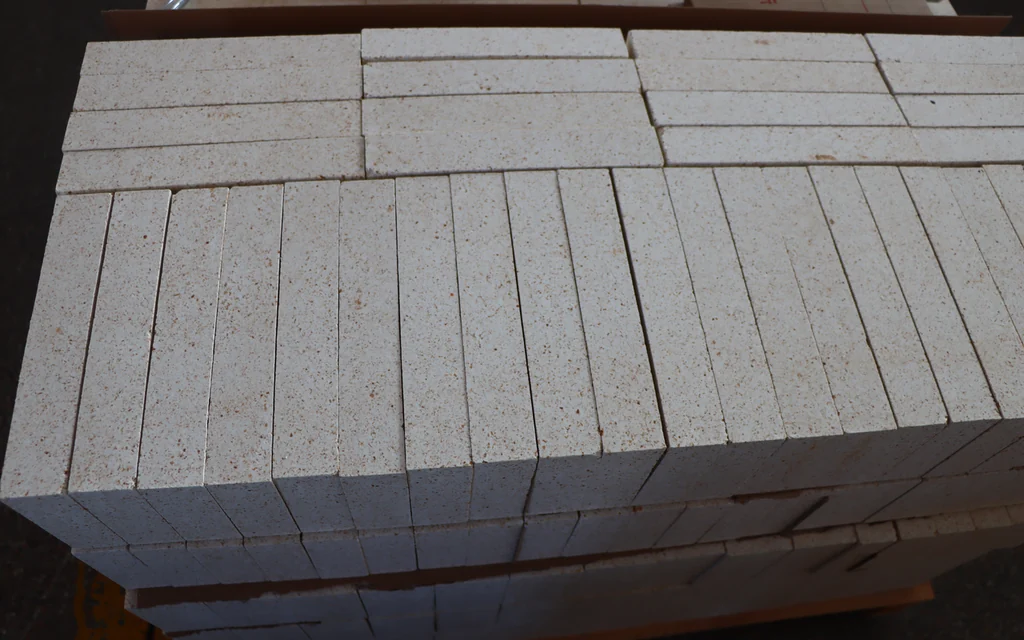
Production runs on automatic batching, CNC pressing from 630 to 2,500 tons, and computer-controlled firing curves. Every batch is tested — chemistry, density, porosity, strength, and the application-critical property such as creep for stove grades or conductivity for hearth carbon — and ships with its Certificate of Analysis. Third-party inspection by SGS, BV or TÜV with witnessed sampling is available at this stage, and for major relines we recommend it: an inspection certificate issued before despatch is the cheapest dispute prevention in the project.
Stage 4 — Packaging and Delivery Sequencing
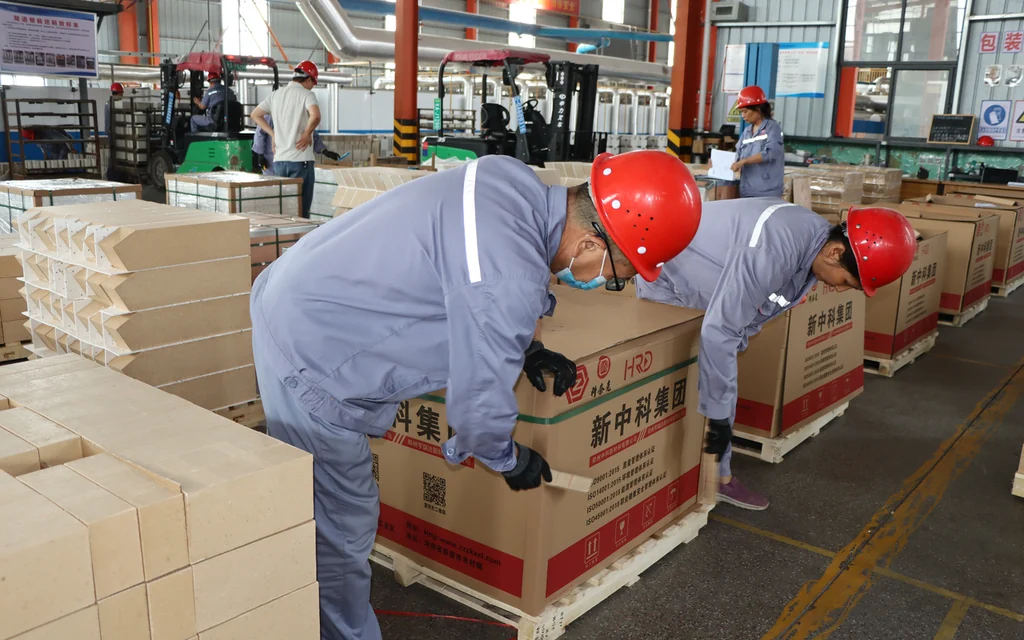
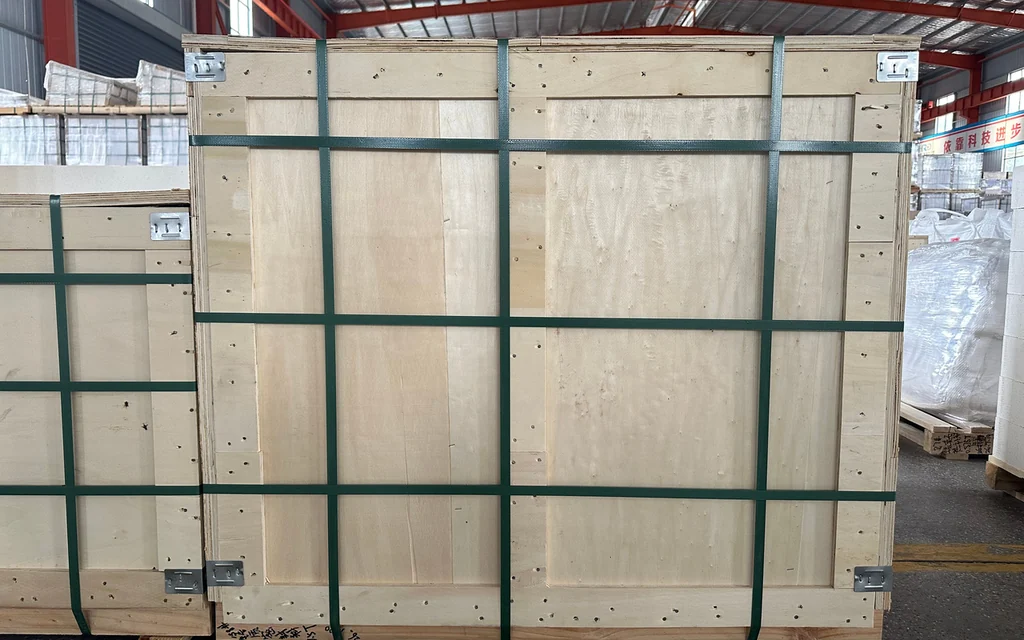
Material is palletised, marked by grade and — for course-graded stove and furnace work — by course number, so installation follows the design sequence without site re-sorting. Delivery schedules are built backwards from the reline window: the first containers carry what the crew needs in the first days of the job, and the last carry the final courses, not the reverse. Low-density insulation is crated; machined assemblies travel with face protection; every container's loading is photographed before sealing.
Stage 5 — Installation Support and Heat-Up
For turnkey scopes, XZK provides installation supervision: working drawings at the workplace, layer verification for rammed and cast positions, dry-fit checks for machined assemblies, and the heat-up curves that protect the lining during first firing. First heat is where hearths are lost and castable linings are spalled — a controlled ramp with logged hold points is the least glamorous and highest-return service in the package.
What the Turnkey Model Changes for the Plant Team
The commercial structure is easy to describe; the operational change is what plant teams actually notice. Under the piece-purchase model, the maintenance planner owns the coordination risk: three to six suppliers, each with their own lead times, documentation and installation notes, and every interface between them — mortar against brick, castable against anchor, heat-up curve against material set — is a risk the plant carries alone. Under the turnkey model, those interfaces become the supplier's engineering responsibility. The plant team's role shifts from coordinating parts to auditing one plan: reviewing the zonal proposal, witnessing the factory dry fits, checking the batch documentation as containers arrive, and logging the wear data that feeds the next campaign. Teams that make this shift report the same two benefits: fewer surprise findings during the reline (because the interfaces were engineered, not improvised), and a shorter learning cycle between campaigns (because one supplier holds the complete wear picture). Neither benefit appears on the quotation; both appear in the cost per ton.
What We Ask For, and Why Each Item Matters
Because the quality of the proposal is set by the quality of the inputs, the enquiry stage deserves specificity. The vessel drawing sets geometry: shell diameters, cone angles, taphole positions — the dimensions every brick shape must respect. The operating data sets the duty: capacity, tapping temperature, cycle frequency, slag chemistry where known, and the scrap or hot metal practice that drives impact and chemistry loads. The wear history sets the baseline: where the previous linings failed, at what campaign length, and — most valuable of all — photographs of the failed lining, because a residual-thickness map taken at teardown is worth more than a year of estimates. Plants that send all three receive proposals with forecast lives they can hold us to; plants that send only the capacity receive a conditional one, stated with its assumptions. The difference is not courtesy — it is the difference between engineering and estimation, and it is why our enquiry template asks for the three items explicitly rather than waiting to discover their absence at the first campaign review.
Stage 6 — Campaign Follow-Up
After start-up, the proposal's consumption forecast becomes the measurement framework: wear is recorded per position at each maintenance window and compared against forecast, and the divergences drive grade adjustments for the next campaign. A turnkey supplier who issued the forecast in writing has agreed to be measured by it — that is deliberate, and it is why the second campaign should be cheaper per ton than the first.
To start the path, send the drawing and the operating data through the contact page. The equipment-specific system pages — blast furnace, BOF converter, ladle and RH/VD — show how the package structure maps onto your furnace class.