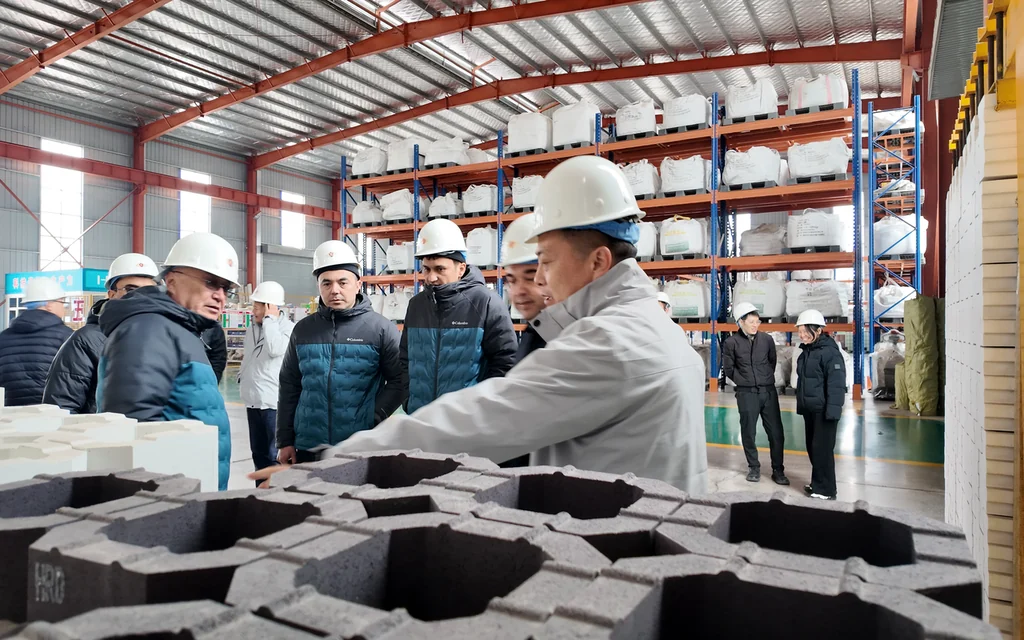
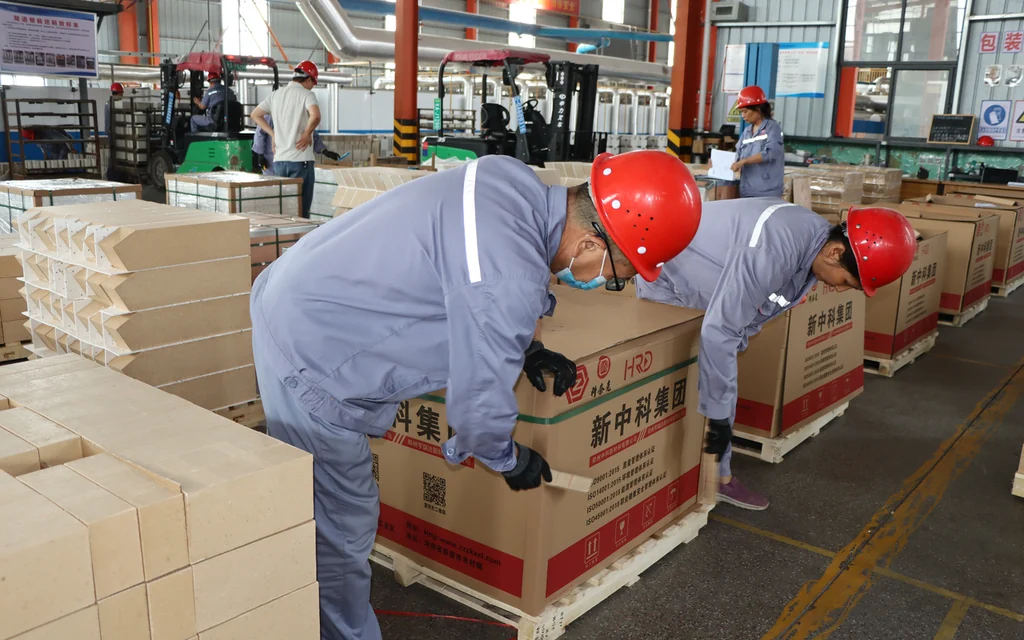
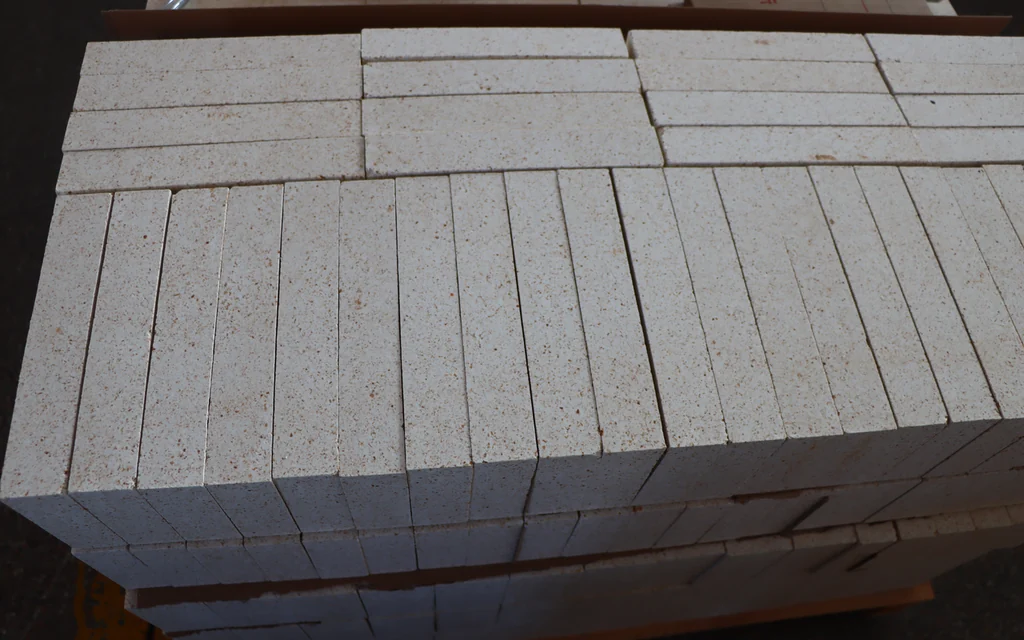
XZK has completed the shipment of 1,620 metric tons of magnesia-carbon bricks, ASC bricks and slide gate systems to JSW Steel's Vijayanagar works — one of the largest single refractory consignments XZK has delivered to the Indian market, and a supply that spans primary steelmaking, hot metal transport and secondary flow control in one coordinated programme.
Scope of Supply
The consignment covered three product families with deliberately interlocking delivery schedules:
- Magnesia-carbon brick — zonal converter and ladle grades from the XZK-MC series, covering charge pad, slag line, barrel and safety lining positions, each batch tested for carbon content, MgO purity, bulk density, apparent porosity and cold crushing strength before despatch.
- ASC brick — alumina-silicon carbide-carbon working linings for hot metal transport duty, with the throat and mouth shapes machined to the car geometry and palletised by car and zone for installation sequencing.
- Slide gate systems — Al-Zr-C plates with matched upper and lower nozzles and well blocks, machined to the ladle mechanism with dimensional inspection reports supplied per set, so the plates seat correctly on arrival rather than being fitted by adjustment on the ladle stand.
Why One Programme Instead of Three Orders
Vijayanagar is one of the largest integrated steel operations in India, and its refractory consumption runs across the whole iron and steel route. Buying the three families separately is the ordinary way, and it has a hidden cost: the materials arrive on different schedules, from different quality systems, with documentation in different formats, and the plant's receiving inspection repeats itself three times. One coordinated programme replaces that with a single documentation standard, a single verification regime, and delivery schedules aligned to the maintenance calendar of each equipment class — converter campaigns, torpedo rotations and ladle sequences each receive their material when the maintenance window opens, not when the shipping schedule happens to land.
The coordination also served quality continuity. Torpedo ASC mortar was specified against the ASC brick chemistry from the same production system; slide gate nozzles were matched to the plates rather than sourced generically; and the magnesia-carbon grades were issued from the same zonal drawing used on previous campaigns, so the consumption forecast could be checked against recorded wear rather than estimated fresh.
Logistics at This Scale
1,620 tons is a logistics project in its own right: roughly thirty to forty containers depending on density mix, staged so that no maintenance window waits on a late container and no material arrives months early to sit in monsoon-season storage. Packing followed the export standard — ISPM-15 pallets, moisture-barrier liners, edge protection on every machined face, desiccant in every monolithic bag — with the low-density items crated rather than palletised. Container loading plans were issued per consignment, and despatch photographs documented each loading before the doors were sealed, so the receiving inspection at the Indian end could reconcile against evidence rather than memory.
The Indian Market Context
India's steel capacity expansion makes it the fastest-growing refractory market in the world, and it is also one of the most technically demanding: Indian steelmakers' engineering teams specify rigorously, audit thoroughly, and expect suppliers to support the material through the campaign rather than until despatch. XZK's supply model for the region reflects that — batch Certificates of Analysis with every shipment, third-party inspection by SGS or BV available with witnessed sampling, and a zonal proposal format that shows the reasoning per position so the customer's own engineers can challenge it. Long-term supply relationships in this market are built on documented performance, and this consignment is one instalment of that documentation.
Receiving Inspection at This Scale
A consignment of this size deserves a note on how the Indian end received it, because the receiving discipline is half the value of the shipping discipline. The inspection followed the sequence we recommend for any large refractory delivery: container integrity and seal numbers checked against the manifest before opening; pallet markings reconciled against the packing list per container, not from memory at the end of the day; batch numbers matched to their Certificates of Analysis as each pallet came off, so a discrepancy surfaced with the container it arrived in; and photographs taken of anything doubtful before it moved. The whole routine costs the warehouse team minutes per container and converts any transit issue into a documented, insurable claim within the carrier's window. On this consignment the routine did its quiet work: one pallet of nozzle sets arrived with strapping disturbed in transit, was photographed and set aside, and was replaced from the spares margin built into the shipment — a minor event, handled in an afternoon, precisely because the inspection made it visible on day one rather than on installation day weeks later.
What Happens Next
Grade Continuity Across Campaigns
One further discipline is worth naming because large customers increasingly audit for it: batch-to-batch consistency across the programme's lifetime. A converter or ladle programme runs for years, and a brick supplied in the fourth year must match the brick supplied in the first — same chemistry, same density window, same antioxidant package — or the consumption forecast the plant budgeted against quietly expires. Continuity is a production-system property, not a promise: it comes from automatic batching with recorded set-points, controlled pressing and firing curves, and per-batch testing against the declared figures, so that any drift is caught at the batch, not in the furnace. It also comes from change control on the supplier side — if a raw material source or an antioxidant package must change, the customer hears it before the shipment does, with the test data that explains what changed and why the declared figures still hold. Programme buyers should ask prospective suppliers directly how continuity is guaranteed; the quality of the answer, more than any certificate, predicts the fourth year of the relationship.
Consumption and wear data will be reviewed against the forecast at each maintenance window, and the grade map adjusted where the furnace's reality differs from the model — the feedback loop that turns a large shipment into a durable supply programme. For plants planning comparable packages, the product entry points are the magnesia carbon brick, ASC brick and slide gate plate pages, and the related project view in the JSW Steel 180 t BOF and 400 t torpedo case study. Send us your vessel data and maintenance calendar — the coordinated programme proposal is free within 48 hours.