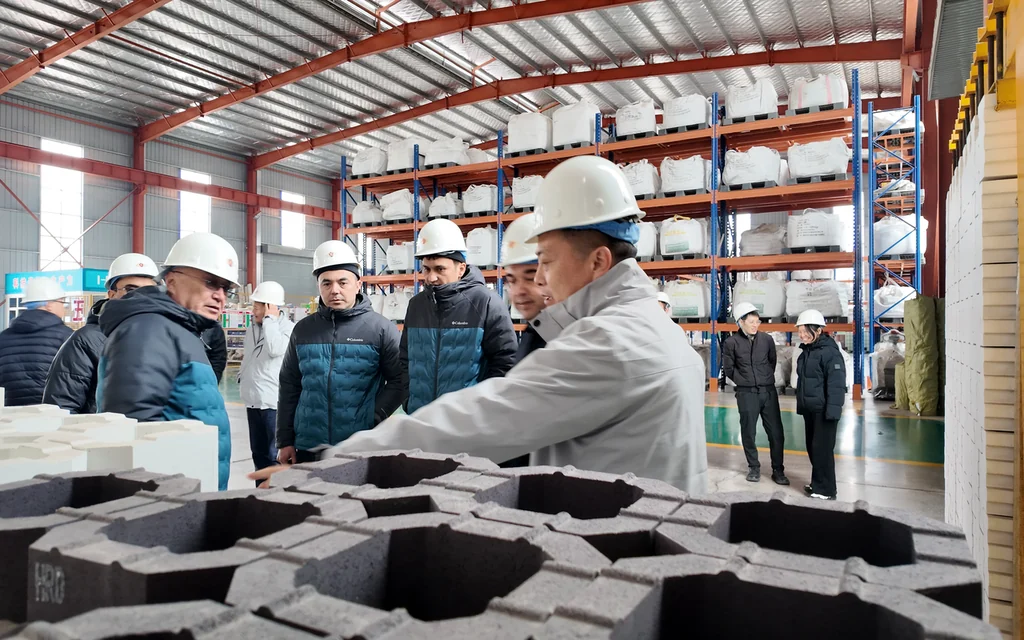
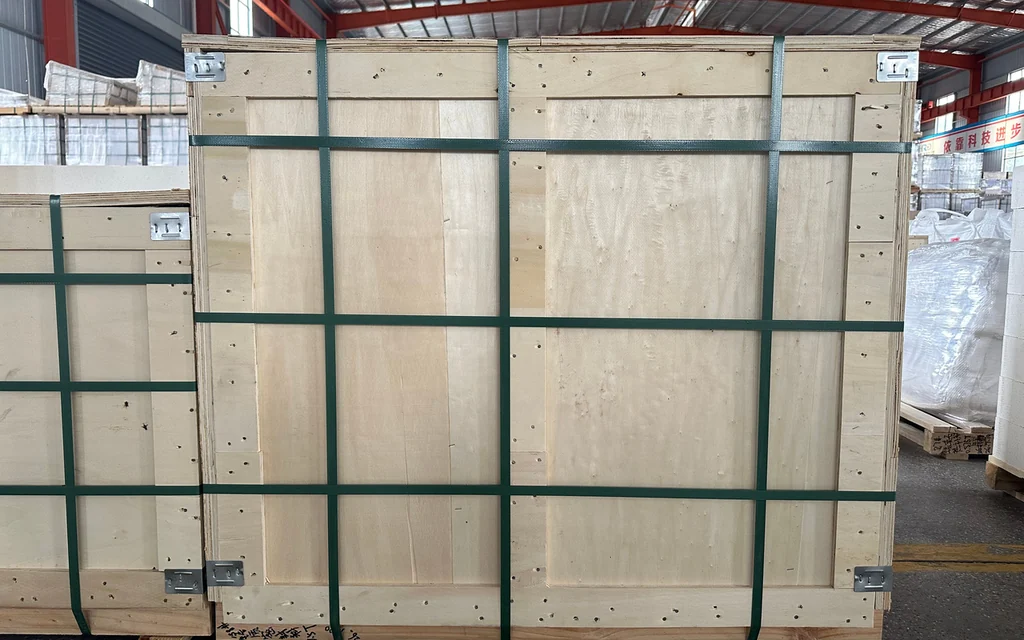
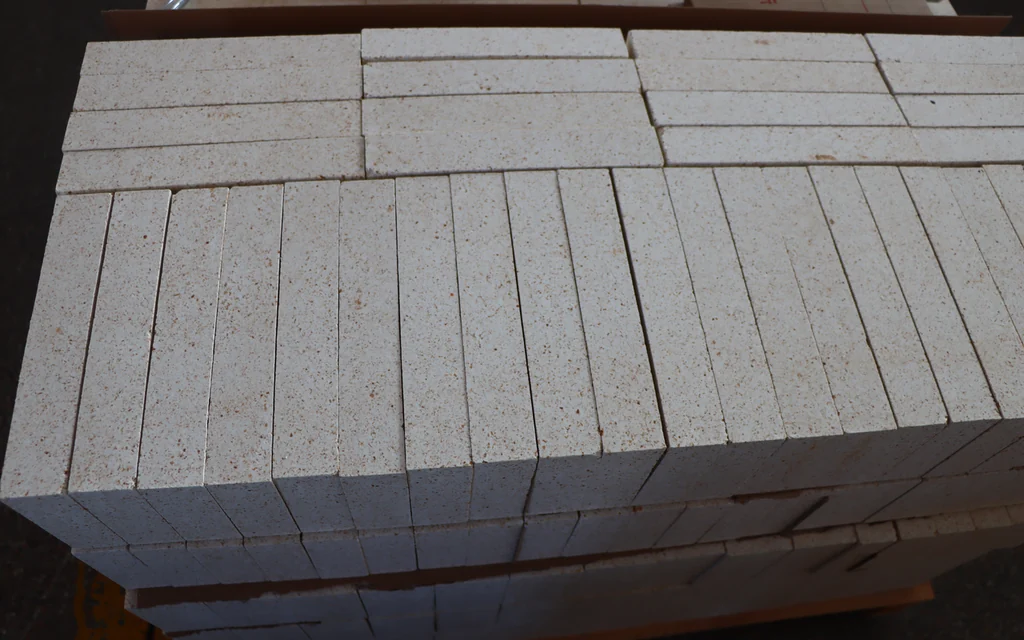
XZK has delivered 1,120 metric tons of magnesia-carbon bricks and slide gate plate systems to Abinsk Electric Steel Works, continuing a supply relationship that covers the EAF route's two refractory cost centres — the furnace slag line and the ladle flow-control system — under one quality and documentation standard.
Scope of Supply
- Magnesia-carbon brick — EAF slag line and hot spot grades from the XZK-MC-12AF and 14AF series, selected against the transformer power level and the shop's arc practice, with safety lining grades completing the shell package.
- Ladle working lining — MgO-C slag line grades paired with spinel-forming AMC barrel and bottom brick, so the ladle wears as a system rather than failing at its weakest joint.
- Slide gate plate systems — Al-Zr-C plates with matched upper and lower nozzles and well blocks, machined to the ladle mechanism, with dimensional inspection reports accompanying every set.
Why the EAF Route Concentrates Refractory Cost
An EAF-based steel plant spends its refractory budget in two places, and both are unusually demanding. The furnace itself cycles faster than a converter route — charge, melt, refine, tap, repeat — so slag line and hot spot materials face aggressive oxidation and thermal cycling in compressed intervals. The ladle, meanwhile, carries the refining duty that the EAF route concentrates: less primary furnace time means more metallurgy happens in the ladle, which raises slag temperatures and extends slag contact times. A supply programme that treats furnace and ladle as separate purchases misses this interaction. Treating them together means the grades, mortars and gunning mixes are selected against one operating picture — which is how this consignment was assembled.
The Slide Gate Detail That Matters
Slide gate plates fail at the seat more often than in the bore, and the failure is dimensional before it is chemical. A plate whose seating face is not true to the mechanism, or a nozzle whose interface height is off by a fraction of a millimetre, leaves a path for steel infiltration that no material improvement can survive. This is why the slide gate portion of the consignment was machined to the Abinsk mechanism drawings, with the interface dimensions verified on every set and the inspection reports shipped inside the container. The plant's maintenance team can check the fit at receiving in minutes; the alternative is discovering a fit problem on the ladle stand, where the fix costs a sequence.
Documentation and Verification
Every production batch in the consignment carries its Certificate of Analysis — chemistry, bulk density, apparent porosity, cold crushing strength, and for the magnesia-carbon grades the carbon content and antioxidant package designation. Third-party inspection with witnessed sampling was arranged for the despatch lot, and the pallets were marked with grade, quantity and production date so the receiving inspection reconciles physically against the paperwork. This documentation standard is the same across all XZK export programmes; on a multi-product supply like this one it has the additional benefit of letting the plant compare performance across positions using one consistent data format.
Gunning Mix and the Maintenance Between Campaigns
The consignment also carried magnesia gunning mix, which deserves more attention than its price suggests. Between campaigns, an EAF shell's slag line and hot spots are repaired by gunning — and the quality of that repair decides whether the next campaign starts from a true profile or from a patched approximation. Gunning quality is mostly technique: water demand held to specification, nozzle distance and angle held consistent, layer thickness built up in passes rather than dumped on, and the rebound (material that bounces off and lands on the floor) monitored as the honest indicator of technique. A gunned patch that rebounds thirty percent is a patch that is thirty percent porous at exactly the position that fails first. Our mix is formulated for adhesion at the shop's gunning conditions, and the procedure sheet specifies the settings — but the crew's discipline is what the furnace sees. Plants that track rebound and retrain periodically get gunned repairs that last into the campaign instead of into the first week; the consumable invoice rewards that discipline twice, once in mix consumed and again in campaign length.
The Ongoing Programme
Reading the Wear Data: What the First Campaign Teaches
The first campaign on a coordinated furnace-and-ladle programme produces the most valuable document in the relationship: a per-position wear record measured against forecast. Reading it well requires resisting two temptations. The first is to treat any position outperforming forecast as proof the specification was conservative — over-performance in one zone usually means consumption was displaced from another zone, and the record shows where. The second is to adjust grades after a single campaign; one campaign is one sample, and slag chemistry, scrap mix and seasonal operating changes all leave fingerprints in it. The disciplined reading takes three campaigns to distinguish pattern from noise, adjusts the grade map only where the mechanism is clear, and treats the forecast as a living document rather than a promise to defend. Plants that keep this discipline turn their refractory supply into an engineering programme with a memory — and the cost curve per ton reflects that memory, campaign after campaign.
This delivery is part of a rolling supply relationship: consumption is reviewed against forecast at each maintenance window, the grade map is adjusted where wear data disagrees with the model, and the shipping schedule tracks the EAF maintenance calendar. The economics of a refractory programme on an EAF route are won in that loop — a slag line grade that extends two hundred heats changes the maintenance plan more than any discount changes the invoice.
The grades behind this delivery are documented on the BOF/EAF magnesia carbon brick, alumina-magnesia carbon brick and slide gate plate pages, with the EAF system view on the EAF refractory system page and the project background in the ABINSK EAF slag line and slide gate case study. Running an EAF route and want a two-position consumption forecast — furnace and ladle together? Send the operating data; the proposal is free within 48 hours.