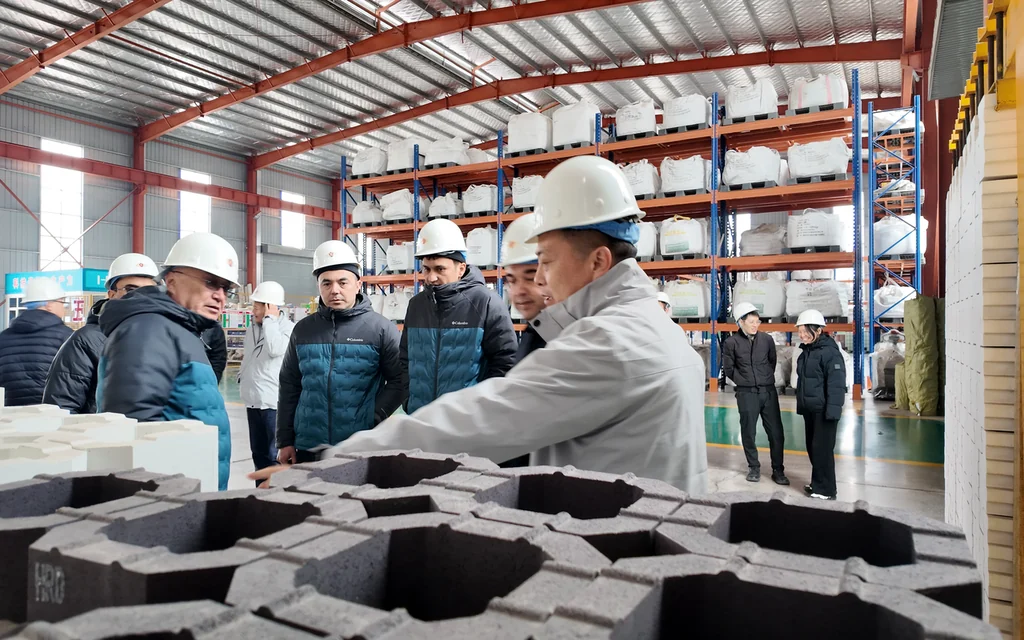
XZK has completed a shipment of alumina-silicon carbide-carbon (ASC) refractories for a 600 t torpedo car fleet, covering working lining brick, matching mortar and throat castables under a rolling supply programme tied to the customer's fleet maintenance schedule.
Scope of Supply
- ASC working lining brick for barrel, slag line and impact pad, graded by position.
- Dedicated throat and mouth wear shapes, plus a mouth castable formulated for the mechanical cleaning practice at that site.
- Matching ASC mortar with verified adhesion strength, so the joint is not the weakest element of the lining.
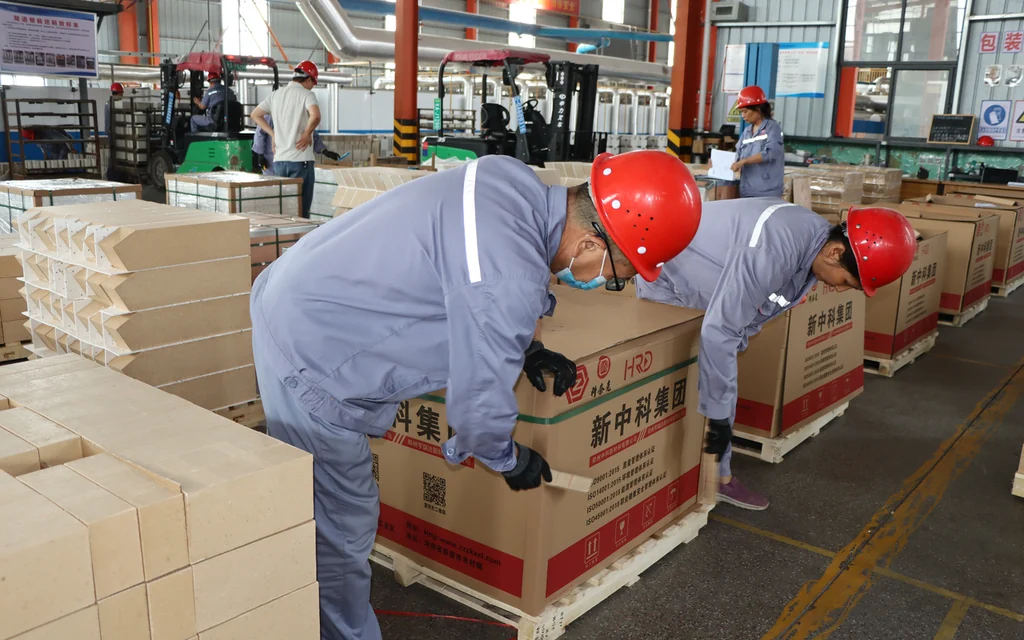
Material was palletised and labelled by car and by zone, so installation followed the maintenance sequence without re-sorting on site. Batch Certificates of Analysis covering chemistry, bulk density, apparent porosity and cold crushing strength accompanied the shipment, and third-party inspection was witnessed before despatch.
Documentation deserves a sentence of its own, because it is where export refractory programmes most often disappoint. A brick that arrives without traceable batch documentation cannot be verified against its specification, and a discrepancy discovered at installation is expensive in a way that no amount of purchase-price saving recovers. Every ASC production batch in this programme was tested before despatch against the declared figures, and the paperwork shipped inside the container rather than emailed afterwards — so the receiving inspection could reconcile pallet markings against certificates without waiting for the supplier's office hours.
Why ASC for Torpedo Service
A torpedo car lining faces three attacks simultaneously, and the body chemistry has to answer all three. Slag erosion from desulfurisation and de-siliconisation reagents attacks chemically. Thermal cycling on every trip — hot metal in at tap temperature, heat loss during transport and wait, hot metal out — attacks mechanically. And iron and slag infiltration at temperature attacks microstructurally, penetrating the brick and degrading it from inside.
Alumina handles the erosion of moving hot metal and resists chemical attack better than silica-based bodies. Silicon carbide adds erosion resistance, reagent resistance and, critically, high thermal conductivity that softens the thermal gradients of every trip. Carbon provides non-wetting behaviour that blocks infiltration and gives the lining the compliance to survive cycling. A high-alumina brick addresses only the first of the three mechanisms — which is why high-alumina torpedo linings wear unevenly and unpredictably compared with a well-specified ASC package.
The Rolling Supply Model
Torpedo fleets are maintained continuously, not relined all at once. Cars rotate through the maintenance shop on a schedule, and the refractory supply has to track that rotation. A one-off shipment forces the plant to hold inventory and risks batch variation between cars relined months apart. A rolling programme does the opposite: material is produced and shipped against the fleet maintenance calendar, so every car receives material from a recent, documented production batch, and the plant carries minimal stock.
Why the Wear Profile Matters More Than Peak Life
The economic goal of a torpedo lining programme is not maximum life from any single car — it is an even wear profile across the fleet, so that cars are pulled for maintenance on plan rather than on emergency. Uneven wear is expensive twice: once when a car comes out early on its worst zone, and again when good material on the rest of the lining is discarded with it.
That is why the package is graded by position — barrel, slag line, impact pad, throat and mouth each get the grade matched to their dominant mechanism, with mortar and castables specified for compatibility rather than price. The result is that the lining wears as a system, and fleet availability becomes predictable.
Inside the ASC Body: What Each Component Does
The ASC acronym describes three phases doing three different jobs. The alumina aggregate is the structural backbone: hard, erosion-resistant, and chemically stable against the desulfurisation reagents used in hot metal pretreatment. The silicon carbide phase adds hardness and thermal conductivity, and — less obviously — protects the carbon by forming a glassy silica layer that slows oxidation. The carbon phase provides non-wetting behaviour against slag and iron infiltration and gives the brick the compliance that lets it survive tens of thermal cycles per week without cracking.
Grade selection within the ASC family is a question of tuning these proportions to the duty. Impact pad grades run denser and stronger for mechanical shock; slag-line grades raise the carbon and carbide fraction for chemical attack; barrel grades balance the two. Mortar is matched to the brick chemistry rather than bought generically, because a joint with the wrong chemistry is a penetration path exactly where the lining can least afford one.
Packaging and Transit Discipline
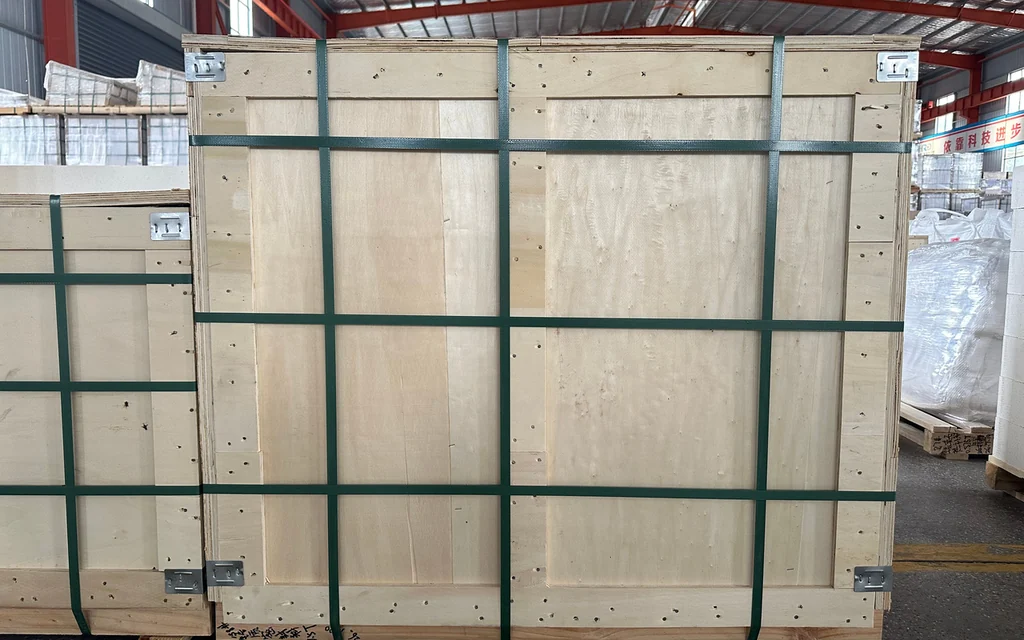
Torpedo shapes are heavy, individually machined where they mate with the car structure, and frequently shipped by sea for weeks before installation. Transit damage to a machined throat shape is not a cosmetic problem — it is a fitting failure waiting to happen. The shipment therefore followed the packing standard we apply to all machined refractory: ISPM-15 heat-treated pallets at 1.0–1.5 t, edge protectors on every machined face, moisture-barrier liners against humidity, and container loading with dunnage and lashing so nothing moves in the last leg of the journey. Every pallet carries grade, quantity and production date; every batch carries its Certificate of Analysis.
What We Need to Quote a Fleet Programme
A rolling torpedo programme is quoted from four inputs: fleet size and car geometry (drawings for the throat and mouth shapes are the critical ones), the hot metal route — including whether desulfurisation happens in the car or upstream — current lining life and the controlling wear zone, and the maintenance cadence of the fleet. From those we produce a per-position grade map, a consumption forecast per car per campaign, and a shipping schedule aligned to the maintenance plan.
For the chemistry in detail, see our ASC brick page; for the fleet-level view, read the 600 t torpedo car fleet case study and the torpedo & casthouse system overview. If you operate torpedo cars and want a consumption forecast per car, send us your fleet size, hot metal route and current lining life — the proposal is free and typically delivered within 48 hours.