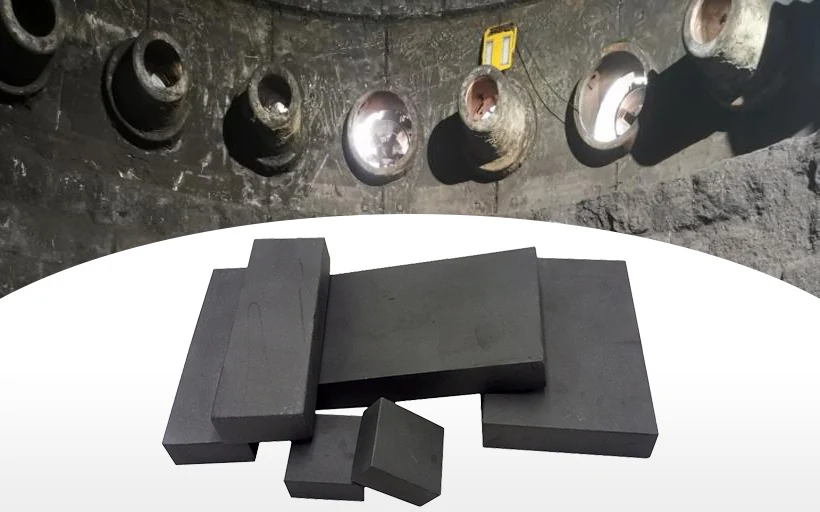
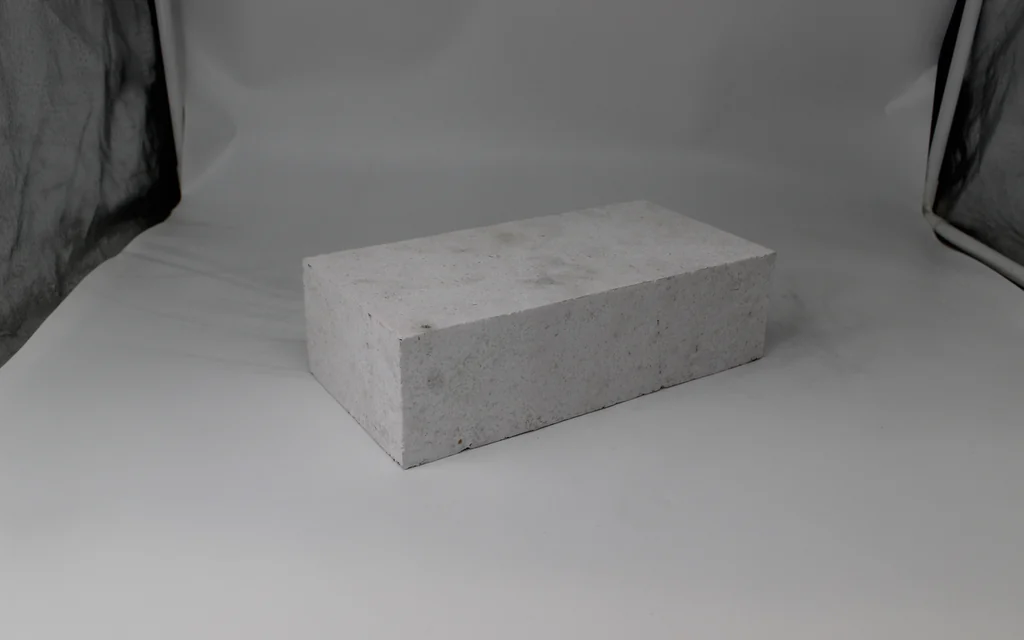
Hot blast stoves come out of service because they have changed shape. The brick is usually still chemically sound — the checkerwork has simply crept, the channels have closed, airflow is restricted, and the stove can no longer deliver blast at design temperature. That is why the specification that governs stove life is not alumina content and not refractoriness. It is creep rate, measured at the temperature and load the brick will actually see.
Creep Is the Governing Property
A checker column carries the weight of everything above it at high temperature, for years, without interruption. Under sustained load at temperature, refractory deforms slowly and permanently — that is creep in compression. A checker brick with excellent chemistry but mediocre creep behaviour will gradually compact; the flue channels narrow, pressure drop rises, heat exchange efficiency falls, and eventually the stove can no longer be brought to temperature in the available cycle time.
Creep is specified as a percentage deformation under a stated load at a stated temperature over a stated duration — for example, ≤0.2% at 1400 °C × 50 h. Two materials with similar alumina content can differ by an order of magnitude on this number, which is why it is the number to demand on the data sheet, and the number to verify per production batch rather than only at type approval.
Why Andalusite Works
Andalusite converts to mullite in service, producing a fine, interlocked, volume-stable microstructure with markedly better creep resistance than conventional high-alumina at the same service temperature. That phase transformation happens during firing and early service, so the brick arrives at its stable mineralogy quickly and then holds its geometry. This is why low-creep andalusite brick is specified for stove domes and the hottest checker courses even where its headline alumina content is not the highest available option.
The companion property is thermal shock resistance. Stoves cycle on every changeover, and the top courses see the largest swings. A brick with excellent creep but poor shock tolerance will spall in the dome — so both numbers belong in the specification, and both should be batch-verified.
How Creep Is Actually Tested
Creep in compression is measured on a full-size test piece loaded in a furnace at a controlled temperature for a defined duration, with deformation tracked continuously. The test conditions matter as much as the result: a creep figure quoted without its temperature, load and duration is not a specification but a decoration. The industry-standard condition for stove checker grades in the hottest courses is 1400 °C with a compressive load of 0.2 MPa over 50 hours; mid-course grades are quoted at 1350–1450 °C depending on their position. When comparing quotations, insist that every supplier states the test condition next to the number — a "0.5% creep" figure at 1350 °C is not comparable to a "0.2%" figure at 1400 °C, and the cheaper brick is often the one tested easier.
XZK verifies creep on every production batch for the grades where creep is the governing property, not only at type approval. That discipline costs kiln time and laboratory time, and it is exactly why the figure on the Certificate of Analysis means something when the stove is designed for a 25-year campaign.
Checker Geometry and Laying Tolerance
Checkerwork performance is a system of material and geometry. The channels between checker bricks set the surface area available for heat exchange, and they are only as open as the laying tolerance allows. A checker brick pressed 2 mm oversize accumulates that error over a column of dozens of courses; the result is misaligned channels, hot gas short-circuiting through the widest passages, and uneven temperature distribution across the stove section. This is why dimensional tolerance belongs in the specification next to creep — and why we press checkers to tight tolerance on CNC hydraulic presses and deliver them course-sorted and labelled, so the installation follows the design sequence without re-sorting on site and without a course being laid with the wrong grade.
Grade the Stove, Not Just the Brick
Temperature falls with depth through a stove, so running one premium grade from dome to bottom spends money where it buys nothing. The correct structure is a graded package: andalusite at the dome and upper checker, low-creep high-alumina in the mid courses, and low-creep fireclay checkers at the base, with the insulation behind the working lining specified as a density ladder rather than a single product. Correctly graded, a stove package typically costs 15–25% less than a uniform premium specification with no reduction in campaign life — the highest-return decision available in a stove reline.
The economics compound with stove size. On a large stove the checker volume alone runs to hundreds of tonnes, so the price difference between a uniform premium specification and a correctly graded one is measured in meaningful capital — money better spent on the dome courses where creep actually governs, or on the verification testing that protects the whole investment. Grading is not downgrading: every course is specified to the temperature and load it will see, and the governing property at each course is verified per batch.
The Combustion Chamber and Burner Zone: The Other Half of the Stove
Checkerwork gets the tonnage and most of the specification attention, but stove availability is frequently decided elsewhere — in the combustion chamber, the burner throat and the dome-to-wall transition. These positions combine the highest gas temperatures in the stove with the sharpest cycling, since the burner fires and shuts on every changeover, and they see flame impingement that checkerwork never experiences. The failure mode here is not creep but thermal shock and, in the burner zone, direct erosion from the flame front and any carryover in the gas. The material answer differs accordingly: shock resistance outranks creep resistance in the burner wall and dome shoulder, and the dome itself must withstand both, which is why the dome is the one position in a stove where a premium grade is almost always justified regardless of furnace size. Wall insulation and the expansion allowance at the dome springing point are the other two details that separate a combustion chamber that runs a full campaign from one that needs a mid-campaign repair — and a mid-campaign combustion chamber repair is expensive out of proportion to its size, because it means taking the stove out of the set and rebalancing the whole stove cycle around it.
Reading the Campaign Backwards
When a stove is finally opened, the sequence of inspection determines how much the next campaign benefits. Photograph before dismantling, in position, because the wear pattern in situ is the evidence and the rubble is not. Map residual thickness by course, not by sample, and record which courses deviated from the design prediction. Sample the deformed checker brick for creep re-testing where the original figures are still on file — a re-test against the original Certificate of Analysis is the only way to know whether the material performed or the duty was misjudged, and the two lead to completely different specifications next time. Finally, reconcile the actual campaign against the design campaign with the operating record beside it: number of changeovers, peak dome temperature history, and any period of abnormal gas cleaning. Stoves rarely underperform without a reason that is visible in hindsight, and the reline specification written from that hindsight is worth more than any generic standard.
You can see the graded structure in detail on our low-creep andalusite brick and checker brick pages, and the system view in the hot blast stove refractory system overview. The Tata Steel Kalinganagar 5873 m³ stove project shows a full graded package applied on one of the largest furnaces in the world. If you are preparing a stove reline specification, send us the stove geometry and blast parameters — we will return a course-by-course grading proposal with the creep figures stated for each course, at the test conditions each course will actually see.